
Chemical Additives Guide: Performance, Safety, and Cost Basics


Chemical additives sit behind many of the performance differences that shape industrial products, from plastics and coatings to advanced composites and specialty process fluids. In practical terms, they influence durability, processing stability, compliance outcomes, and final cost. For anyone comparing materials across global supply chains, a basic understanding of chemical additives helps turn technical claims into clearer decisions.
That matters even more in sectors where precision and reliability are tightly linked. In the broader environment tracked by G-AIT, materials are rarely judged on one property alone. They are assessed against standards, application risk, sourcing continuity, and long-term operating value. Chemical additives therefore deserve attention not as minor ingredients, but as strategic formulation tools.
What chemical additives actually do
At the simplest level, chemical additives are substances added in small or moderate amounts to improve how a base material behaves. They may change processing, surface quality, flame resistance, UV stability, conductivity, viscosity, antimicrobial behavior, or shelf life.
The key point is that additives do not act in isolation. A stabilizer that works well in one polymer may behave differently in another. A dispersant that improves pigment uniformity may also affect curing speed or adhesion. This interaction is why additive selection requires context.
Across industry, common categories include antioxidants, plasticizers, flame retardants, lubricants, antifoaming agents, surfactants, curing accelerators, corrosion inhibitors, and nano-scale functional modifiers. Each category solves a different problem, but each also introduces trade-offs that affect safety, cost, and qualification effort.
Why the topic carries more weight today
The conversation around chemical additives has shifted. It is no longer limited to performance enhancement. It now includes regulatory pressure, supply chain transparency, carbon considerations, export controls, and tighter customer specifications.
In high-performance manufacturing, materials are expected to remain stable under thermal load, vacuum exposure, aggressive cleaning cycles, or optical inspection requirements. Additives can support those targets, but they can also become the source of contamination, outgassing, residue, or variability.
This is where a benchmarking mindset becomes useful. G-AIT’s broader focus on ISO, SEMI, IEEE, and ASTM-aligned evaluation reflects a practical reality: additive choices should be judged against verified operating conditions, not just supplier brochures.
Pressure points shaping current decisions
- Material regulations are evolving across regions, especially for substances with toxicity or persistence concerns.
- Process consistency matters more when production lines rely on automation, machine vision, or tight dimensional tolerances.
- Advanced applications increasingly require lower contamination, cleaner burn profiles, and predictable aging behavior.
- Cost analysis is shifting from unit price toward total lifecycle impact.
Performance value depends on application fit
Not all value from chemical additives appears in a datasheet headline. In many cases, the benefit shows up as fewer defects, smoother processing, longer service intervals, or better qualification success.
In 3D printing and additive manufacturing, for example, additives may improve powder flow, resin stability, interlayer bonding, or thermal control. In coatings for optical or machine vision environments, additives can influence gloss, anti-static behavior, or contamination resistance.
In graphene and nano-material systems, additive chemistry often determines dispersion quality. Poor dispersion can erase the expected gain in conductivity or strength. In vacuum and cryogenic engineering, certain additives may create outgassing or low-temperature brittleness, making screening especially important.
Safety is broader than hazard labeling
When reviewing chemical additives, safety should cover worker handling, environmental exposure, storage stability, transport classification, and end-use restrictions. A formulation may meet performance targets yet still create unacceptable compliance burdens.
This is especially relevant for global sourcing. The same additive package may face different reporting, labeling, or restricted-substance requirements across regions. Changes in REACH status, TSCA review, RoHS alignment, or customer-specific restricted lists can alter material suitability overnight.
Another overlooked issue is byproduct behavior. Under heat, UV exposure, or chemical contact, some additives degrade into substances that affect odor, color, corrosion, or emissions. Safety evaluation should therefore include use-phase conditions, not only unopened-container data.
Useful checks during comparison
- Verify the latest safety data sheet and regulatory declarations.
- Ask whether the additive contains substances under current or emerging restriction review.
- Check thermal, UV, and chemical stability under actual operating conditions.
- Review storage, shelf life, and incompatibility requirements.
- Look for application-specific contamination risks, especially in precision environments.
Cost basics go beyond price per kilogram
One of the most common mistakes is evaluating chemical additives only by purchase price. A lower-cost additive may increase scrap, slow processing, create cleaning burdens, or trigger requalification work. A higher-cost option may reduce overall production cost if it stabilizes quality.
Total cost should include loading level, formulation compatibility, process yield, maintenance impact, compliance documentation, and supplier reliability. In some sectors, the cost of a failed batch or delayed audit is far greater than the additive itself.
Commercial intelligence also matters. Patent activity, export controls, and single-region sourcing concentration can affect future availability. G-AIT’s market monitoring perspective is relevant here because technical suitability without sourcing resilience is an incomplete answer.
A practical cost lens
A useful comparison asks four questions. How much additive is needed? How stable is performance lot to lot? What validation effort is required? How exposed is the supply chain to disruption or regulation?
How to read additive claims in real business settings
Marketing language around chemical additives often sounds decisive. Terms like high efficiency, advanced protection, or superior compatibility can be directionally useful, but they are not enough for selection. The more reliable approach is to connect claims to measurable conditions.
That means checking dosage sensitivity, processing window, interaction with fillers or pigments, and performance after aging. It also means asking whether the reported improvement comes from laboratory conditions or scaled production.
For cross-industry comparison, it helps to separate three layers. First, the additive function. Second, the formulation context. Third, the qualification standard. Once those layers are visible, performance, safety, and cost become easier to weigh together.
A sensible next step for deeper evaluation
A strong starting point is to build a short comparison framework for the chemical additives under review. Focus on intended function, regulatory status, material compatibility, process impact, contamination risk, and total cost of use.
From there, narrow the field with evidence that matches the operating environment. In advanced manufacturing, verified data matters more than broad claims. Benchmarking against recognized standards and realistic conditions usually reveals which additive package truly fits the application.
The most useful decisions rarely come from asking which additive is best in general. They come from asking which chemical additives remain effective, compliant, and commercially viable under the exact conditions that matter most.
Related News

How to verify part consistency before choosing a 3D printing OEM
Choosing a 3D printing OEM? Learn how to verify part consistency with repeat-build trials, validated inspections, and traceability checks before committing to production.
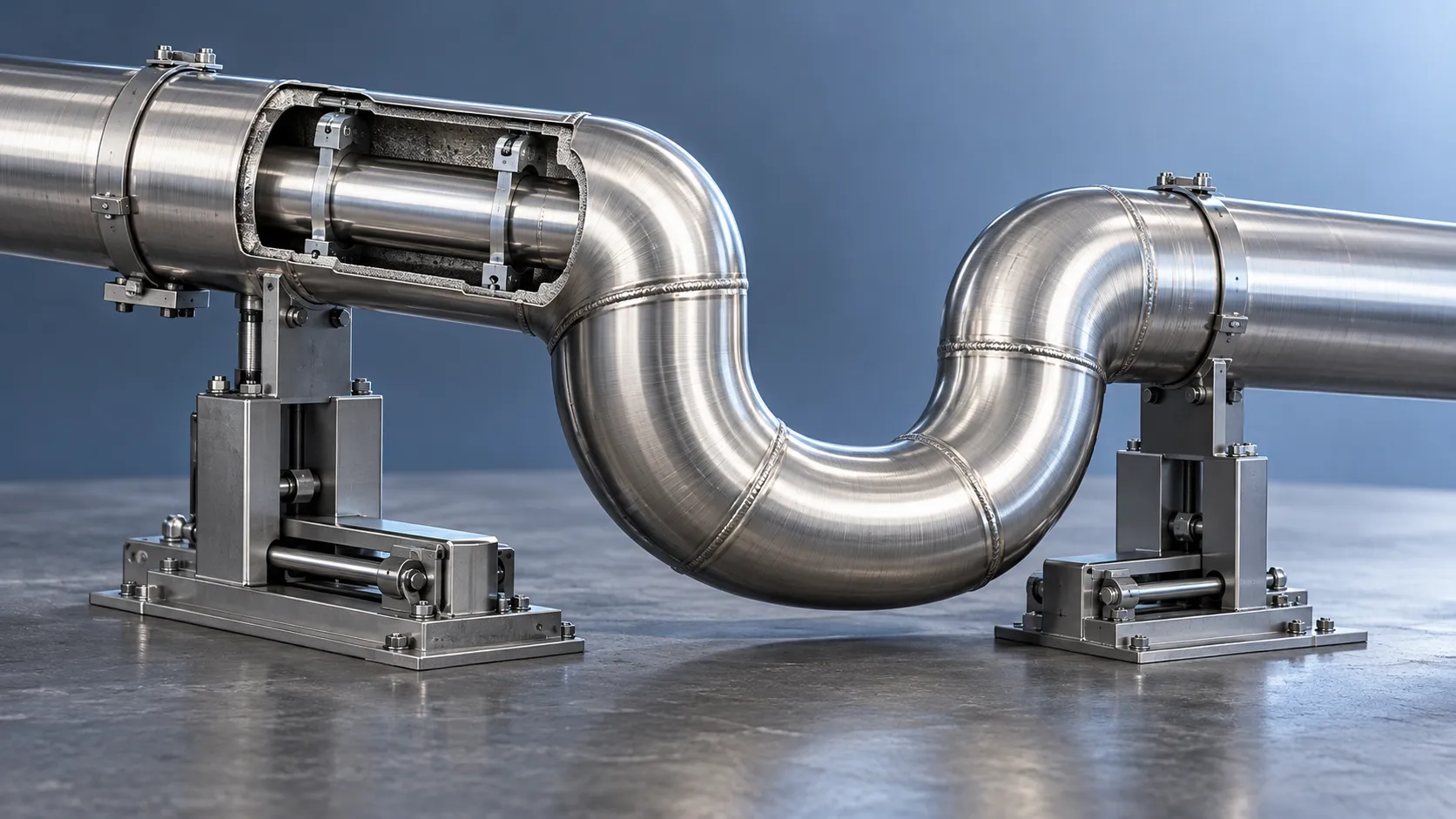
How does a rigid cryogenic transfer line handle thermal contraction?
Learn how a rigid cryogenic transfer line manages thermal contraction with bends, bellows, and guided supports. Discover key design checks for safe, reliable cryogenic performance.

How much does edge vision deployment cost beyond the hardware?
Understand edge vision deployment cost beyond hardware, from data and integration to security and support. Uncover hidden expenses and build a smarter lifecycle budget before you scale.

How does the purity of sputtering targets affect thin-film quality?
Discover how sputtering targets affect thin-film quality. Learn to assess purity, identify harmful impurities, and choose specifications that improve coating performance.

How high power laser cladding systems control substrate dilution
Discover how high power laser cladding systems control substrate dilution through beam shaping, material feed, and thermal management to deliver reliable bonds and coating performance.

How to check HS codes for customs compliance in international logistics
Strengthen international logistics customs compliance: learn how to verify HS codes, check official tariffs, and document classifications to reduce costly shipment delays.

Choosing a 3D Printing Service for Consumer Products: Finish, Fit, and Cost
Compare 3d printing consumer good services by finish, fit, materials, and total cost. Learn how to choose a reliable supplier and avoid costly defects before ordering.

Which Consumer Goods Can Be 3D Printed, and What Are the Practical Limits?
Explore 3d printing consumer goods, from custom eyewear to replacement parts. Discover practical limits on materials, safety, and costs to make smarter production decisions.

From Prototype to Small Batch: Applying 3D Printing to Consumer Goods
Explore 3d printing in consumer goods: learn how to move from prototype to small-batch production with practical guidance on materials, quality validation, and cost control.
Related News
- 00
0000-00
How to verify part consistency before choosing a 3D printing OEM - 00
0000-00
How does a rigid cryogenic transfer line handle thermal contraction? - 00
0000-00
How much does edge vision deployment cost beyond the hardware? - 00
0000-00
How does the purity of sputtering targets affect thin-film quality? - 00
0000-00
How high power laser cladding systems control substrate dilution
Marcus Print
Weekly Insights
Stay ahead with our curated technology reports delivered every Monday.