
What drives cement cost volatility in construction projects?


What Drives Cement Cost Volatility in Construction Projects?
Cement is often treated as a routine line item until its price moves at exactly the wrong moment. A change in delivered cement cost can affect concrete pricing, subcontractor negotiations, pour schedules, contingency use, and ultimately the credibility of the project budget. The problem is not simply that cement becomes “more expensive.” It is that the price may change faster than the project team can revise quantities, release purchase orders, or secure transport capacity.
For project managers, the useful question is not whether cement prices are volatile in general. It is: which part of the cost stack is moving in this location, for this specification, during this stage of the programme? A bulk order for ordinary Portland cement near a coastal terminal has a very different risk profile from a high-strength or low-heat cement requirement for an industrial foundation in an inland market. Treating both as one commodity purchase is where many budgets become exposed.
Cement cost volatility is usually the result of several overlapping pressures: energy-intensive production, raw-material availability, logistics, regional construction demand, exchange rates, environmental compliance, and supplier operating constraints. Some are visible in market news. Others only appear when a supplier cannot confirm a delivery window or a ready-mix contractor reopens a quotation.
Energy is built into every tonne
Cement manufacturing requires high-temperature kiln operation, grinding, material handling, and often substantial electrical power. Fuel and power costs therefore sit close to the center of cement pricing, even when the buyer sees only one delivered rate. Changes in coal, petroleum coke, natural gas, electricity tariffs, or industrial fuel availability can feed through to the supplier’s cost base.
The timing matters. A cement producer may have fuel contracts, inventory coverage, or regulated energy arrangements that delay the impact of a market movement. Another producer in the same region may be exposed much sooner. This is one reason project teams should be cautious when comparing offers received weeks apart. A low quote may reflect a supplier’s current stock position rather than a durable market advantage.
Energy exposure also affects availability. When production economics deteriorate or a plant faces power restrictions, the issue may become allocation rather than unit price. For a project with a critical structural pour, paying a slightly higher cement price can be rational if the supplier can commit to the required volume and dispatch sequence. The least expensive quotation is not necessarily the lowest-cost procurement decision once delay risk enters the calculation.
Raw materials and clinker supply can tighten without much warning
Cement begins with minerals such as limestone, clay, gypsum, and corrective materials, but the more commercially sensitive input is often clinker. Clinker is the intermediate product formed in the kiln before final grinding and blending. A supplier with secure local clinker production may have a different cost position from one dependent on imported clinker or interregional transfers.
Quarry permits, extraction limits, plant maintenance, kiln shutdowns, and environmental restrictions can all influence supply. These are not always dramatic events. A planned maintenance outage, for example, may be manageable for the producer but difficult for a project that has not booked its anticipated monthly volume. In tight markets, distributors may prioritize customers with established call-off agreements over buyers seeking spot material.
Material substitution needs particular care. Blended cements, supplementary cementitious materials, and lower-clinker formulations may offer commercial or environmental benefits, but they should not be selected solely because the initial rate is lower. Their suitability depends on the concrete mix design, strength-development requirements, curing conditions, exposure class, placement method, and applicable project specifications. Procurement should confirm technical acceptance with the concrete technologist and designer before treating an alternative binder as a direct replacement.
Freight is often the hidden driver of delivered cement cost
A project can be close to a cement plant and still face unstable delivered prices if truck availability, fuel cost, road restrictions, terminal congestion, or unloading limitations are changing. Conversely, a more distant producer may occasionally be competitive if it has reliable rail, barge, port, or dedicated fleet access. The delivered price needs to be separated into product, transport, handling, and site-service components wherever possible.
Bagged cement and bulk cement should not be evaluated as interchangeable formats. Bagged supply adds packaging, manual handling, storage losses, and a greater chance of site-level damage or pilferage. Bulk supply can reduce handling and support continuous concrete operations, but only if silo capacity, pneumatic discharge arrangements, access roads, and inventory controls are in place. A site that regularly runs its silo close to empty is not simply carrying low inventory; it is turning ordinary transport variation into a concrete production risk.
There is also a practical point that tends to get missed in early budgeting: freight costs are not always proportional to distance. Waiting time at site, restricted delivery hours, poor turning space, failed weighbridge processes, and small call-off quantities can make the last few kilometres disproportionately expensive. Procurement teams should ask suppliers how the price changes with load size, standby time, redelivery, and after-hours dispatch rather than assuming the quoted transport rate is fixed.
Demand peaks create local pricing, even in a global market
Cement is traded internationally in some markets, but construction demand remains intensely local. Large infrastructure packages, industrial expansions, housing cycles, reconstruction activity, or a cluster of data-center and manufacturing projects can absorb regional capacity quickly. When demand rises, suppliers may not need to publish a dramatic price increase to change the market. They can shorten quote validity, reduce credit flexibility, require volume commitments, or limit allocations.
Seasonality can produce similar pressure. Weather windows, fiscal-year spending patterns, and scheduled concrete works may align across several projects. A team that forecasts cement demand only as an annual total misses the more important issue: when tonnage is required by week or by pour sequence. The procurement schedule should mirror the construction programme, including known peaks for foundations, slabs, precast production, paving, or heavy civil works.
Import availability may soften local shortages, but it introduces another set of variables: ocean freight, port capacity, customs procedures, exchange-rate exposure, and the consistency of imported material documentation. Imported cement can be a useful contingency route; it is rarely an instant solution after local supply has already tightened.
Regulation changes the cost base, not just the paperwork
Environmental requirements can influence cement cost through emissions controls, fuel choices, quarry obligations, dust management, waste-handling rules, and carbon-related compliance mechanisms where applicable. The commercial impact varies greatly by jurisdiction and by the producer’s technology. It should not be assumed that every environmental requirement produces the same price effect in every market.
For projects with sustainability targets, the risk is often a mismatch between procurement language and technical reality. A specification may request lower embodied-carbon concrete, while the local supply base has limited availability of approved binder combinations or lacks comparable environmental documentation. This can narrow the qualified supplier pool and increase both price sensitivity and approval time.
The better approach is to establish acceptable performance criteria early: required standards, compressive-strength development, durability exposure, permitted cement types, supplementary material limits, test requirements, and documentation expectations. Standards such as ASTM, EN, or local equivalents must be applied according to the contract and jurisdiction, not selected casually because they appear familiar. Technical benchmarking and regulatory monitoring are especially valuable at this stage. Intelligence platforms such as G-AIT, which track verifiable engineering information alongside supply-chain and regulatory developments, can help procurement and engineering teams distinguish a genuine specification risk from a generic market claim.
What should be tracked before a purchase order is released?
A single market index rarely gives enough visibility for a live project. The most useful procurement dashboard is usually a compact view of commercial and operational signals that can be discussed with the contractor, concrete supplier, and finance team.
Contracting choices determine whether volatility becomes a budget shock
There is no universal best buying model. Fixed-price supply can provide budget certainty, but suppliers may build a risk premium into the offer or limit the duration and quantity covered. Index-linked pricing can be more transparent when the index and adjustment formula are genuinely relevant to the local market, yet it leaves the project exposed to movement. Spot buying may work for small, flexible scopes; it is a weak strategy for a programme with major concrete milestones.
A practical middle ground is often to lock a baseline volume for the critical path and retain controlled flexibility for later or less certain work packages. The agreement should define product type, quality documentation, delivery geography, forecast cadence, minimum and maximum call-offs, rejection procedures, and the treatment of transport surcharges. Vague wording around “market adjustment” is an invitation to dispute when conditions change.
Dual sourcing can improve resilience, but only if both sources have been technically and commercially qualified. Switching cement suppliers midstream can alter fresh-concrete behaviour, admixture compatibility, setting characteristics, or strength development. The site team may then face additional trials and approvals at the worst possible time. A backup supplier should be tested as a planned contingency, not discovered during a supply interruption.
The most common mistake: managing price without managing consumption
Even a well-negotiated cement price will not protect a project from poor material control. Differences between design quantities, batching records, delivery tickets, silo readings, waste, rework, and actual placed concrete should be reviewed regularly. Unexpected consumption may signal overdesign in mix usage, inaccurate batching, rejected loads, uncontrolled site handling, or a change in construction method. It can also reveal that the original estimate did not reflect the practical realities of pumping, finishing, or weather-related losses.
The strongest projects connect commercial data to field data. Procurement sees committed tonnage and pending exposure; engineering sees approved mix options; operations sees daily consumption and upcoming pour requirements. That coordination is less glamorous than chasing the lowest quote, but it is usually where cement cost control is won or lost.
When cement markets are unsettled, the sensible response is not panic buying. It is to identify the critical volume, validate technically acceptable alternatives, understand the delivered-cost assumptions, and negotiate supply terms that match the actual programme. Price volatility cannot be eliminated, but surprises can be reduced substantially when the project treats cement as a supply-chain and engineering decision rather than a simple commodity purchase.
Related News

How to verify part consistency before choosing a 3D printing OEM
Choosing a 3D printing OEM? Learn how to verify part consistency with repeat-build trials, validated inspections, and traceability checks before committing to production.
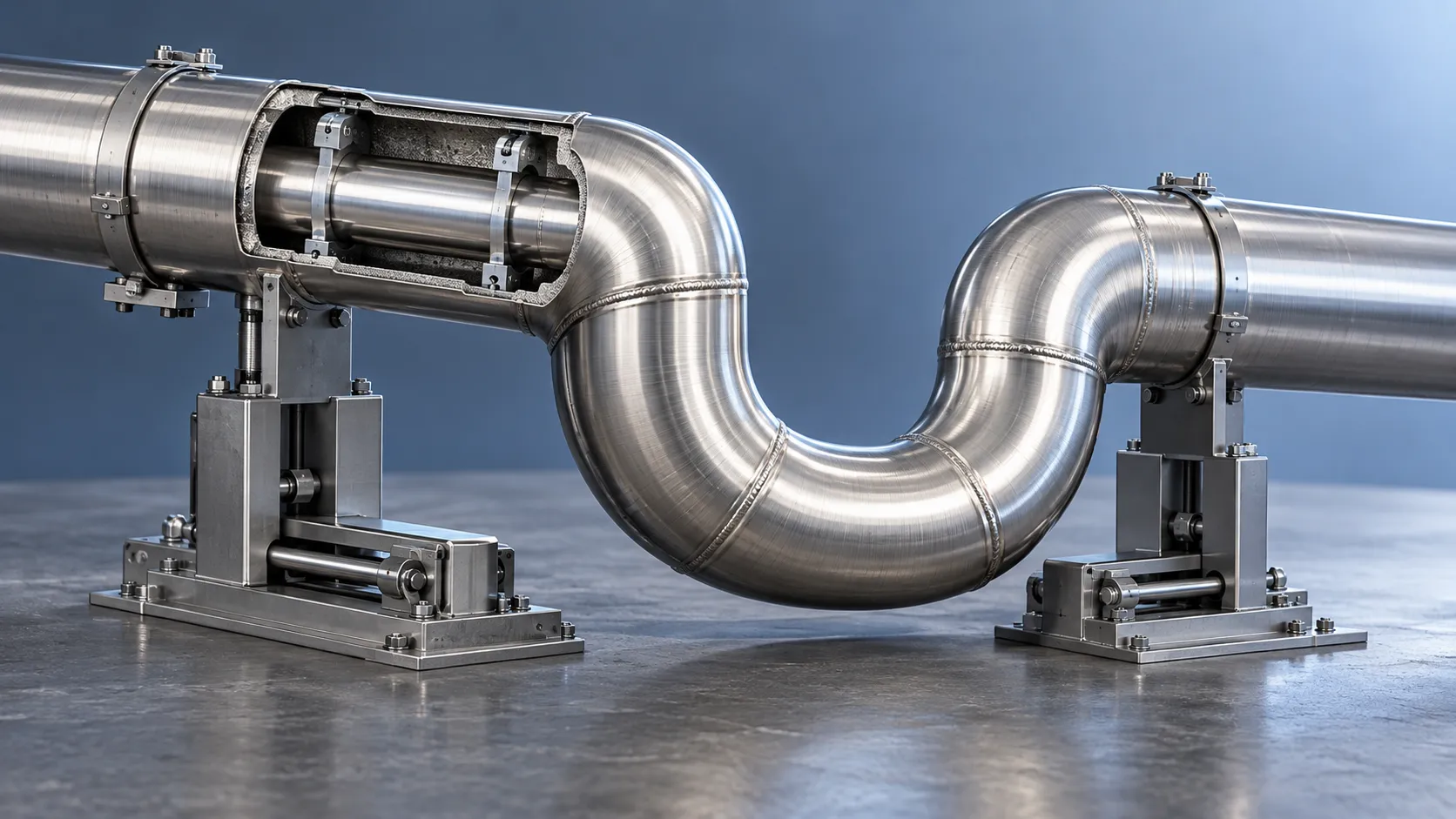
How does a rigid cryogenic transfer line handle thermal contraction?
Learn how a rigid cryogenic transfer line manages thermal contraction with bends, bellows, and guided supports. Discover key design checks for safe, reliable cryogenic performance.

How much does edge vision deployment cost beyond the hardware?
Understand edge vision deployment cost beyond hardware, from data and integration to security and support. Uncover hidden expenses and build a smarter lifecycle budget before you scale.

How does the purity of sputtering targets affect thin-film quality?
Discover how sputtering targets affect thin-film quality. Learn to assess purity, identify harmful impurities, and choose specifications that improve coating performance.

How high power laser cladding systems control substrate dilution
Discover how high power laser cladding systems control substrate dilution through beam shaping, material feed, and thermal management to deliver reliable bonds and coating performance.

How to check HS codes for customs compliance in international logistics
Strengthen international logistics customs compliance: learn how to verify HS codes, check official tariffs, and document classifications to reduce costly shipment delays.

Choosing a 3D Printing Service for Consumer Products: Finish, Fit, and Cost
Compare 3d printing consumer good services by finish, fit, materials, and total cost. Learn how to choose a reliable supplier and avoid costly defects before ordering.

Which Consumer Goods Can Be 3D Printed, and What Are the Practical Limits?
Explore 3d printing consumer goods, from custom eyewear to replacement parts. Discover practical limits on materials, safety, and costs to make smarter production decisions.

From Prototype to Small Batch: Applying 3D Printing to Consumer Goods
Explore 3d printing in consumer goods: learn how to move from prototype to small-batch production with practical guidance on materials, quality validation, and cost control.
Related News
- 00
0000-00
How to verify part consistency before choosing a 3D printing OEM - 00
0000-00
How does a rigid cryogenic transfer line handle thermal contraction? - 00
0000-00
How much does edge vision deployment cost beyond the hardware? - 00
0000-00
How does the purity of sputtering targets affect thin-film quality? - 00
0000-00
How high power laser cladding systems control substrate dilution
Dr. Hideo Tanaka
Weekly Insights
Stay ahead with our curated technology reports delivered every Monday.