
Manufacturing Market Updates: Risks to Watch


Manufacturing Market Updates: Risks to Watch Across Industrial Scenarios
As global supply chains recalibrate around advanced materials, precision automation, export controls, and capital-intensive production systems, manufacturing market updates are becoming essential risk signals for enterprise decision-makers.
From industrial laser processing and additive manufacturing to machine vision, graphene applications, and vacuum engineering, competitiveness depends on reading technical and regulatory shifts early.
The most useful manufacturing market updates do not only describe demand growth. They reveal where reliability, compliance, capacity, and investment exposure may change next.
Scenario Background: Why Manufacturing Market Updates Now Carry Higher Strategic Value
Industrial decision cycles are no longer driven by price alone. Technical validation, export permissions, energy availability, and qualified suppliers increasingly shape production continuity.
This makes manufacturing market updates valuable across different operational scenarios. Each scenario has distinct risk triggers, lead-time pressures, and capital consequences.
A laser welding line, a metal additive facility, and a vacuum chamber project may face different constraints. Yet all depend on trusted market intelligence.
G-AIT tracks these intersections through technical benchmarking, standards alignment, export control monitoring, tender intelligence, and patent landscape analysis.
Effective manufacturing market updates should connect market movement with engineering readiness. Otherwise, promising opportunities may hide operational fragility.
Scenario 1: Industrial Laser Processing Capacity Expansion
Laser processing projects are sensitive to optics quality, power stability, beam control, cooling systems, and automation integration.
Manufacturing market updates in this scenario should highlight component shortages, multi-kilowatt fiber laser pricing, and certification requirements for high-power systems.
The core judgment point is not whether laser demand is rising. It is whether validated performance can scale without downtime.
Risks often appear in beam delivery modules, protective windows, precision motion platforms, and industrial safety compliance.
Manufacturing market updates should also track regional substitution trends. Localized sourcing may reduce exposure, but it can increase validation workload.
Scenario 2: Additive Manufacturing for Metal Parts and Tooling
Additive manufacturing shifts risk from conventional tooling to powder quality, machine repeatability, process parameters, and post-processing capacity.
Manufacturing market updates should monitor metal powder availability, ASTM-related qualification trends, and demand from aerospace, medical, automotive, and energy applications.
A frequent mistake is treating 3D printing as a direct replacement for traditional machining. The real scenario is hybrid production planning.
Risk increases when build size, surface finish, fatigue properties, and heat treatment are not evaluated together.
Reliable manufacturing market updates should connect printer capacity with powder traceability, nondestructive testing, and part qualification timelines.
Scenario 3: Machine Vision and Optical Inspection Upgrades
Machine vision investments are rising as production lines require faster inspection, lower defect leakage, and better traceability.
In this scenario, manufacturing market updates should track sensors, lenses, illumination modules, AI inspection software, and 3D metrology platforms.
The key question is whether inspection accuracy remains stable under real factory lighting, vibration, dust, and temperature variation.
Market growth alone is insufficient. Compatibility with PLCs, MES platforms, robotics, and data governance rules must be assessed.
Manufacturing market updates become more useful when they identify where AI models require retraining, validation datasets, and audit-ready performance records.
Scenario 4: Graphene and Nano-Materials Moving Toward Industrial Use
Graphene and nano-material applications promise conductivity, thermal management, mechanical reinforcement, and lightweight design advantages.
However, manufacturing market updates must distinguish laboratory performance from repeatable industrial production.
Critical risks include dispersion stability, batch consistency, contamination control, regulatory classification, and compatibility with existing production chemistry.
For batteries, coatings, polymers, sensors, and thermal interfaces, small material variations can produce large performance differences.
High-value manufacturing market updates should compare patent activity, pilot-line evidence, and third-party characterization results.
Scenario 5: Vacuum and Cryogenic Engineering Under Supply Pressure
Vacuum and cryogenic systems support semiconductor tools, quantum technologies, space simulation, advanced coating, and scientific infrastructure.
Manufacturing market updates in this field should cover UHV chambers, cryopumps, valves, gauges, leak detection, and clean welding capacity.
Risks often emerge from specialty alloys, precision machining slots, helium availability, and extended acceptance testing.
A project can appear financially approved while still being exposed to months of technical delay.
Useful manufacturing market updates should flag long-lead components and standards-linked documentation gaps before purchase commitments harden.
Different Scenario Needs: What to Compare Before Acting
This comparison shows why manufacturing market updates must be interpreted by scenario. A single growth forecast rarely supports capital decisions.
The same supplier can be strong in one context and unsuitable in another. Technical fit matters as much as commercial availability.
Scenario Adaptation: Practical Actions for Risk Control
- Map manufacturing market updates to specific production bottlenecks, not broad category headlines.
- Benchmark equipment and materials against ISO, SEMI, IEEE, ASTM, or relevant internal standards.
- Track export controls before finalizing sourcing regions, spare parts plans, or software dependencies.
- Separate proven production data from pilot claims, especially in advanced materials and additive processes.
- Review tender activity and patent movement to identify capacity pressure before pricing changes accelerate.
Manufacturing market updates should feed a living risk register. Each update should change a forecast, supplier score, or validation priority.
Without that discipline, intelligence becomes reading material rather than an operational control mechanism.
Common Misjudgments Hidden in Manufacturing Market Updates
Mistaking demand growth for implementation readiness
Strong demand does not guarantee qualified suppliers, trained technicians, or validated process windows.
Manufacturing market updates must be checked against installation capacity, service coverage, and acceptance criteria.
Ignoring regulatory timing
Export controls, restricted technologies, and documentation rules can alter supply options faster than technical roadmaps.
This is especially important for lasers, semiconductor-related vacuum tools, AI inspection software, and advanced materials.
Overlooking qualification cost
A lower equipment price can be offset by testing, rework, training, downtime, and additional certification work.
The best manufacturing market updates include total risk cost, not only headline purchasing cost.
Assuming local substitution is immediate
Regional alternatives can improve resilience, but qualification cycles may be long and technically demanding.
Substitution planning should include sample testing, documentation review, failure analysis, and backup source development.
Risk Signals Worth Monitoring in the Next Market Cycle
Several indicators deserve close attention as advanced manufacturing systems become more connected and specialized.
- Rising lead times for precision optics, sensors, cryogenic components, and specialty powders.
- New export control language affecting lasers, AI systems, vacuum tools, or advanced materials.
- Patent clustering around process control, defect detection, material modification, or thermal management.
- Tender spikes in semiconductor, aerospace, energy storage, and high-end equipment ecosystems.
- Changes in international standards that alter testing, traceability, or documentation expectations.
When these signals move together, manufacturing market updates become early warnings rather than retrospective summaries.
The strongest intelligence programs link market monitoring with engineering review and supplier validation.
Action Guide: Turning Manufacturing Market Updates Into Decisions
Begin by defining the production scenario. Then identify the technical variables most likely to delay output, qualification, or regulatory clearance.
Next, align manufacturing market updates with measurable decision gates. Examples include supplier approval, pilot completion, tender participation, or technology substitution.
Use G-AIT-style benchmarking to compare systems, materials, and suppliers against international standards and verified performance evidence.
Finally, review updates on a fixed cadence. Fast-changing sectors require continuous monitoring, not occasional market summaries.
Manufacturing market updates are most valuable when they reduce uncertainty before capital, sourcing, or engineering commitments become difficult to reverse.
The practical next step is to build a scenario-based watchlist covering technology readiness, supplier resilience, compliance exposure, and qualification cost.
With disciplined monitoring, manufacturing market updates can support stronger continuity planning and more confident industrial investment decisions.
Related News

How to verify part consistency before choosing a 3D printing OEM
Choosing a 3D printing OEM? Learn how to verify part consistency with repeat-build trials, validated inspections, and traceability checks before committing to production.

How does a rigid cryogenic transfer line handle thermal contraction?
Learn how a rigid cryogenic transfer line manages thermal contraction with bends, bellows, and guided supports. Discover key design checks for safe, reliable cryogenic performance.

How much does edge vision deployment cost beyond the hardware?
Understand edge vision deployment cost beyond hardware, from data and integration to security and support. Uncover hidden expenses and build a smarter lifecycle budget before you scale.

How does the purity of sputtering targets affect thin-film quality?
Discover how sputtering targets affect thin-film quality. Learn to assess purity, identify harmful impurities, and choose specifications that improve coating performance.

How high power laser cladding systems control substrate dilution
Discover how high power laser cladding systems control substrate dilution through beam shaping, material feed, and thermal management to deliver reliable bonds and coating performance.

How to check HS codes for customs compliance in international logistics
Strengthen international logistics customs compliance: learn how to verify HS codes, check official tariffs, and document classifications to reduce costly shipment delays.
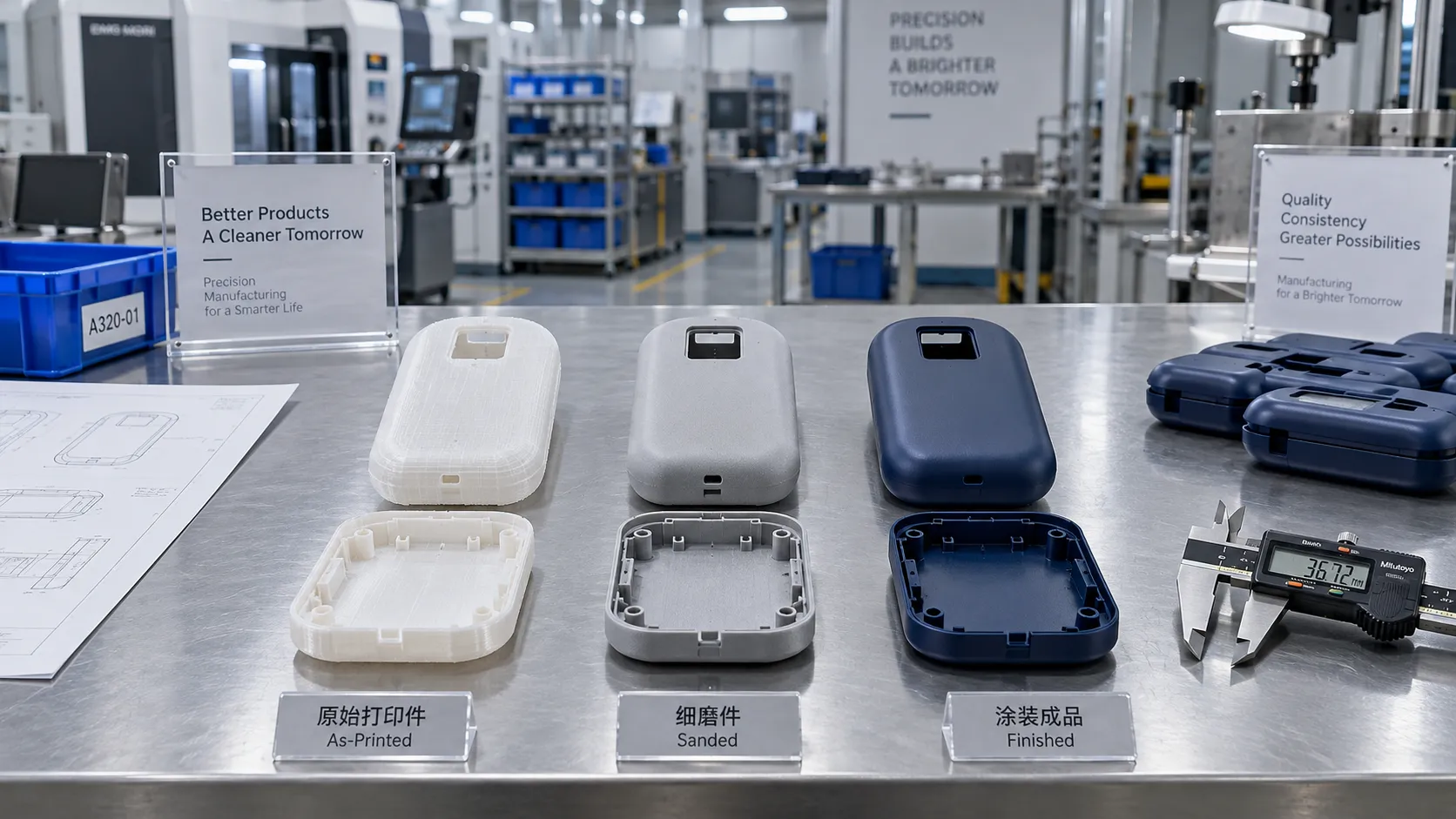
Choosing a 3D Printing Service for Consumer Products: Finish, Fit, and Cost
Compare 3d printing consumer good services by finish, fit, materials, and total cost. Learn how to choose a reliable supplier and avoid costly defects before ordering.
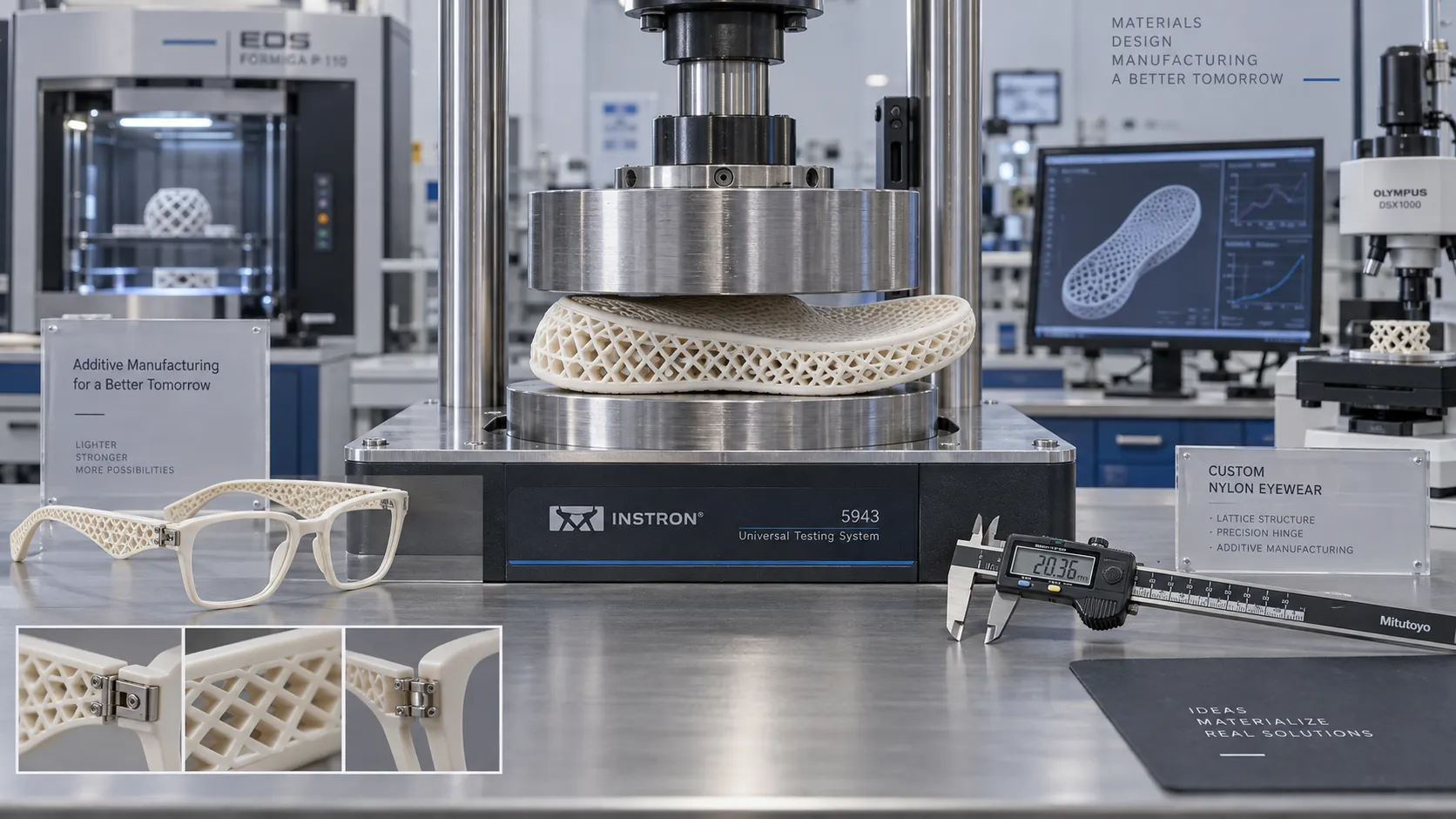
Which Consumer Goods Can Be 3D Printed, and What Are the Practical Limits?
Explore 3d printing consumer goods, from custom eyewear to replacement parts. Discover practical limits on materials, safety, and costs to make smarter production decisions.

From Prototype to Small Batch: Applying 3D Printing to Consumer Goods
Explore 3d printing in consumer goods: learn how to move from prototype to small-batch production with practical guidance on materials, quality validation, and cost control.
Related News
- 00
0000-00
How to verify part consistency before choosing a 3D printing OEM - 00
0000-00
How does a rigid cryogenic transfer line handle thermal contraction? - 00
0000-00
How much does edge vision deployment cost beyond the hardware? - 00
0000-00
How does the purity of sputtering targets affect thin-film quality? - 00
0000-00
How high power laser cladding systems control substrate dilution
Marcus Print
Weekly Insights
Stay ahead with our curated technology reports delivered every Monday.