
Printing Powder Materials: Key Properties That Affect Part Quality

Printing Powder Materials: Key Properties That Affect Part Quality
For technical evaluation, printing powder materials are not just consumables. They directly shape density, tolerances, surface texture, and build consistency.
That is why powder review should sit beside machine capability, parameter settings, and qualification planning. Material behavior often decides whether a process is stable or fragile.
In practice, two powders with the same alloy label can deliver very different results. Small differences in particle shape, fines content, or oxygen pickup can change part quality fast.
This is especially important in metal additive manufacturing, binder jetting, and polymer powder bed fusion. Each process responds to powder properties in a different way.
A structured assessment of printing powder materials helps compare suppliers, reduce trial cycles, and support qualification with evidence instead of assumptions.
Why Printing Powder Materials Matter So Early
Part quality starts before the first layer is spread. It starts with powder consistency, handling history, and the way the material reacts under process energy.
If the powder does not spread evenly, the build already carries risk. Uneven layers can lead to porosity, lack of fusion, rough surfaces, and dimensional drift.
More importantly, printing powder materials influence repeatability. A single good build proves little if the next batch behaves differently under the same settings.
From a sourcing standpoint, this means the material specification must go beyond chemistry alone. A robust buying decision requires particle metrics, contamination limits, and reuse guidance.
Particle Size Distribution and Layer Uniformity
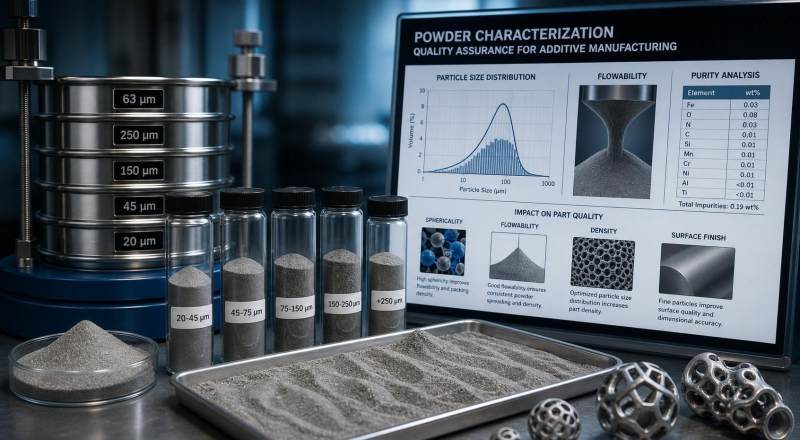
Particle size distribution is one of the first checkpoints for printing powder materials. It strongly affects packing density, recoating behavior, and feature resolution.
A narrow distribution can improve process control. However, if it is too narrow, packing may become less efficient and flow can become less predictable.
A broader distribution can increase packing density because smaller particles fill gaps. But excess fines often raise cohesion and make spreading more difficult.
In real builds, that tradeoff shows up as either smooth layer deposition or streaking and agglomeration. Both outcomes affect dimensional accuracy and density.
- Large particles can reduce detail and increase roughness.
- Too many fines can reduce flowability and increase spatter sensitivity.
- Poor distribution control can shift recoater load and layer thickness stability.
When reviewing supplier data, D10, D50, and D90 values are useful. Still, they are not enough on their own. Distribution shape matters just as much.
Particle Shape, Morphology, and Flowability
Flowability is a core performance indicator for printing powder materials. If the powder cannot spread into stable layers, quality control becomes reactive instead of preventive.
Spherical particles usually flow better than irregular ones. That is why gas-atomized powders are often preferred for high-performance powder bed systems.
Irregular morphology can increase friction and interlocking. It may also create local defects in the powder bed, especially at thin layers or high scan speeds.
Satellites are another warning sign. These small particles attached to larger ones can weaken flow consistency and alter local melting behavior.
Common flow tests include Hall flow, Carney flow, angle of repose, and apparent density. For technical review, it is better to compare several indicators together.
What Good Flowability Supports
- Stable layer thickness across the build area
- Lower risk of voids caused by poor spreading
- More predictable energy absorption
- Better repeatability across batches and reuse cycles
Purity, Chemistry, and Contamination Risk
Chemical composition defines baseline performance, but purity often decides whether printing powder materials remain within qualification limits after handling and reuse.
Oxygen, nitrogen, hydrogen, and foreign metallic contamination can shift mechanical properties. In sensitive alloys, even small changes can reduce ductility or fatigue life.
This matters most in aerospace, medical, and energy applications. There, part quality is tied to traceability, lot control, and evidence of stable powder chemistry.
Contamination does not come only from the supplier. It can enter through sieving, transport, storage containers, or mixing virgin and reused powder without controls.
A practical review should ask for chemistry certificates, test methods, and acceptable drift limits after repeated use. That gives a more realistic view of production behavior.
Moisture Sensitivity and Storage Stability
Moisture is one of the most underestimated risks in printing powder materials. It can reduce flowability, increase clumping, and affect melt pool stability.
For some powders, moisture also raises oxidation risk during storage. For polymers, it can influence sintering response and dimensional consistency.
In business terms, moisture sensitivity affects warehouse practice, packaging requirements, and incoming inspection. These are not secondary issues. They are quality controls.
Look for supplier guidance on sealed packaging, desiccant use, allowable exposure time, and reconditioning methods. Without those details, comparison remains incomplete.
Bulk Density, Packing, and Final Part Density
Bulk density and tap density help explain how printing powder materials pack before melting or binding. Better packing often supports higher final density and lower porosity.
Still, high packing alone does not guarantee good parts. If flow is poor or contamination is high, part quality can still fall below target.
This is why powder evaluation should treat density metrics as part of a system. Flowability, size distribution, and chemistry must be reviewed together.
Reuse Behavior and Lot-to-Lot Consistency
Many production teams do not run only virgin powder. They blend reused material to manage cost, availability, and waste.
That makes reuse behavior a major part of printing powder materials evaluation. Some powders remain stable across cycles. Others degrade quickly.
Typical changes include oxygen increase, particle coarsening, loss of fines balance, and reduced flowability. These changes can quietly reduce part quality over time.
Lot-to-lot consistency is equally important. A qualified process cannot depend on a single good batch. It needs controlled variation over repeated deliveries.
For that reason, supplier assessment should include historical consistency data, not only a current certificate of analysis.
Standards and Evaluation Questions That Matter
Printing powder materials should be reviewed against recognized methods whenever possible. Standards improve comparability and reduce ambiguity during qualification.
Depending on the process, useful references may include ISO, ASTM, and internal OEM specifications. The key is consistent testing, not standards language alone.
Key Questions for Supplier Comparison
- What is the full particle size distribution, not only the average?
- How is morphology verified, and how often is it checked?
- What are the impurity limits and analytical methods?
- How does the powder perform after reuse and sieving?
- What packaging and storage controls are required?
- Is there lot-to-lot capability data across commercial supply?
These questions move the review from marketing claims to measurable risk. That is where technical decisions become more reliable.
How to Make Printing Powder Materials Decisions More Reliable
A solid evaluation process connects powder data to real part outcomes. That means linking incoming material checks with density results, roughness data, and defect trends.
The most useful approach is practical and repeatable:
- Define critical powder properties by process and application.
- Require matched test methods across candidate suppliers.
- Validate virgin and reused powder separately.
- Track lot variation against final part quality metrics.
- Include storage and handling controls in qualification.
Printing powder materials have a direct, measurable effect on process stability and qualification confidence. Better decisions come from treating powder as a controlled engineering variable, not a background commodity.
When powder assessment is disciplined, supplier comparison becomes clearer, production risk drops, and part quality becomes far easier to defend with data.
Related News
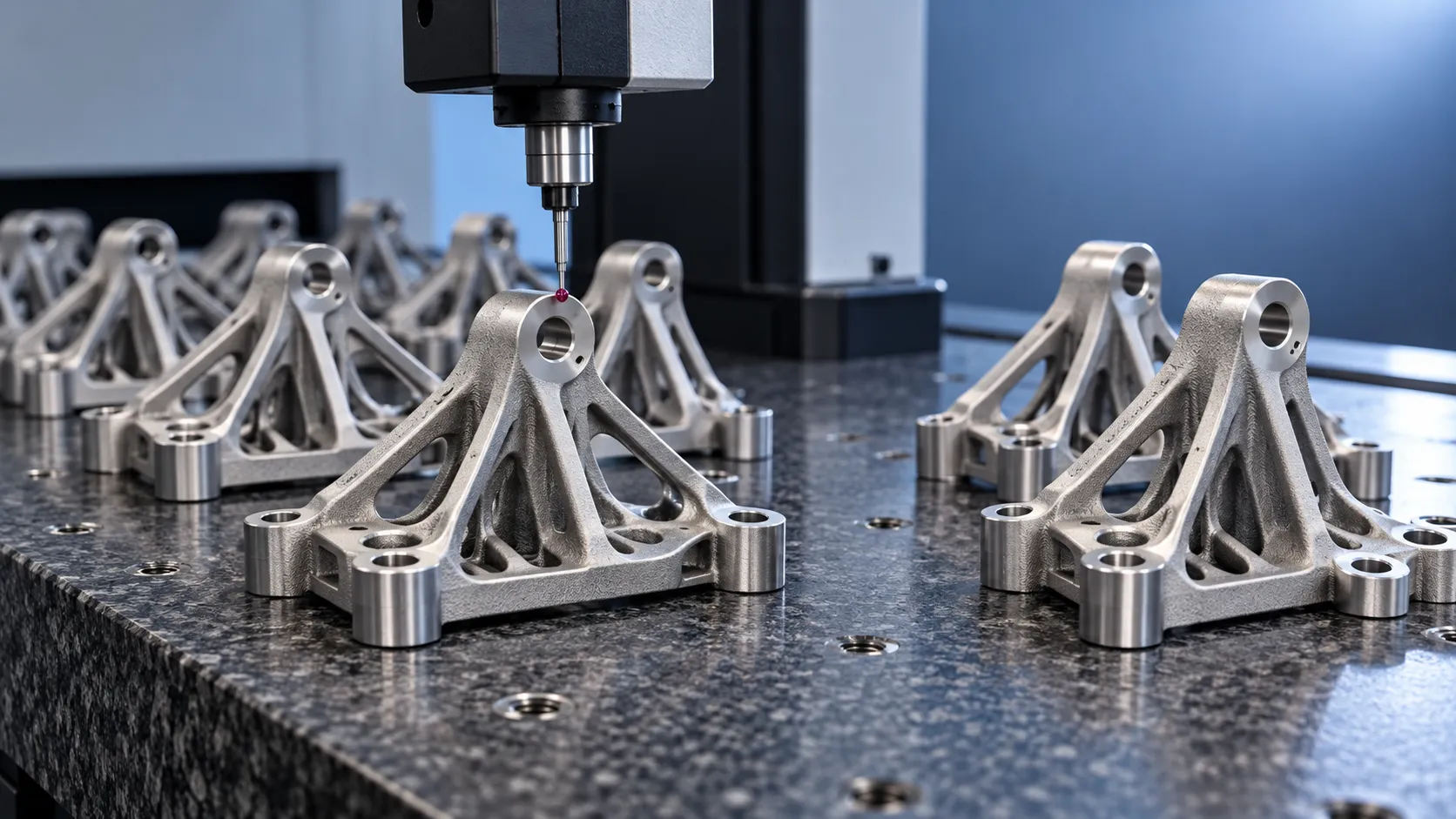
How to verify part consistency before choosing a 3D printing OEM
Choosing a 3D printing OEM? Learn how to verify part consistency with repeat-build trials, validated inspections, and traceability checks before committing to production.
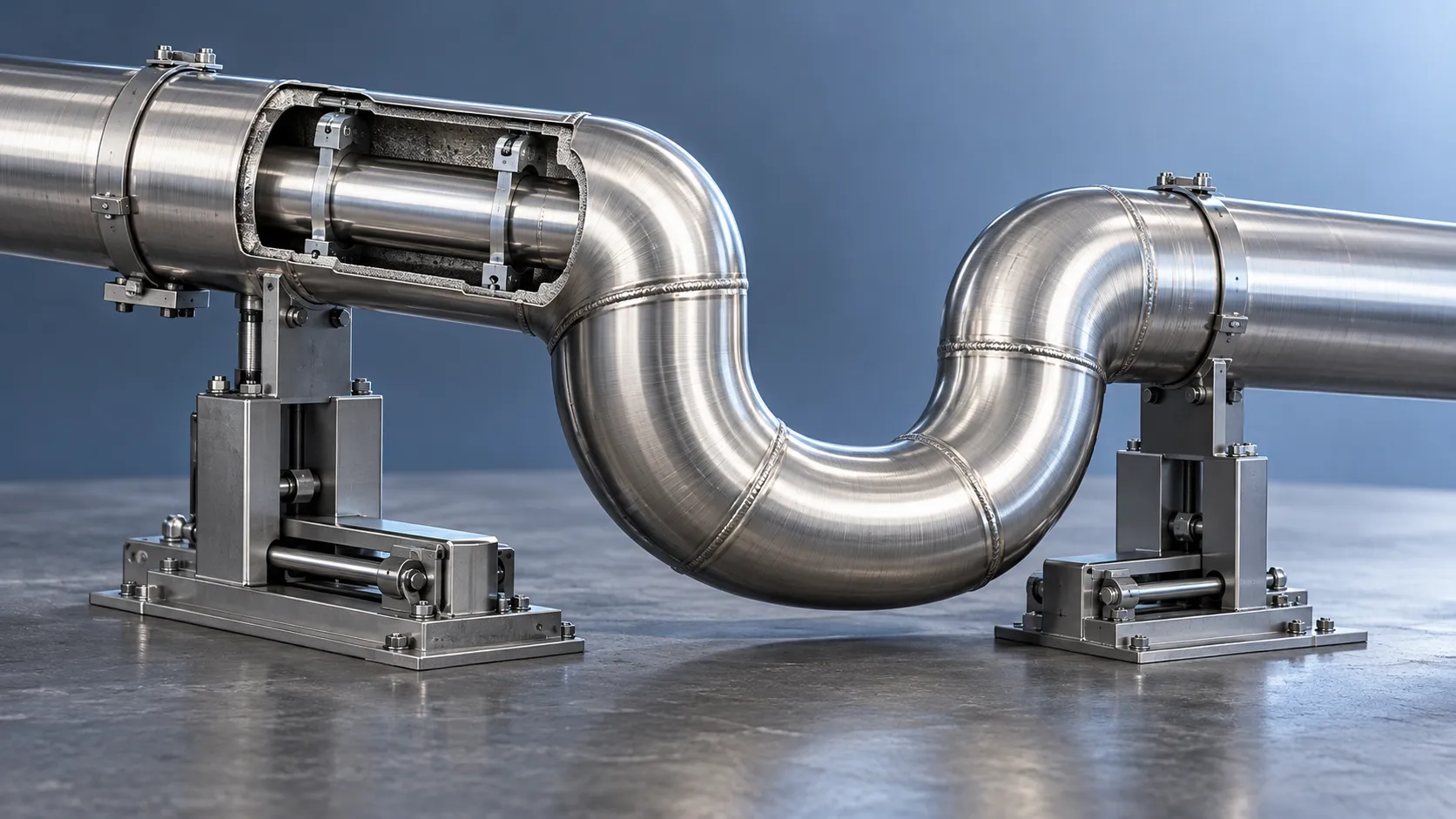
How does a rigid cryogenic transfer line handle thermal contraction?
Learn how a rigid cryogenic transfer line manages thermal contraction with bends, bellows, and guided supports. Discover key design checks for safe, reliable cryogenic performance.
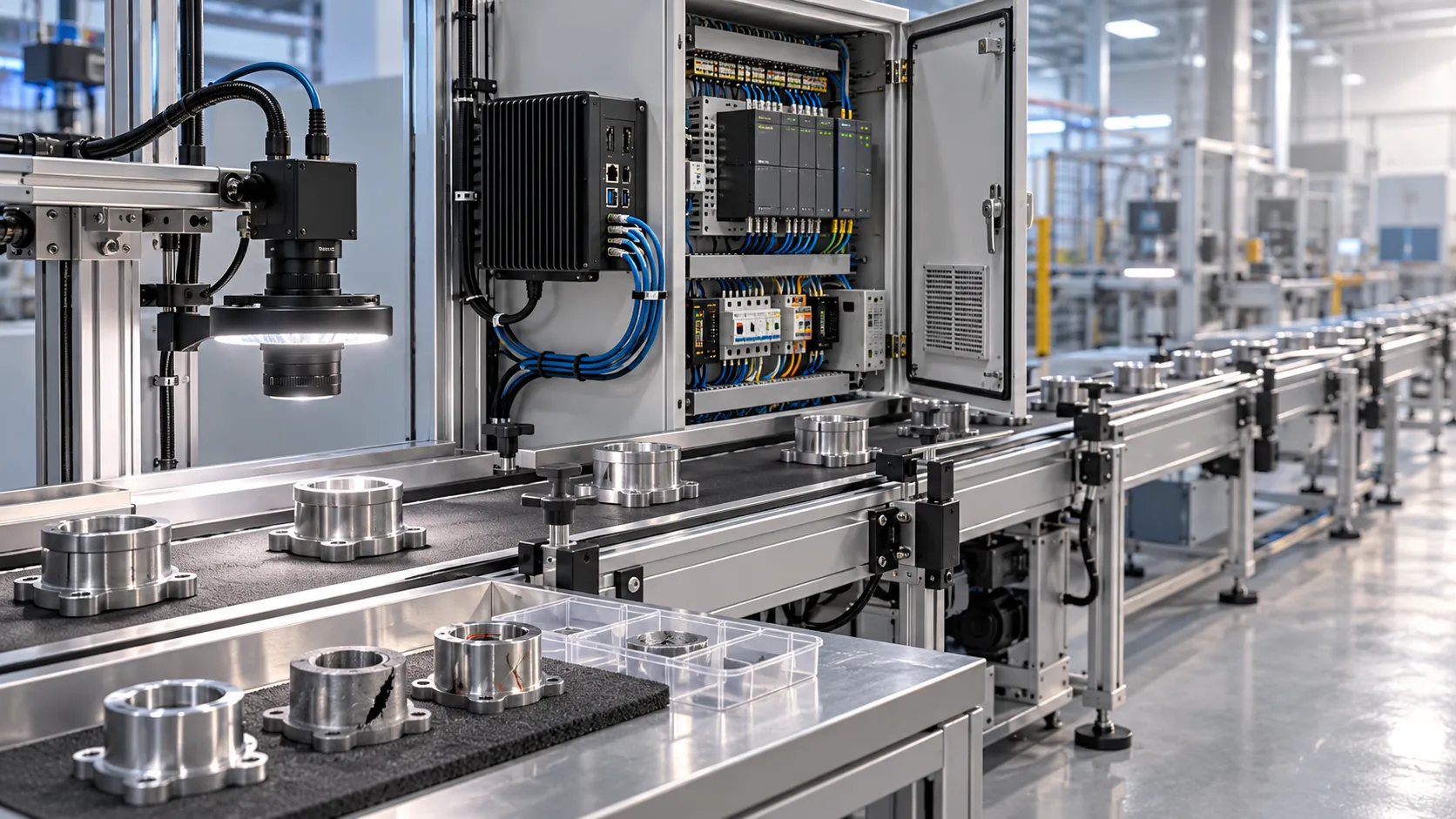
How much does edge vision deployment cost beyond the hardware?
Understand edge vision deployment cost beyond hardware, from data and integration to security and support. Uncover hidden expenses and build a smarter lifecycle budget before you scale.
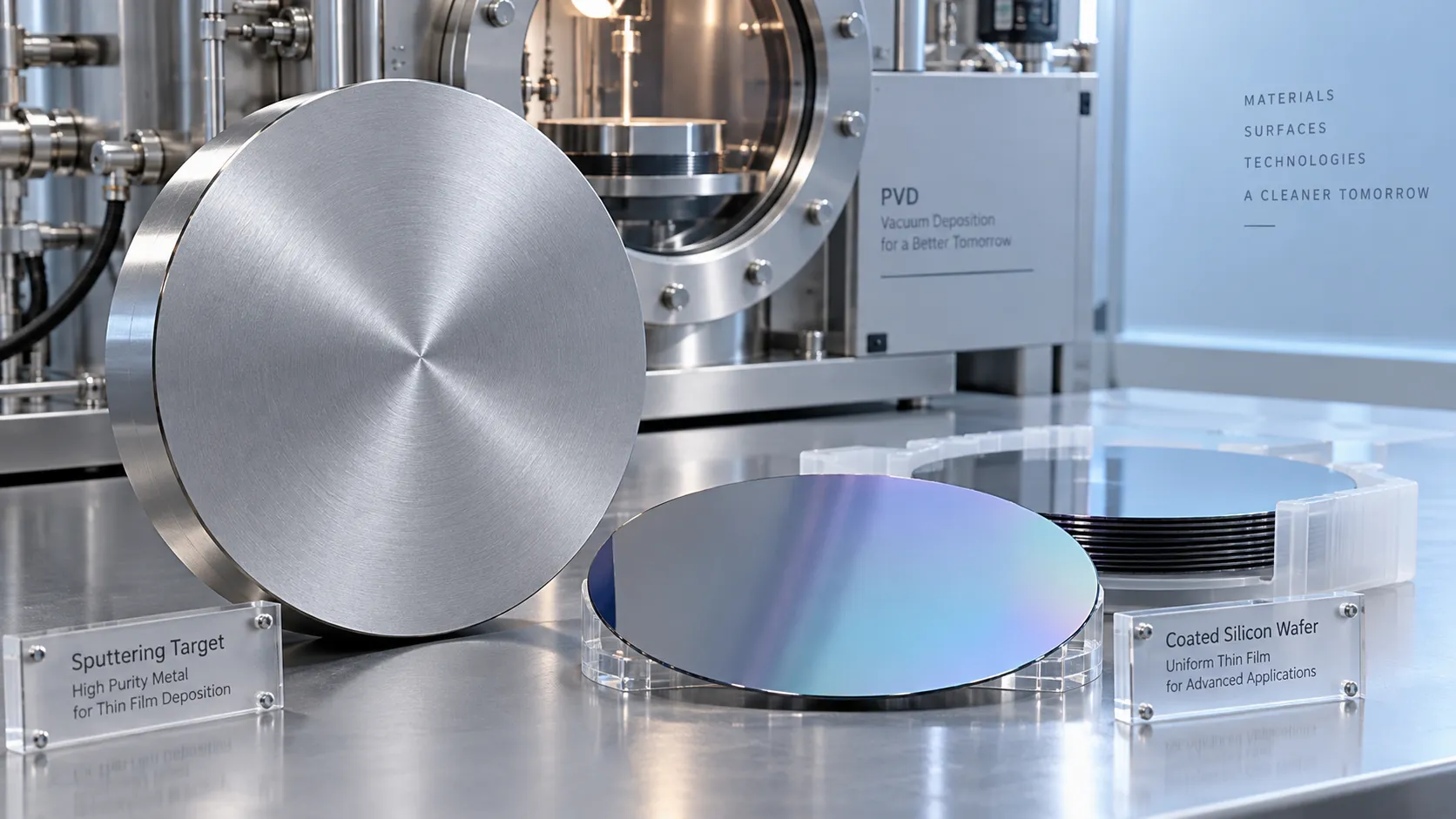
How does the purity of sputtering targets affect thin-film quality?
Discover how sputtering targets affect thin-film quality. Learn to assess purity, identify harmful impurities, and choose specifications that improve coating performance.
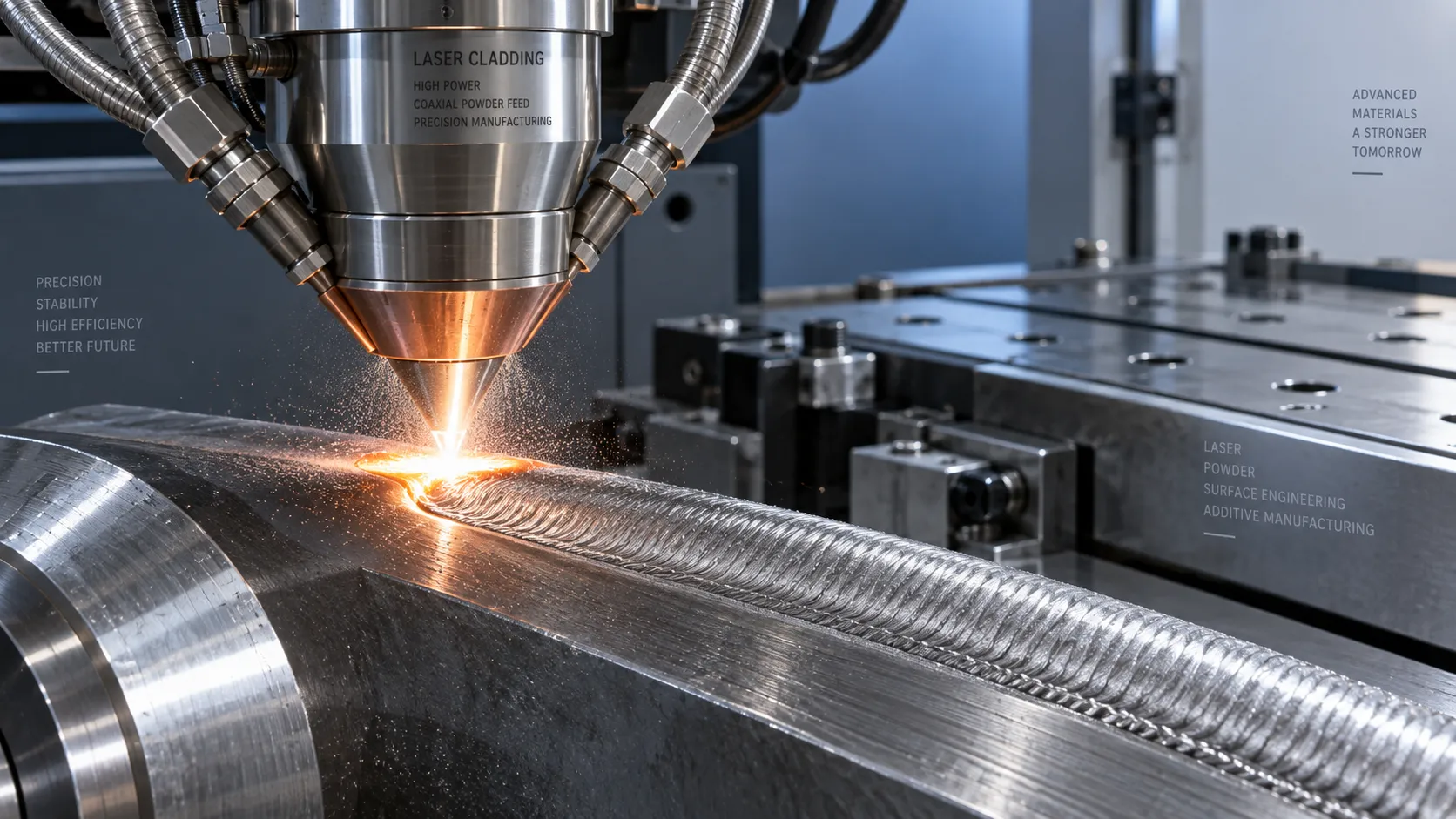
How high power laser cladding systems control substrate dilution
Discover how high power laser cladding systems control substrate dilution through beam shaping, material feed, and thermal management to deliver reliable bonds and coating performance.

How to check HS codes for customs compliance in international logistics
Strengthen international logistics customs compliance: learn how to verify HS codes, check official tariffs, and document classifications to reduce costly shipment delays.
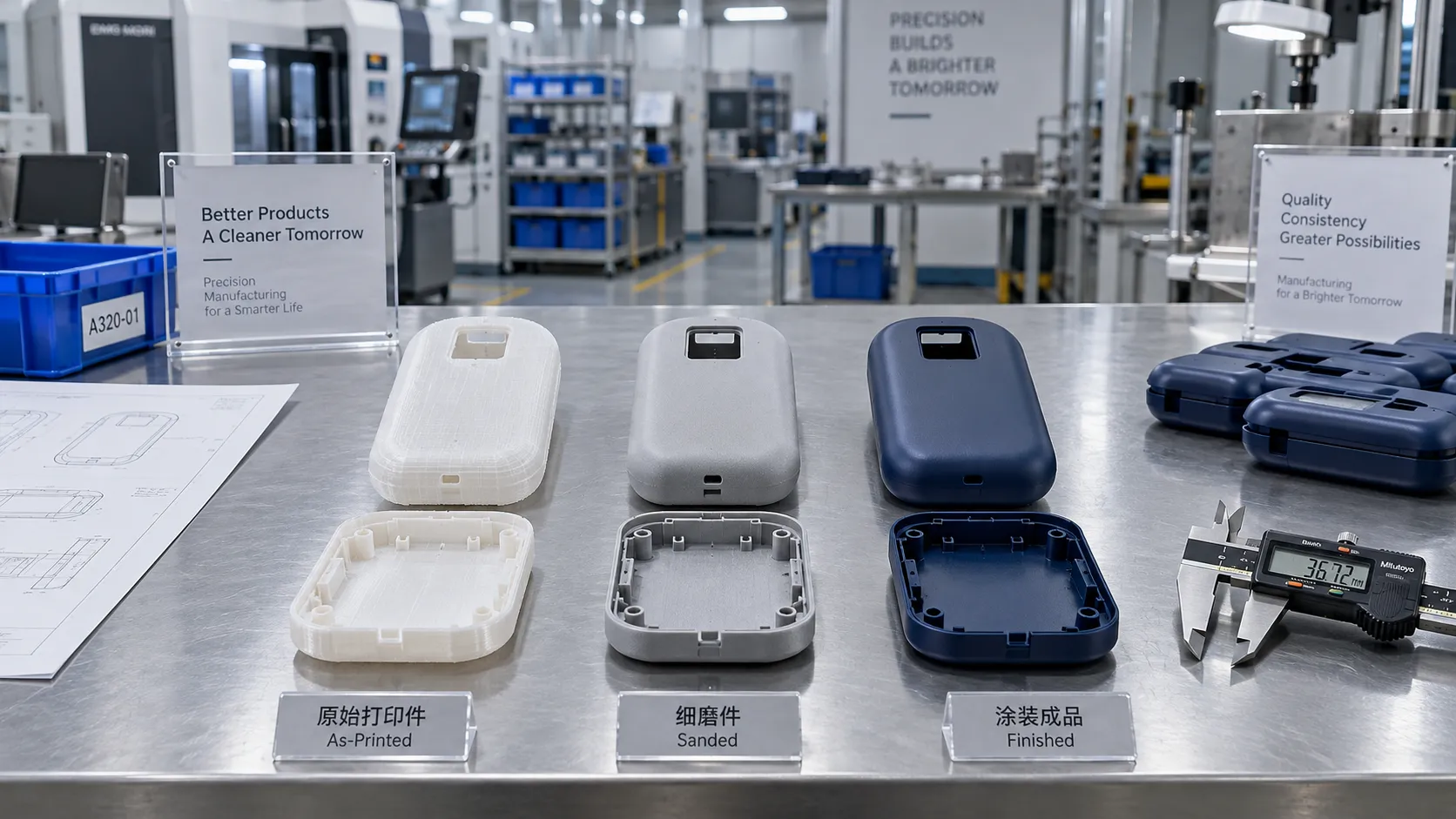
Choosing a 3D Printing Service for Consumer Products: Finish, Fit, and Cost
Compare 3d printing consumer good services by finish, fit, materials, and total cost. Learn how to choose a reliable supplier and avoid costly defects before ordering.
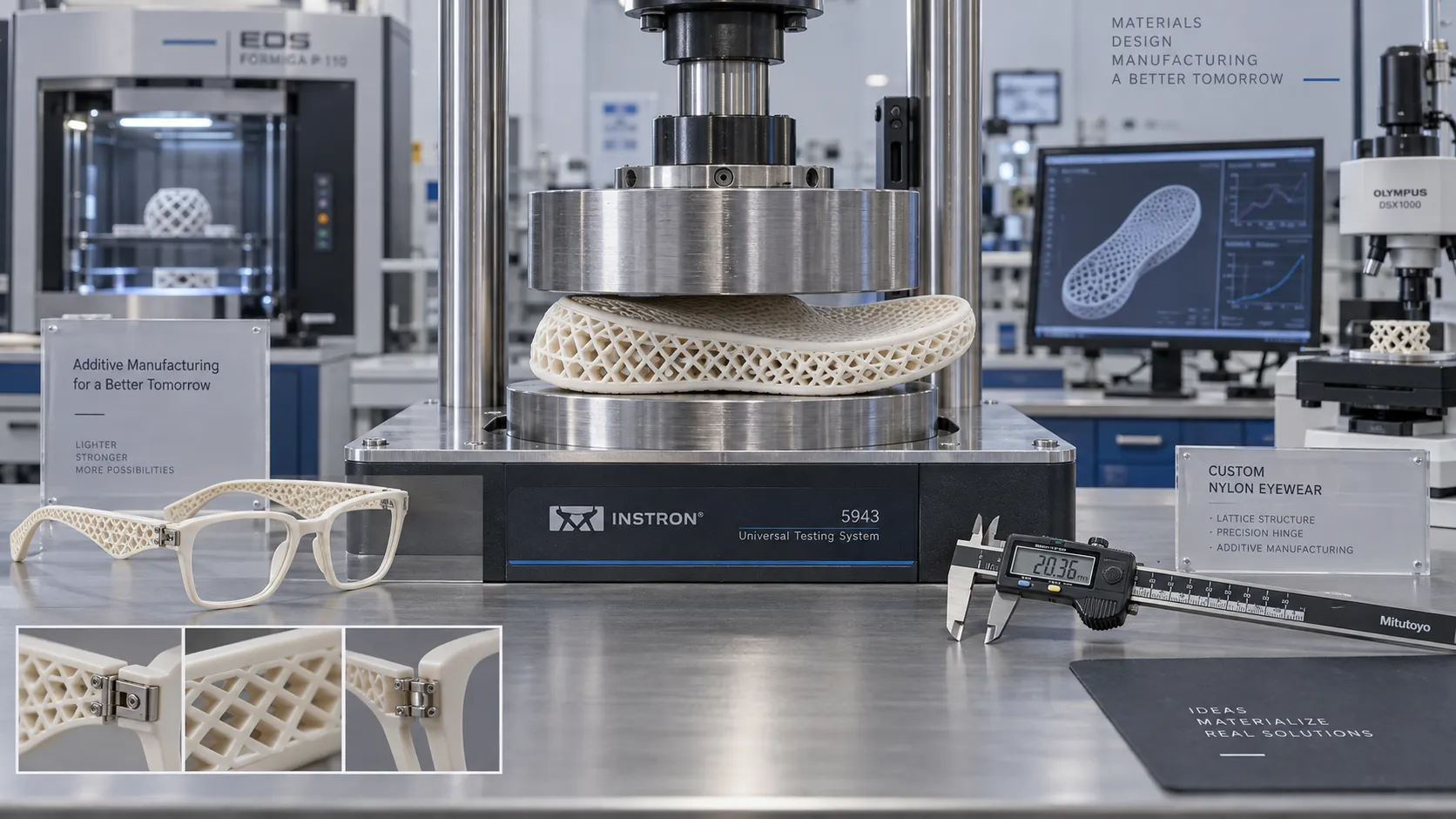
Which Consumer Goods Can Be 3D Printed, and What Are the Practical Limits?
Explore 3d printing consumer goods, from custom eyewear to replacement parts. Discover practical limits on materials, safety, and costs to make smarter production decisions.
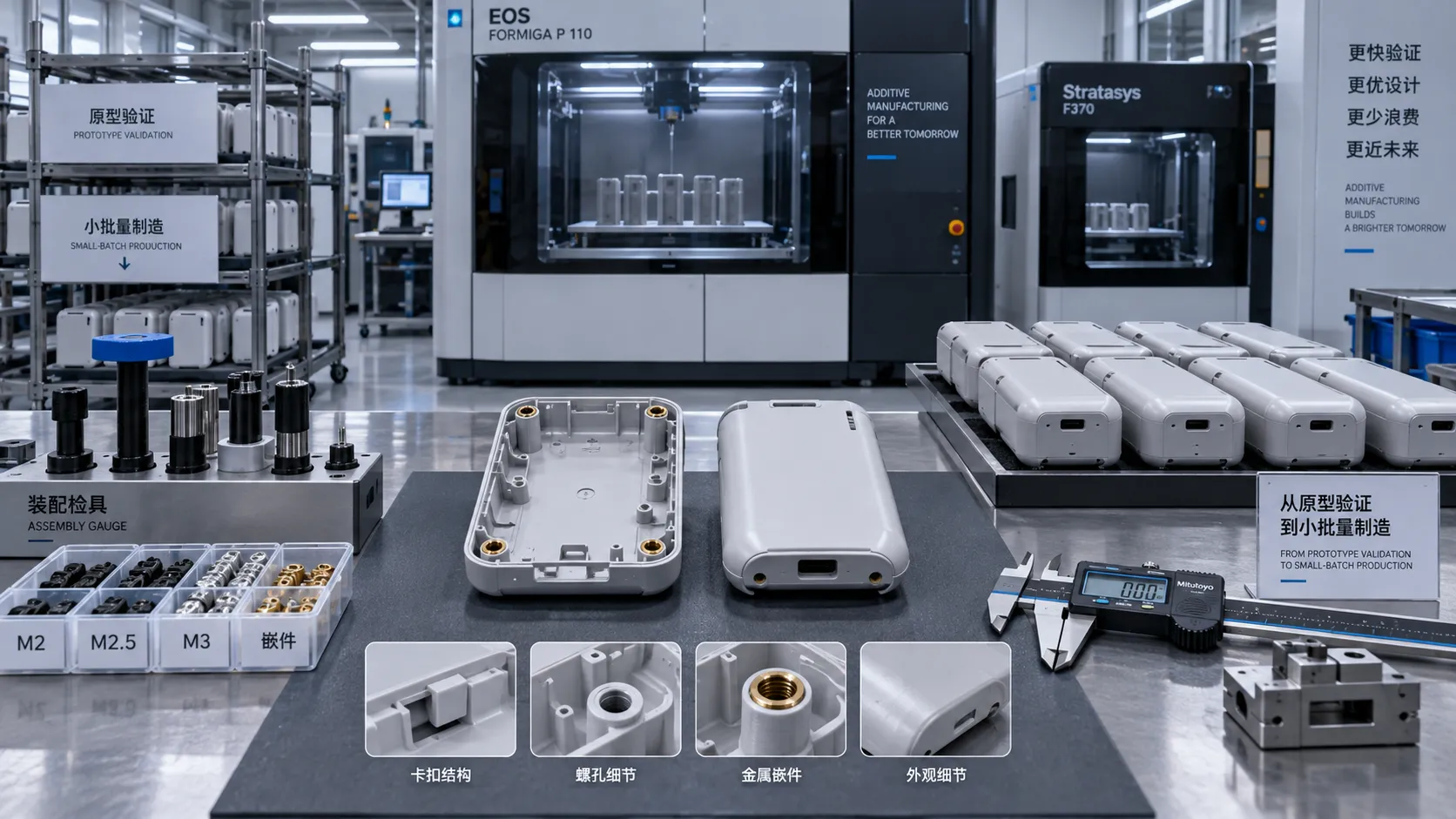
From Prototype to Small Batch: Applying 3D Printing to Consumer Goods
Explore 3d printing in consumer goods: learn how to move from prototype to small-batch production with practical guidance on materials, quality validation, and cost control.
Related News
- 00
0000-00
How to verify part consistency before choosing a 3D printing OEM - 00
0000-00
How does a rigid cryogenic transfer line handle thermal contraction? - 00
0000-00
How much does edge vision deployment cost beyond the hardware? - 00
0000-00
How does the purity of sputtering targets affect thin-film quality? - 00
0000-00
How high power laser cladding systems control substrate dilution
Marcus Print
Weekly Insights
Stay ahead with our curated technology reports delivered every Monday.