
How to Evaluate Global Trade Risk in 2026


In 2026, geopolitical shifts, export controls, and supply chain volatility are reshaping how enterprises make cross-border decisions. A strong global trade risk assessment helps business leaders identify hidden exposure, protect procurement continuity, and respond faster to regulatory change. For decision-makers navigating complex industrial markets, understanding trade risk is no longer optional—it is a strategic requirement for resilient global growth.
For most enterprise leaders, the core question is not whether trade risk exists, but how to evaluate it early enough to protect revenue, sourcing, and market access. The real search intent behind global trade risk assessment is practical: leaders want a decision framework they can apply to suppliers, countries, contracts, technologies, and future investments.
Decision-makers also care less about abstract definitions and more about exposure visibility. They need to know where disruption is most likely, which signals matter, how to prioritize action, and how to turn risk intelligence into faster procurement, compliance, and capital allocation decisions.
In 2026, an effective evaluation model must go beyond tariffs and shipping delays. It must include export controls, sanctions exposure, technology transfer restrictions, customs friction, financial counterparty risk, logistics concentration, and supplier resilience across strategic industrial categories.
Why Global Trade Risk Assessment Has Become a Board-Level Issue in 2026
Global trade risk now affects more than procurement teams. It directly influences production uptime, bid competitiveness, regulatory liability, customer commitments, and investor confidence. That is why enterprise boards increasingly treat trade risk as part of operational resilience, not just international commerce.
For industrial and technology-driven businesses, the stakes are especially high. Advanced equipment, engineered materials, optical systems, additive manufacturing platforms, vacuum subsystems, and semiconductor-linked components are all exposed to changing export rules and cross-border approval requirements.
Many companies still rely on fragmented monitoring. One team tracks suppliers, another checks sanctions, and another watches freight costs. This creates blind spots. A modern global trade risk assessment connects those signals into one decision picture so management can act before disruption becomes expensive.
The strongest programs do not aim to eliminate uncertainty. They aim to reduce surprise, quantify exposure, and create response options. That shift alone can improve sourcing continuity, shorten internal escalations, and support more confident market expansion decisions.
What Enterprise Decision-Makers Most Need to Evaluate
Business leaders usually want to answer five questions. First, where are we exposed today? Second, which risks are rising fastest? Third, which suppliers or markets are most vulnerable? Fourth, what is the financial impact if disruption occurs? Fifth, what actions are worth funding now?
These questions matter because not every trade risk deserves the same response. A delayed customs clearance may require process improvement. A new export control on high-precision components may require supplier redesign, licensing support, contract revision, or regional production changes.
That is why the evaluation process should focus on business consequence, not only risk category. A low-probability issue with severe operational impact may deserve more attention than a frequent but manageable delay. Leaders need prioritization that reflects business reality.
In practical terms, the most useful assessment is one that ranks exposure by revenue dependence, manufacturing criticality, regulatory sensitivity, replacement difficulty, and recovery time. This helps executives move from awareness to resource allocation.
The 7 Risk Domains That Should Be in Every 2026 Assessment
The first domain is geopolitical risk. This includes regional conflict, diplomatic deterioration, trade retaliation, and policy divergence between major economies. Geopolitical shifts often trigger downstream effects long before formal regulation appears in customs systems or supplier contracts.
The second domain is export controls and sanctions. For advanced industrial sectors, this is often the most underestimated risk. Restrictions may apply not only to finished goods, but also to software, subsystems, technical data, dual-use materials, and end-user categories.
The third domain is supply chain concentration. If too much spend, capability, or lead-time dependency sits with one country, one port corridor, or one specialist supplier, the business may be more fragile than standard supplier scorecards suggest.
The fourth domain is logistics and customs reliability. Ocean rerouting, port congestion, air cargo restrictions, documentation errors, and customs inspection variability can all create unplanned inventory pressure and delayed project execution.
The fifth domain is regulatory and standards divergence. Changes in certification rules, technical conformity requirements, environmental reporting, and product traceability standards can delay market entry or increase the compliance cost of cross-border sales.
The sixth domain is financial and counterparty risk. Currency volatility, payment restrictions, insurance cost shifts, and supplier liquidity pressure can all weaken trade performance. A technically capable partner may still become a commercial risk under stress.
The seventh domain is technology and IP exposure. In high-value sectors, collaboration across borders may create risks related to patent sensitivity, data access, licensing, technology transfer controls, and customer restrictions on source-country content.
How to Build a Practical Global Trade Risk Assessment Framework
A useful framework begins with mapping. Identify your critical products, high-dependency suppliers, regulated technologies, key customer commitments, and revenue-linked trade corridors. Without this baseline, trade risk remains too abstract to manage well.
Next, assign exposure dimensions to each critical node. These can include country risk, export licensing sensitivity, supplier substitution difficulty, logistics dependency, payment exposure, and compliance burden. The goal is to make each risk visible in a structured way.
Then score both likelihood and impact. Likelihood should reflect current signals, not historical averages alone. Impact should include lost production, delayed revenue, margin erosion, contractual penalties, compliance liability, and strategic delay in product delivery or installation.
Scenario testing is the most valuable step for executives. Ask what happens if a supplier country becomes restricted, a component requires a new license, a shipping corridor slows by three weeks, or a key customer market adds new certification barriers.
Finally, translate assessment into action tiers. Some risks require immediate mitigation, such as dual sourcing or contract changes. Others require monitoring, such as pending policy shifts. A smaller set may justify strategic investment, such as regional manufacturing or inventory redesign.
Which Signals Matter Most When Conditions Change Quickly
In fast-moving trade environments, static annual reviews are no longer enough. Leaders need a compact set of forward-looking signals. The most important are policy announcements, export control revisions, sanctions updates, customs enforcement patterns, and tender-related localization requirements.
Supplier-side signals are equally important. Watch lead-time drift, quality fluctuation, financing pressure, unusual subcontracting, management turnover, and changes in country-of-origin declarations. These often appear before formal disruption reaches procurement dashboards.
Logistics indicators also deserve close monitoring. Rising insurance premiums, route changes, repeated port delays, booking instability, and freight capacity constraints can signal structural trade friction rather than temporary transportation noise.
For technology-intensive industries, patent activity, restricted entity additions, and shifts in national industrial policy can also serve as early warnings. These indicators help companies detect where future approvals, sourcing paths, or market access may become harder.
How to Prioritize High-Risk Exposure Without Slowing Growth
One common mistake is treating all international exposure as equally dangerous. That approach creates internal fatigue and slows commercial momentum. A better method is to separate strategic risk from manageable friction and focus resources where downside is concentrated.
Start with criticality. Which imported parts can stop production? Which export markets drive margin? Which technologies face licensing uncertainty? Which customers impose strict origin, compliance, or traceability standards? These are your priority zones for deeper review.
Then measure replaceability. If a supplier can be replaced within two weeks, the mitigation path differs from a case where qualification takes nine months. Trade risk becomes much more serious when technical qualification and regulatory approval are difficult to replicate.
Also examine decision timing. Some risks are best managed through near-term contracts, while others require long-horizon capital planning. If a region may become more restricted, waiting too long can reduce sourcing flexibility and raise switching costs significantly.
The goal is not to abandon global growth. It is to grow with informed risk distribution. Companies that know where fragility sits can still expand internationally, but with better supplier architecture, clearer compliance controls, and stronger contingency planning.
What Mitigation Actions Usually Deliver the Best Return
For many enterprises, the highest-return action is supplier diversification focused on critical components, not blanket duplication across all spend. Strategic dual sourcing can reduce single-point failure risk without creating unnecessary complexity or diluting procurement leverage.
Contract redesign also matters. Add clauses covering origin transparency, change notification, regulatory cooperation, inventory commitments, and alternative routing responsibilities. Stronger contracts do not remove risk, but they improve response speed when conditions shift.
Another strong action is building compliance upstream into sourcing decisions. If export classification, end-use review, or technical documentation checks happen too late, companies may discover restrictions only after orders, bids, or production schedules are committed.
Inventory strategy should be selective. Buffer stock is useful for long-lead, hard-to-replace components with high operational criticality. It is far less efficient when used broadly without clear risk segmentation or demand visibility.
For advanced industrial sectors, technical benchmarking is also a mitigation tool. Verifiable performance data helps teams qualify alternates faster when a supplier becomes restricted or unreliable. This reduces dependency on a narrow pool of approved sources.
How Industrial and High-Tech Companies Should Adapt the Model
In industrial technology markets, trade risk cannot be separated from engineering reality. A compliant substitute is not always a functional substitute. Laser systems, optical modules, additive manufacturing hardware, nano-material inputs, and vacuum assemblies often require exact performance validation.
This means the assessment model should include technical equivalence risk. If an alternate supplier exists but fails critical tolerances, stability standards, or interoperability requirements, the practical risk remains high even if procurement has multiple quotes.
High-tech firms should also assess regulatory overlap between product design and trade law. A component may be commercially available yet subject to end-use restrictions, destination limitations, or documentation requirements that affect installation, service, and resale.
In these sectors, cross-functional governance is essential. Procurement, legal, engineering, quality, export compliance, and commercial leadership must work from the same exposure map. Trade risk decisions made in isolation often miss technical or contractual consequences.
Common Mistakes That Weaken Trade Risk Evaluation
One major mistake is relying only on country-level risk ratings. These are helpful, but too broad. Real exposure often sits at the intersection of product type, end use, supplier capability, logistics route, and customer-specific compliance terms.
Another mistake is treating assessment as a one-time report. In 2026, trade conditions can change too quickly for static documents to remain useful. The value comes from repeatable review cycles, trigger-based monitoring, and clear ownership of response actions.
Many firms also underestimate hidden dependency. They may think they have diversified suppliers, yet those suppliers rely on the same sub-tier manufacturer, source material region, or certification body. Without deeper mapping, redundancy can be misleading.
Finally, some organizations collect risk data without linking it to business decisions. If the assessment does not influence sourcing, contracting, inventory, market entry, or investment priorities, it becomes an administrative exercise instead of a resilience tool.
Conclusion: What Good Trade Risk Assessment Looks Like in 2026
A strong global trade risk assessment in 2026 is practical, cross-functional, and decision-oriented. It helps leaders identify where disruption would hurt most, which signals deserve attention, and what mitigation actions produce the best operational and financial return.
For enterprise decision-makers, the most important shift is to treat trade risk as a strategic planning discipline rather than a narrow compliance task. The companies that do this well will protect continuity, respond faster to regulatory change, and compete more confidently across borders.
In complex industrial markets, resilience comes from more than diversification alone. It comes from verified data, clear prioritization, technical understanding, and governance that connects supply chain realities with commercial strategy. That is the foundation of better global decisions in 2026.
Related News

How to verify part consistency before choosing a 3D printing OEM
Choosing a 3D printing OEM? Learn how to verify part consistency with repeat-build trials, validated inspections, and traceability checks before committing to production.

How does a rigid cryogenic transfer line handle thermal contraction?
Learn how a rigid cryogenic transfer line manages thermal contraction with bends, bellows, and guided supports. Discover key design checks for safe, reliable cryogenic performance.

How much does edge vision deployment cost beyond the hardware?
Understand edge vision deployment cost beyond hardware, from data and integration to security and support. Uncover hidden expenses and build a smarter lifecycle budget before you scale.

How does the purity of sputtering targets affect thin-film quality?
Discover how sputtering targets affect thin-film quality. Learn to assess purity, identify harmful impurities, and choose specifications that improve coating performance.

How high power laser cladding systems control substrate dilution
Discover how high power laser cladding systems control substrate dilution through beam shaping, material feed, and thermal management to deliver reliable bonds and coating performance.
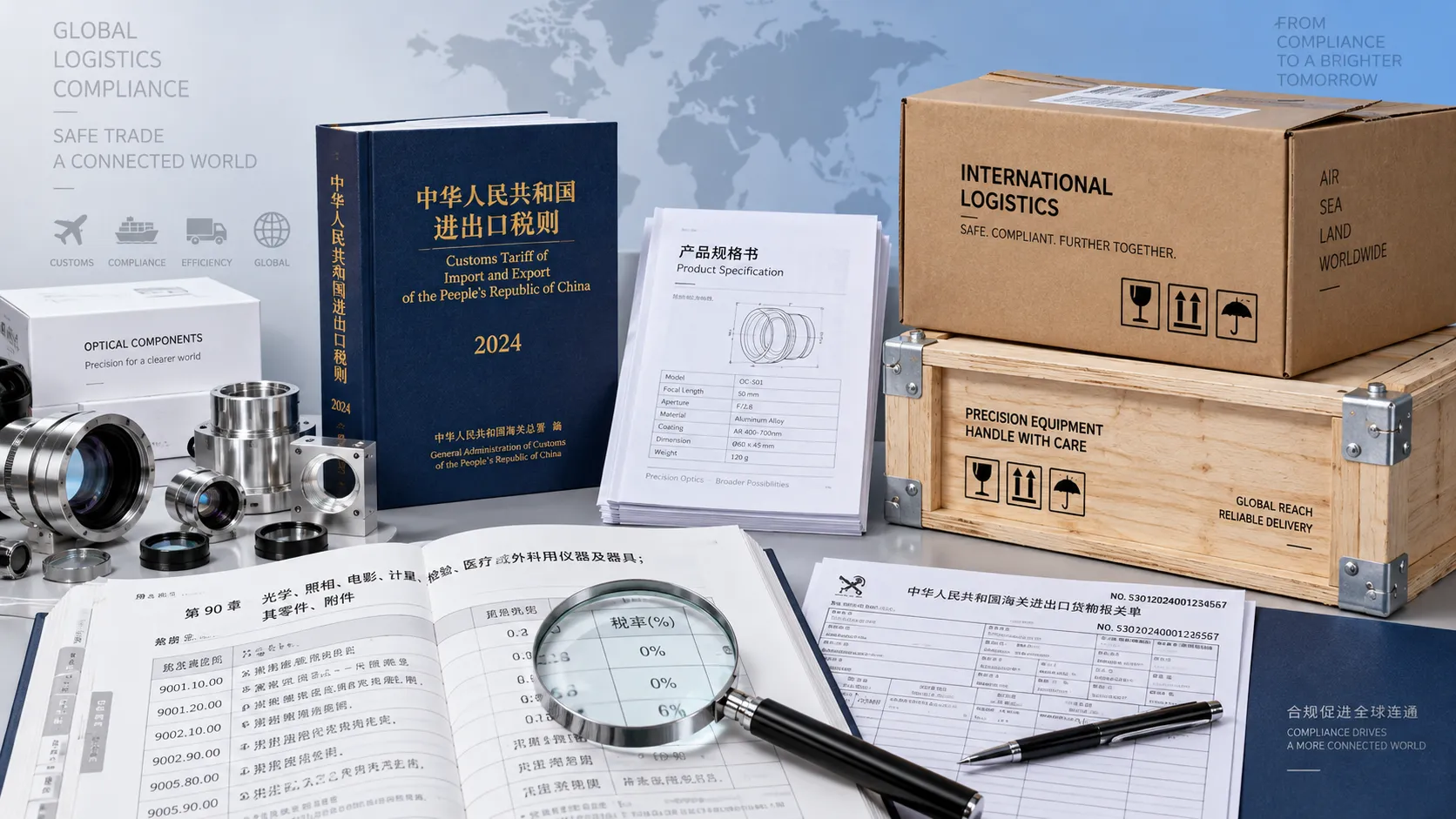
How to check HS codes for customs compliance in international logistics
Strengthen international logistics customs compliance: learn how to verify HS codes, check official tariffs, and document classifications to reduce costly shipment delays.
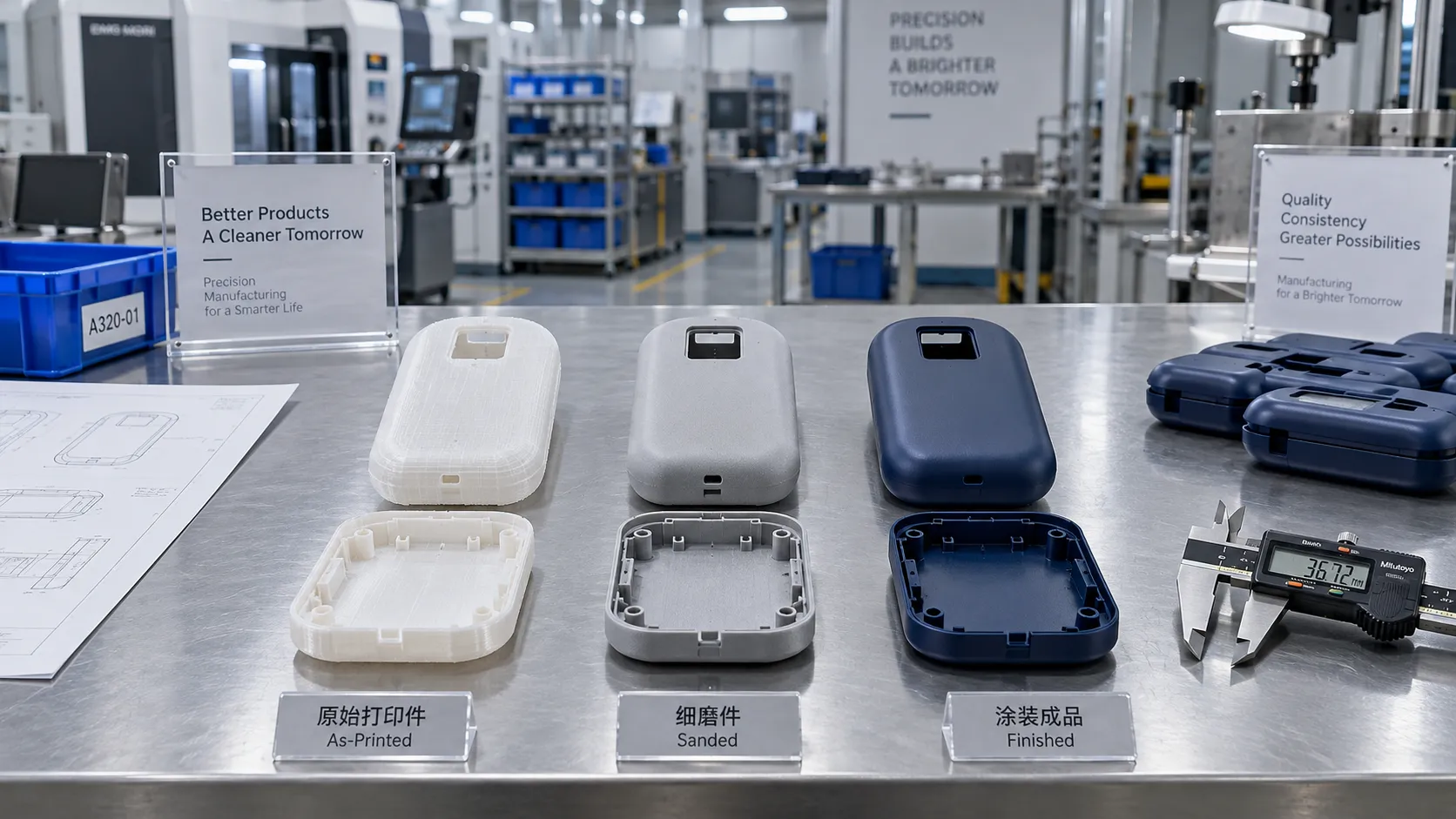
Choosing a 3D Printing Service for Consumer Products: Finish, Fit, and Cost
Compare 3d printing consumer good services by finish, fit, materials, and total cost. Learn how to choose a reliable supplier and avoid costly defects before ordering.

Which Consumer Goods Can Be 3D Printed, and What Are the Practical Limits?
Explore 3d printing consumer goods, from custom eyewear to replacement parts. Discover practical limits on materials, safety, and costs to make smarter production decisions.

From Prototype to Small Batch: Applying 3D Printing to Consumer Goods
Explore 3d printing in consumer goods: learn how to move from prototype to small-batch production with practical guidance on materials, quality validation, and cost control.
Related News
- 00
0000-00
How to verify part consistency before choosing a 3D printing OEM - 00
0000-00
How does a rigid cryogenic transfer line handle thermal contraction? - 00
0000-00
How much does edge vision deployment cost beyond the hardware? - 00
0000-00
How does the purity of sputtering targets affect thin-film quality? - 00
0000-00
How high power laser cladding systems control substrate dilution
Dr. Hideo Tanaka
Weekly Insights
Stay ahead with our curated technology reports delivered every Monday.