
Business Intelligence News Trends Reshaping Industrial Strategy in 2026


Business intelligence news is moving from support function to strategy signal
Business intelligence news now influences industrial strategy with unusual speed. In 2026, market timing, compliance exposure, and technology readiness are becoming inseparable decisions.
That shift is especially visible across advanced manufacturing. Investment logic no longer depends only on machine capability, material performance, or output volume.
Leaders are reading a wider field of signals. Patent activity, export controls, tender patterns, standards revisions, and supplier qualification data increasingly shape capital allocation.
This is why business intelligence news has become central rather than complementary. It helps connect technical promise with operational reality before costs are locked in.
Across industrial laser processing, additive manufacturing, machine vision, graphene, and vacuum engineering, the pattern is similar. The market rewards verified insight more than optimistic assumptions.
Why the signal became louder in the industrial economy
Several changes are converging at the same time. Each one raises the value of business intelligence news for industrial planning.
- Technology cycles are shortening, especially where AI, optics, automation, and materials science intersect.
- Regulatory conditions are becoming less predictable across trade, dual-use controls, and localization requirements.
- Supply chains are broadening geographically, but qualification standards remain tight and highly technical.
- Industrial buyers are demanding proof of durability, compatibility, and standards alignment before scale commitments.
The result is a new planning model. Strategy teams increasingly rely on business intelligence news to understand not just where demand is growing, but where risk is shifting.
From recent market behavior, a stronger signal stands out. Companies are no longer asking whether a technology is impressive. They are asking whether it is certifiable, scalable, and geopolitically viable.
That distinction matters. It separates technical curiosity from industrial adoption, and it explains why intelligence quality now affects competitive speed.
The biggest changes are happening at the intersection of data and engineering
Business intelligence news is no longer limited to financial indicators or broad market commentary. In industrial settings, the most useful signals are deeply technical.
A standards revision in ASTM or ISO can alter material qualification plans. A new export control interpretation can reshape vendor selection. A patent cluster can reveal where the next pricing pressure will emerge.
This is where institutions such as G-AIT are gaining importance. Their value lies in translating fragmented technical developments into structured decision intelligence.
Because G-AIT tracks five industrial pillars, it captures how change in one field affects another. Machine vision upgrades influence laser process control. Vacuum engineering affects semiconductor and advanced materials reliability.
That cross-disciplinary view is increasingly necessary. Many industrial bottlenecks in 2026 will not come from one machine underperforming, but from one interface failing across systems.
What the market is watching more closely now
This is why business intelligence news has a stronger operational role now. It helps distinguish noise from signals that can change deployment economics.
Impact is spreading beyond procurement and into system design
One of the clearest changes is organizational. Business intelligence news is no longer consumed only for commercial planning. It is increasingly shaping engineering decisions upstream.
In additive manufacturing, for example, intelligence about powder traceability, machine certification, and aerospace qualification pathways can determine which platform architecture remains viable.
In machine vision, the issue is often integration depth. Optical inspection systems are being judged less on isolated accuracy and more on how they fit broader data environments.
In graphene and nano-materials, commercial maturity still varies sharply. Here, business intelligence news helps compare research excitement with production repeatability and regulatory tolerance.
Vacuum and cryogenic engineering present another example. Ultra-high performance systems may look similar on specification sheets, yet service support, contamination control, and standards history can change lifetime cost.
The common lesson is simple. Industrial choices now depend on contextual intelligence as much as nominal performance values.
What separates useful business intelligence news from market noise
Not all intelligence deserves equal weight. The strongest industrial decisions are built on signals that are verifiable, comparable, and linked to execution constraints.
Useful business intelligence news usually has three qualities. It connects technical evidence, market movement, and rule-based implications in the same frame.
- It is benchmarked against recognized standards such as ISO, SEMI, IEEE, or ASTM.
- It explains consequences, not just events, including qualification delays, sourcing gaps, or integration burdens.
- It allows comparison across suppliers, regions, and technology pathways.
This is where multidisciplinary repositories stand out. G-AIT, for instance, is relevant because it does not isolate engineering benchmarks from export shifts or patent exposure.
That combination reflects how industrial decisions are actually made. In real operations, compliance, uptime, qualification, and cost recovery are assessed together.
The next phase of strategy will favor faster interpretation, not just more data
A larger volume of business intelligence news does not automatically create better strategy. The advantage comes from interpretation speed and relevance to specific industrial exposures.
That means 2026 planning should not focus only on dashboards. It should focus on signal hierarchy. Which developments can delay certification, alter sourcing, or compress margins within one planning cycle?
More advanced organizations are already changing how they read the market. They are combining technical benchmarking with regulatory foresight and live project intelligence.
This approach is especially practical in complex sectors where one component decision affects multiple business outcomes. A laser source, inspection module, or vacuum subsystem can reshape warranty exposure and deployment timing together.
Where attention is likely to move next
- Closer tracking of standards updates that influence qualification thresholds.
- More scrutiny of second-source availability for critical industrial components.
- Earlier assessment of patent congestion in high-growth technology categories.
- Stronger linkage between tender visibility and capacity planning decisions.
How to respond without overreacting to every headline
The practical response is not to chase every update. It is to build a structured filter for business intelligence news that matches actual industrial exposure.
Start by mapping which technologies, materials, and regions create the highest sensitivity. Then compare those areas against standards changes, trade developments, and benchmark shifts.
It also helps to separate short-term signals from structural ones. A delayed shipment matters, but a recurring pattern in export controls or qualification rules matters more.
For many industrial strategies, the next step is not expansion or retreat. It is disciplined scenario review supported by verified technical and commercial intelligence.
Business intelligence news is reshaping industrial strategy because uncertainty now sits inside the technology stack itself. The strongest response is to evaluate change where engineering, regulation, and market timing meet.
Looking ahead, a useful action plan is clear: monitor the right signals, compare them against standards and deployment needs, and update assumptions before market pressure forces the revision.
Related News

How to verify part consistency before choosing a 3D printing OEM
Choosing a 3D printing OEM? Learn how to verify part consistency with repeat-build trials, validated inspections, and traceability checks before committing to production.

How does a rigid cryogenic transfer line handle thermal contraction?
Learn how a rigid cryogenic transfer line manages thermal contraction with bends, bellows, and guided supports. Discover key design checks for safe, reliable cryogenic performance.

How much does edge vision deployment cost beyond the hardware?
Understand edge vision deployment cost beyond hardware, from data and integration to security and support. Uncover hidden expenses and build a smarter lifecycle budget before you scale.

How does the purity of sputtering targets affect thin-film quality?
Discover how sputtering targets affect thin-film quality. Learn to assess purity, identify harmful impurities, and choose specifications that improve coating performance.

How high power laser cladding systems control substrate dilution
Discover how high power laser cladding systems control substrate dilution through beam shaping, material feed, and thermal management to deliver reliable bonds and coating performance.

How to check HS codes for customs compliance in international logistics
Strengthen international logistics customs compliance: learn how to verify HS codes, check official tariffs, and document classifications to reduce costly shipment delays.
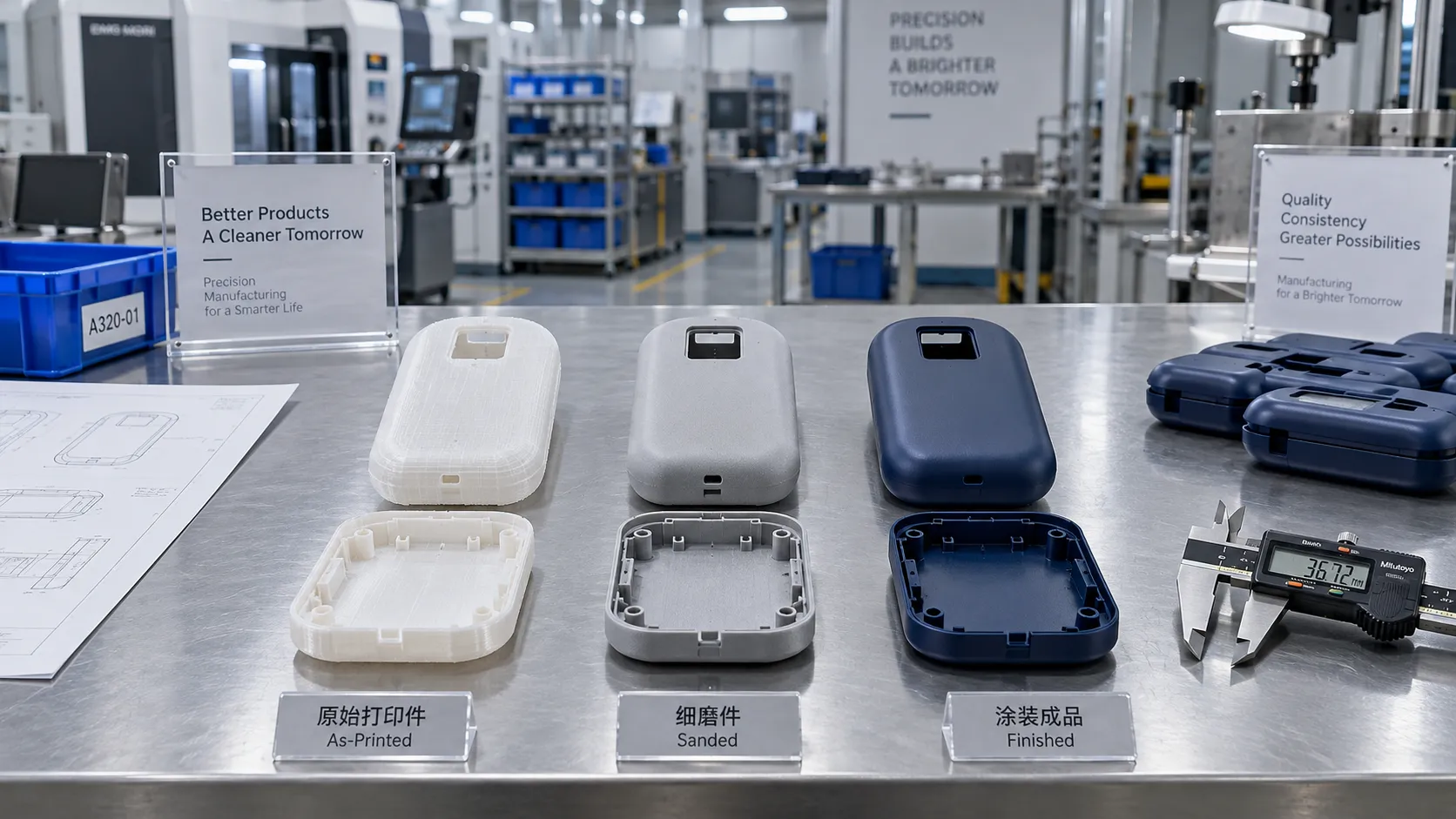
Choosing a 3D Printing Service for Consumer Products: Finish, Fit, and Cost
Compare 3d printing consumer good services by finish, fit, materials, and total cost. Learn how to choose a reliable supplier and avoid costly defects before ordering.

Which Consumer Goods Can Be 3D Printed, and What Are the Practical Limits?
Explore 3d printing consumer goods, from custom eyewear to replacement parts. Discover practical limits on materials, safety, and costs to make smarter production decisions.

From Prototype to Small Batch: Applying 3D Printing to Consumer Goods
Explore 3d printing in consumer goods: learn how to move from prototype to small-batch production with practical guidance on materials, quality validation, and cost control.
Related News
- 00
0000-00
How to verify part consistency before choosing a 3D printing OEM - 00
0000-00
How does a rigid cryogenic transfer line handle thermal contraction? - 00
0000-00
How much does edge vision deployment cost beyond the hardware? - 00
0000-00
How does the purity of sputtering targets affect thin-film quality? - 00
0000-00
How high power laser cladding systems control substrate dilution
Dr. Victor Gear
Weekly Insights
Stay ahead with our curated technology reports delivered every Monday.