
How to verify quality documentation from nanomaterial importers


A shipment of graphene powder, metal-oxide nanoparticles, carbon nanotubes, or nano-enabled masterbatch can look acceptable on paper until the documents are compared line by line. A certificate may state a high purity value, while the test method is undefined. An SDS may describe a generic substance, while the product label identifies a surface-treated grade with different handling hazards. By the time those gaps are found after receipt, material release, worker protection, and downstream product qualification may already be affected.
The practical rule is simple: do not verify quality documentation as a set of independent files. Verify whether every document describes the same material, the same batch or lot, the same test basis, and the same legal identity. For nanomaterial importers, a credible documentation package should establish traceability, demonstrate that analytical claims are meaningful, and provide safety information suitable for the imported form of the material.
Start with document identity, not the reported numbers
A high assay result or an extensive test report does not prove that the document belongs to the product being purchased. Begin by checking the identifiers that should remain consistent across the purchase order, commercial invoice, packing list, product label, certificate of analysis (CoA), technical data sheet (TDS), SDS, and any declaration of conformity.
At minimum, compare the supplier name, manufacturer name where different, product grade, trade name, internal product code, lot or batch number, manufacturing date where provided, net quantity, and country-of-origin information. For a dispersed nanomaterial, identify the carrier liquid, concentration, dispersant, and any stabilizing additive. For a powder, confirm whether the documentation applies to dry powder, granules, pellets, or another supplied form.
Documentation frequently becomes unreliable when a supplier uses a family-level description such as “nano silica” or “graphene nanoplatelets” across several grades. Those descriptions can conceal important differences in particle-size range, functionalization, impurity profile, morphology, moisture content, bulk density, or surface treatment. A CoA for an untreated powder should not automatically support a supplied grade that has been coated, oxidized, compounded, or dispersed.
Build a traceability chain before approving the lot
A useful review method is to create a one-page comparison record for each incoming lot. It does not need to reproduce every figure in the supplier documents. Its purpose is to identify whether the records connect.
- Match the received container label to the packing list and CoA lot number.
- Confirm that the product code on the invoice is the same code referenced by the TDS and SDS.
- Record whether the CoA is lot-specific, date-specific, and signed or otherwise formally released.
- Check whether a distributor-issued document identifies the original manufacturer and original lot.
- Flag relabelled, repacked, blended, or subdivided material, since the chain of custody may affect traceability.
A distributor can legitimately provide documentation on behalf of a manufacturer, but the relationship must be visible. If the importer cannot identify who manufactured the material, who performed the tests, and which lot was tested, the file should be treated as incomplete rather than merely inconvenient.
Read a certificate of analysis as evidence, not as a marketing sheet
A CoA should answer four questions: what was tested, which batch was tested, how it was tested, and whether the result meets a defined acceptance criterion. A table of values without this context has limited value for release decisions.
First, determine whether the certificate is truly batch-specific. A document issued with a current date but lacking a unique lot number may be a typical specification sheet rather than evidence for the delivered material. Similarly, a broad statement such as “purity >99%” is not sufficient unless the basis of purity is clear. Depending on the material, purity may refer to elemental composition, assay of a target compound, carbon content, ash content, metal content, or a supplier-defined calculation. These are not interchangeable.
Do not assume that one characterization result represents all critical nanomaterial properties. Particle size, for example, can be reported by dynamic light scattering, laser diffraction, electron microscopy, gas adsorption, centrifugal methods, or other approaches. Each method measures a different physical response and may be more or less appropriate depending on whether the material is a primary particle, agglomerate, aggregate, dispersion, fiber-like structure, platelet, or porous powder.
For nanomaterials with broad distributions or irregular morphology, a single “average particle size” can be misleading. Ask whether the reported figure is a median, mean, primary-particle estimate, hydrodynamic diameter, agglomerate size, or screen-based classification. The answer matters when the intended process depends on dispersion behavior, inhalation exposure potential, optical properties, conductivity, catalytic performance, or coating uniformity.
Check whether the analytical method fits the claimed property
Quality verification should focus on fitness for purpose, not on whether a document lists sophisticated instruments. A supplier may use an appropriate internal method, but it should be identifiable and controlled. Where recognized standards are cited, confirm that the cited standard is relevant to the reported characteristic and supplied material form. ISO and ASTM methods can support consistency, but simply placing standard numbers on a TDS does not demonstrate compliant testing.
For chemical composition and impurity control, request clarification on sample preparation, detection limits, and reporting thresholds when trace metals, residual catalysts, or hazardous impurities are significant to the application. A result reported as “not detected” is meaningful only when the detection or quantification limit is suitable for the internal acceptance requirement. This is particularly important where metal residues could affect electronics, battery materials, catalytic systems, biomedical research controls, or worker exposure assessments.
For carbon-based materials, distinguish among elemental purity, graphitic content, ash, moisture, volatile content, and residual metal catalyst. For metal oxides, distinguish between phase composition, elemental composition, soluble impurities, surface coating, and moisture or loss-on-drying values. A document may accurately report one of these properties while leaving another unaddressed.
Where morphology is critical, electron microscopy images alone are not enough unless the sampling and evaluation basis are explained. A representative image can demonstrate form, but it does not automatically establish lot-wide distribution. Likewise, surface area results should state the measurement principle and conditioning approach, because degassing conditions, moisture, and porosity can influence the result.
Review the SDS against the actual imported nanomaterial
An SDS is not a substitute for a CoA, but it is central to safety review. It should be current, legible, and aligned with the product identity on the label and invoice. The most common documentation problem is the use of a generic SDS for a material family, especially where a nanomaterial exists in multiple particle sizes, coatings, dispersions, or mixtures.
Examine whether the SDS describes the material’s physical form and foreseeable handling conditions. A dry nanopowder, for example, may create airborne dust during transfer, weighing, cleaning, or spill response. The same chemistry in a stabilized liquid dispersion may present different exposure pathways and may introduce hazards from the liquid medium. The SDS should not obscure those distinctions.
Sections covering composition, hazard identification, exposure controls, handling, accidental release, transport, and disposal deserve particular attention. Check whether the document identifies relevant hazardous components, whether it provides occupational control advice suited to fine particulate handling, and whether it gives a workable spill-cleaning approach. Instructions that only say “avoid dust” without specifying containment, ventilation, respiratory protection selection basis, or cleaning restrictions may be too generic for a high-risk operation.
Safety classification is jurisdiction-dependent. Import review should therefore confirm that the SDS format, hazard communication elements, transport statements, and chemical inventory status are appropriate for the destination market and the intended use. A supplier statement may support an internal review, but it should not be accepted as proof of legal compliance when the statement lacks a material identity, scope, date, signatory authority, or reference to the applicable requirement.
Look for contradictions across the technical file
The most revealing findings often come from mismatches between documents rather than from a single missing field. A CoA might list particle size in nanometers while the SDS describes a conventional micron-scale powder. A TDS might state an aqueous dispersion, but the transport document identifies a flammable solvent. A declaration may claim no intentionally added restricted substances, while the SDS composition section identifies a coating or additive that requires further review.
Use the following contradictions as hold points until they are resolved in writing:
- The same product code is linked to different chemical names or CAS identifiers.
- A batch CoA reports values outside the specification shown on the TDS without an approved deviation explanation.
- Particle-size data are presented without stating whether they refer to primary particles or agglomerates.
- The SDS revision date is much older than a newly introduced product grade or formulation change.
- Hazard statements differ between the SDS, label, and transport paperwork.
- Test reports name a sample but do not identify its lot, sampling date, or relationship to the imported goods.
Not every discrepancy indicates poor quality. Product naming conventions, regional SDS formats, and document revision cycles can create legitimate differences. The key question is whether the supplier can explain the difference with controlled, traceable information rather than an informal assurance.
Use risk-based depth instead of requesting every possible test
Requesting a full characterization suite for every incoming lot may be impractical and can still fail to address the properties that matter most. A stronger approach is to define a material-specific documentation requirement before purchase approval.
For a nanomaterial used in a conductive ink, critical evidence may include composition, morphology, moisture, ash, dispersion compatibility, and relevant contaminant limits. For a photocatalytic oxide, phase identity, surface area, particle distribution, and trace impurities may be more important. For powders handled in open or semi-open operations, safety documentation and information relevant to dust generation, exposure controls, and cleanup procedures may deserve the same priority as performance specifications.
Supplier qualification can then establish which items require a lot-specific CoA, which may be controlled through periodic third-party or manufacturer test reports, and which changes require advance notification. Change control is particularly important for nanomaterials because a modification to precursor source, milling conditions, coating chemistry, drying process, or dispersion formulation can alter performance without changing the general product name.
Set clear escalation triggers
Place the lot on hold when identity cannot be matched, a safety document does not describe the supplied form, critical values lack a test basis, or traceability ends at an unverified distributor document. Ask focused questions: Which laboratory conducted the analysis? Was the reported result generated on the shipped lot? What method and reporting basis were used? Has the formulation, particle treatment, or manufacturing location changed since the prior approved lot?
When the material will enter regulated products, controlled research, high-reliability manufacturing, or processes with significant inhalation exposure potential, documentary review may need to be supplemented by incoming verification testing or an independent technical assessment. The purpose is not to duplicate every supplier test. It is to confirm the few attributes where an incorrect result would create an unacceptable quality, safety, or compliance consequence.
A documentation package is adequate only when it supports a defensible decision: the organization can identify the material, connect it to the received lot, understand what the reported results actually mean, and apply handling controls that match the imported nanomaterial rather than a generic description.
Related News

How to verify part consistency before choosing a 3D printing OEM
Choosing a 3D printing OEM? Learn how to verify part consistency with repeat-build trials, validated inspections, and traceability checks before committing to production.

How does a rigid cryogenic transfer line handle thermal contraction?
Learn how a rigid cryogenic transfer line manages thermal contraction with bends, bellows, and guided supports. Discover key design checks for safe, reliable cryogenic performance.

How much does edge vision deployment cost beyond the hardware?
Understand edge vision deployment cost beyond hardware, from data and integration to security and support. Uncover hidden expenses and build a smarter lifecycle budget before you scale.

How does the purity of sputtering targets affect thin-film quality?
Discover how sputtering targets affect thin-film quality. Learn to assess purity, identify harmful impurities, and choose specifications that improve coating performance.

How high power laser cladding systems control substrate dilution
Discover how high power laser cladding systems control substrate dilution through beam shaping, material feed, and thermal management to deliver reliable bonds and coating performance.

How to check HS codes for customs compliance in international logistics
Strengthen international logistics customs compliance: learn how to verify HS codes, check official tariffs, and document classifications to reduce costly shipment delays.
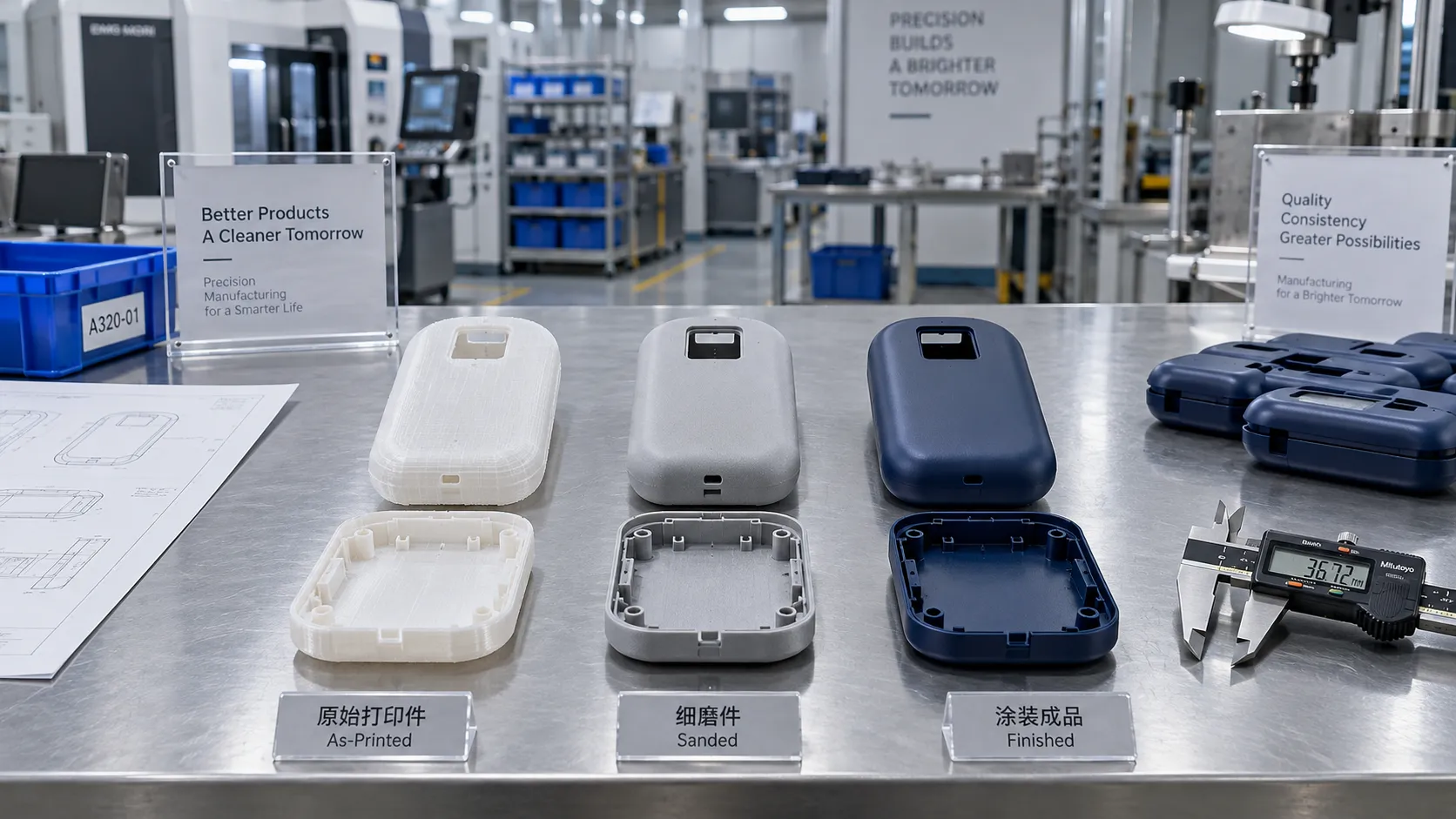
Choosing a 3D Printing Service for Consumer Products: Finish, Fit, and Cost
Compare 3d printing consumer good services by finish, fit, materials, and total cost. Learn how to choose a reliable supplier and avoid costly defects before ordering.

Which Consumer Goods Can Be 3D Printed, and What Are the Practical Limits?
Explore 3d printing consumer goods, from custom eyewear to replacement parts. Discover practical limits on materials, safety, and costs to make smarter production decisions.

From Prototype to Small Batch: Applying 3D Printing to Consumer Goods
Explore 3d printing in consumer goods: learn how to move from prototype to small-batch production with practical guidance on materials, quality validation, and cost control.
Related News
- 00
0000-00
How to verify part consistency before choosing a 3D printing OEM - 00
0000-00
How does a rigid cryogenic transfer line handle thermal contraction? - 00
0000-00
How much does edge vision deployment cost beyond the hardware? - 00
0000-00
How does the purity of sputtering targets affect thin-film quality? - 00
0000-00
How high power laser cladding systems control substrate dilution
Dr. Elena Carbon
Weekly Insights
Stay ahead with our curated technology reports delivered every Monday.