
Medical Grade Resin Selection: Biocompatibility, Cure, and Cost

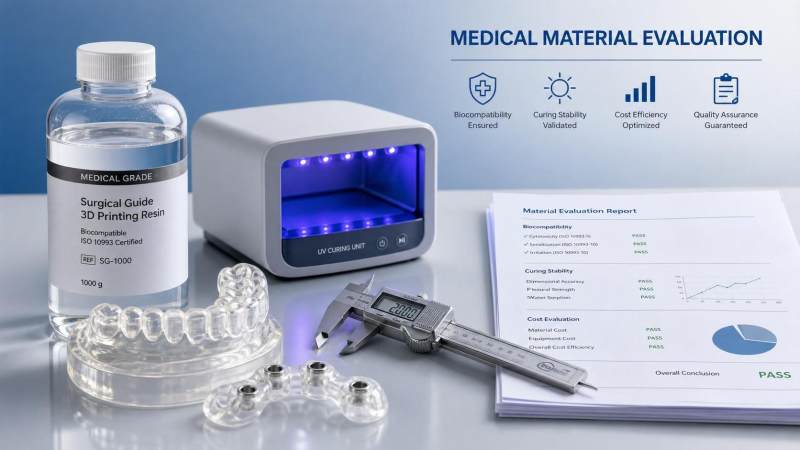
Medical Grade Resin Selection: Biocompatibility, Cure, and Cost
Choosing the right medical grade resin shapes product safety, approval speed, and manufacturing stability.
For many teams, this decision sits between engineering, quality, procurement, and commercialization pressure.
A resin that prints well but fails biocompatibility can derail timelines.
A resin that passes testing but cures too slowly can raise unit cost and limit throughput.
That is why medical grade resin selection should be handled as a system decision, not a material line item.
The most reliable approach compares biocompatibility, curing behavior, process fit, and total lifecycle economics together.
This guide breaks down how to evaluate medical grade resin with fewer assumptions and better procurement confidence.
Start With the Actual Clinical and Regulatory Use Case
Before comparing brands, define exactly how the part will be used.
Not every medical grade resin supports the same contact duration, sterilization route, or validation burden.
A surgical guide, dental tray, fluid manifold, and wearable skin-contact device require different evidence.
In practice, three questions narrow the field quickly.
- Is the part for external contact, mucosal contact, or internal use?
- Is the device single-use, short-term, or repeatedly exposed to sterilization?
- Is production limited to prototypes, bridge manufacturing, or serial output?
These answers determine whether a candidate medical grade resin is even worth further qualification work.
From a decision standpoint, clear use-case definition saves more time than broad supplier comparisons.
Biocompatibility Is More Than a Marketing Claim
Biocompatibility is usually the first filter in medical grade resin selection.
Still, many teams treat it as a label instead of a validation scope.
A medical grade resin may reference ISO 10993, USP Class VI, or both.
That sounds sufficient, but the test conditions matter as much as the standard name.
Ask whether testing covered the final printed and post-cured geometry, not only raw material coupons.
Also confirm whether washing, curing, aging, and sterilization matched the intended manufacturing route.
This is where a medical grade resin can look compliant on paper but fail real device qualification.
What to Verify in Supplier Documentation
- Test standard and edition used
- Contact type and exposure duration covered
- Post-processing method used during testing
- Sterilization compatibility and cycle limits
- Lot traceability and change-control policy
- Shelf life and storage requirements
A dependable medical grade resin supplier should provide this data without ambiguity.
If documentation relies on broad statements, qualification risk usually shifts back to the buyer.
Cure Behavior Directly Affects Performance and Throughput
Curing is often where resin selection becomes operationally real.
Two resins can share similar biocompatibility claims yet behave very differently in production.
Medical grade resin must cure consistently across geometry, wall thickness, and batch volume.
Poor cure control can lead to brittleness, tacky surfaces, dimensional drift, and incomplete mechanical properties.
More importantly, inconsistent cure can compromise downstream validation and field reliability.
Key Cure Factors to Compare
- Required wavelength and printer compatibility
- Exposure window and tolerance to parameter drift
- Post-cure time, temperature, and light intensity
- Shrinkage behavior after full cure
- Mechanical stability after aging and sterilization
- Surface finish after washing and final cure
In actual operations, cure speed alone is not the right target.
The better metric is cure stability inside a validated process window.
A slightly slower medical grade resin can outperform a faster option if rework drops and yield stays high.
Mechanical and Functional Fit Should Match the Device, Not the Datasheet Peak
Selecting medical grade resin by tensile strength alone is a common mistake.
The real question is whether the material fits the device’s working condition.
Some applications need rigidity and dimensional accuracy.
Others need impact resistance, transparency, or limited flex without cracking.
For example, a medical grade resin for surgical planning may prioritize accuracy and surface detail.
A resin for fluid-contact housings may need stronger chemical resistance and lower water uptake.
This also means test coupons rarely tell the whole story.
The more useful approach is to test critical geometry under expected sterilization, storage, and handling conditions.
Total Cost Means More Than Resin Price Per Kilogram
Procurement decisions often start with material price, but that is only one layer.
The real cost of medical grade resin comes from the full validated workflow.
A lower-cost resin can become more expensive when wash cycles are longer, failure rates rise, or documentation gaps create extra testing.
Build a Practical Cost Model
- Calculate resin consumption per qualified part, not per printed part.
- Add supports, failed builds, and routine purge losses.
- Include labor for washing, curing, inspection, and recordkeeping.
- Estimate validation cost for biocompatibility, sterilization, and process qualification.
- Measure changeover risk if the supplier updates formulation or discontinues a grade.
- Price the cost of delay when a resin cannot scale with demand.
This broader view usually changes the shortlist.
A premium medical grade resin may reduce total cost if it shortens qualification and stabilizes output.
Supplier Quality and Change Control Deserve Equal Weight
A technically strong resin still creates risk if supplier control is weak.
For regulated production, medical grade resin should come with dependable lot consistency and clear revision discipline.
Recent market behavior makes this even more important.
Formulation changes, regional supply disruptions, and compliance updates can all affect device continuity.
When evaluating a medical grade resin source, ask for evidence of quality management discipline.
- Certificate of analysis by lot
- Documented notification process for formulation changes
- Defined retest period and expiration controls
- Regional distribution stability and backup channels
- Regulatory support response time
This is often where experienced teams separate a printable material from a scalable medical grade resin program.
A Practical Evaluation Framework for Medical Grade Resin Selection
A structured scorecard helps reduce subjective decision-making.
It also creates alignment between engineering, quality, and sourcing teams.
Use weighted scoring if the device has one dominant requirement.
For example, implant-adjacent applications may place biocompatibility and supplier control above raw throughput.
Common Selection Mistakes to Avoid
- Choosing medical grade resin from a generic material datasheet alone
- Assuming biocompatibility transfers automatically across all print settings
- Ignoring post-cure variability during pilot builds
- Comparing resin price without qualification and scrap cost
- Skipping sterilization and aging checks until late-stage validation
- Relying on a supplier without disciplined change notification
Each of these mistakes looks small early on.
Later, they become schedule slips, retesting cycles, or expensive redesign work.
Final Decision Guidance
The best medical grade resin is rarely the cheapest or the fastest-curing option.
It is the material that supports validated performance, stable curing, and predictable cost over time.
For most programs, the right decision comes from narrowing candidates through use case, verifying biocompatibility depth, testing cure robustness, and modeling full lifecycle cost.
That process makes medical grade resin selection more disciplined and far less reactive.
If a candidate cannot prove compliance clarity, cure repeatability, and supplier stability together, it should not lead the shortlist.
Move forward with the medical grade resin that performs well across validation, manufacturing, and commercial continuity, because that is what protects both product reliability and launch timing.
Related News
How to verify part consistency before choosing a 3D printing OEM
Choosing a 3D printing OEM? Learn how to verify part consistency with repeat-build trials, validated inspections, and traceability checks before committing to production.
How does a rigid cryogenic transfer line handle thermal contraction?
Learn how a rigid cryogenic transfer line manages thermal contraction with bends, bellows, and guided supports. Discover key design checks for safe, reliable cryogenic performance.

How much does edge vision deployment cost beyond the hardware?
Understand edge vision deployment cost beyond hardware, from data and integration to security and support. Uncover hidden expenses and build a smarter lifecycle budget before you scale.

How does the purity of sputtering targets affect thin-film quality?
Discover how sputtering targets affect thin-film quality. Learn to assess purity, identify harmful impurities, and choose specifications that improve coating performance.

How high power laser cladding systems control substrate dilution
Discover how high power laser cladding systems control substrate dilution through beam shaping, material feed, and thermal management to deliver reliable bonds and coating performance.

How to check HS codes for customs compliance in international logistics
Strengthen international logistics customs compliance: learn how to verify HS codes, check official tariffs, and document classifications to reduce costly shipment delays.
Choosing a 3D Printing Service for Consumer Products: Finish, Fit, and Cost
Compare 3d printing consumer good services by finish, fit, materials, and total cost. Learn how to choose a reliable supplier and avoid costly defects before ordering.
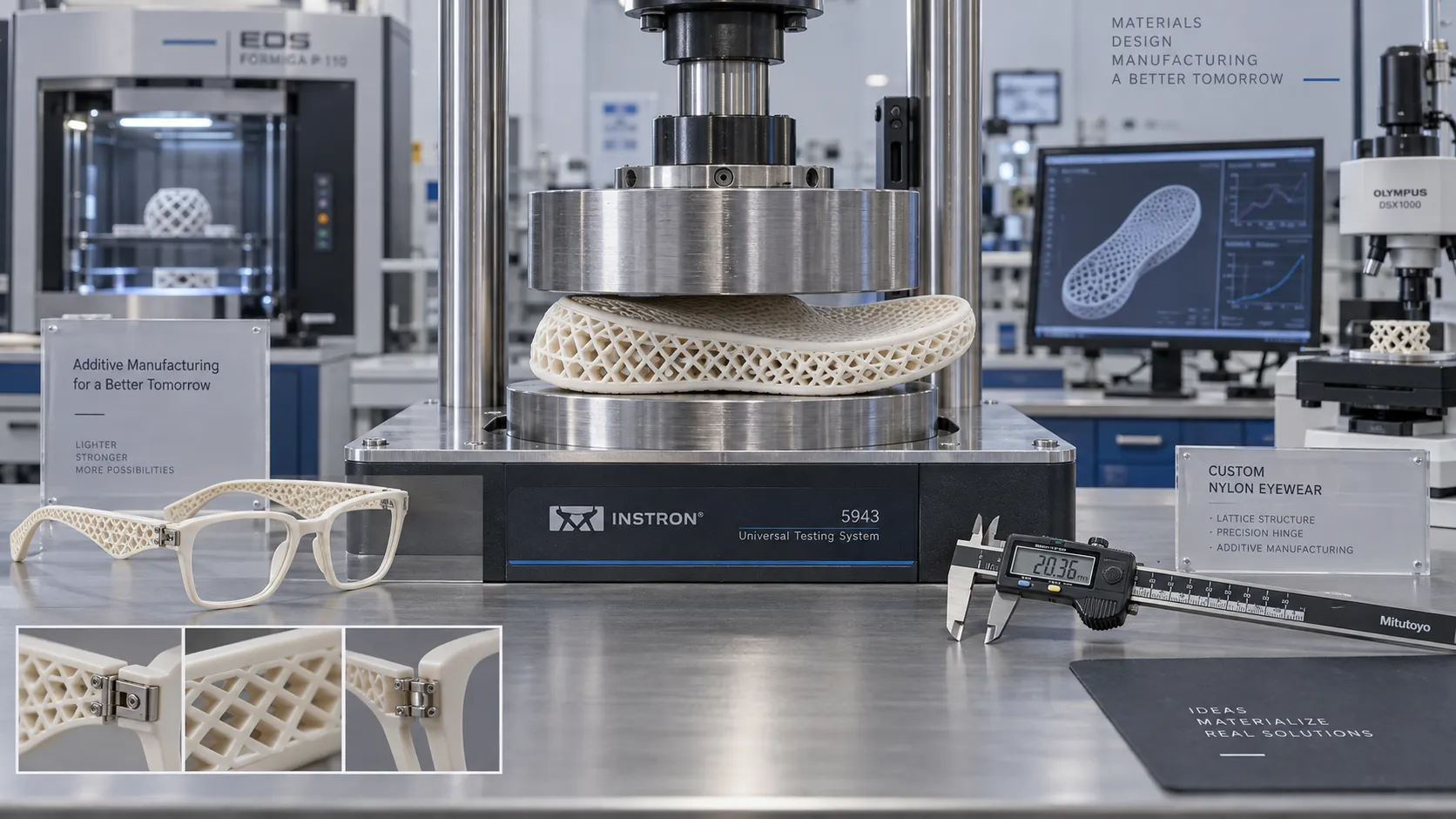
Which Consumer Goods Can Be 3D Printed, and What Are the Practical Limits?
Explore 3d printing consumer goods, from custom eyewear to replacement parts. Discover practical limits on materials, safety, and costs to make smarter production decisions.
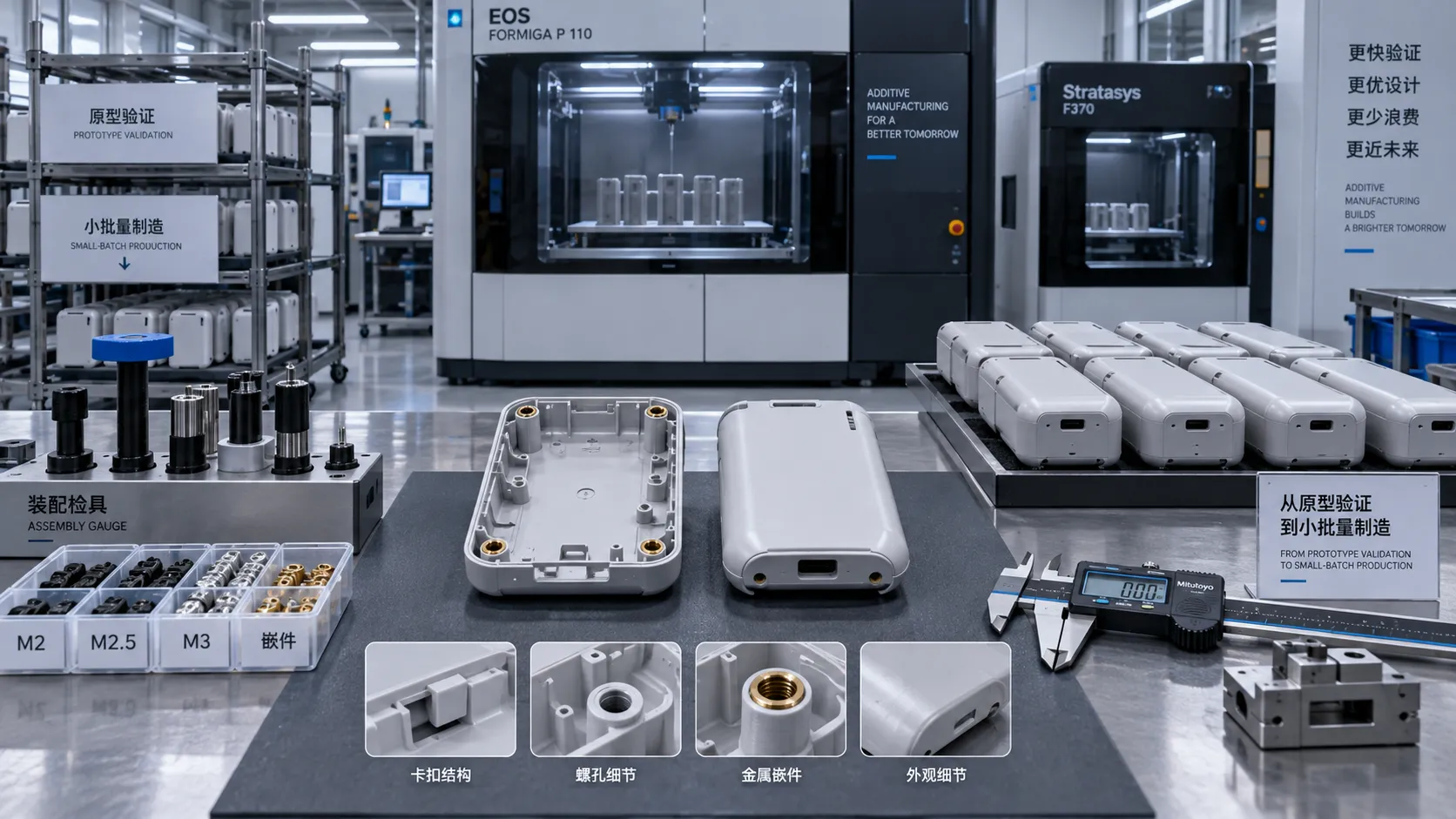
From Prototype to Small Batch: Applying 3D Printing to Consumer Goods
Explore 3d printing in consumer goods: learn how to move from prototype to small-batch production with practical guidance on materials, quality validation, and cost control.
Related News
- 00
0000-00
How to verify part consistency before choosing a 3D printing OEM - 00
0000-00
How does a rigid cryogenic transfer line handle thermal contraction? - 00
0000-00
How much does edge vision deployment cost beyond the hardware? - 00
0000-00
How does the purity of sputtering targets affect thin-film quality? - 00
0000-00
How high power laser cladding systems control substrate dilution
Marcus Print
Weekly Insights
Stay ahead with our curated technology reports delivered every Monday.