
Industrial Equipment Demand News: Signals That Matter in 2026


Industrial equipment demand news in 2026 carries more weight than a routine market headline. It now acts as an early signal for capital timing, sourcing strategy, technology upgrades, and regional capacity decisions.
That shift matters because demand is no longer moving evenly across industrial markets. Orders are concentrating around higher-performance systems, compliance-ready platforms, and equipment that supports resilient, data-driven production.
In that context, industrial equipment demand news becomes useful only when it is linked to technical benchmarks, standards, export controls, and real project activity. Otherwise, volume headlines can hide where durable demand is actually forming.
What demand news really means in 2026
At a basic level, industrial equipment demand news refers to the market signals showing where equipment purchasing is rising, slowing, or changing in quality. The important word is not only demand, but direction.
A growing order book for commodity equipment does not mean the same thing as rising demand for precision laser systems, large-format metal additive machines, or AI-enabled optical inspection platforms.
In practice, 2026 demand signals are being shaped by three layers at once. The first is industrial output. The second is technology replacement. The third is regulatory and supply chain pressure.
This is why broad industrial equipment demand news often needs interpretation. A shipment increase may reflect backlog release, while a smaller but more specialized order profile may reveal stronger long-term market confidence.
Why this topic is getting sharper attention
The current cycle is defined by selective investment, not universal expansion. Industrial groups are spending where throughput, traceability, material performance, and process stability can be defended with measurable outcomes.
That changes how industrial equipment demand news should be read. Market attention is shifting from simple unit demand to specification depth, standards alignment, lifecycle support, and geopolitical exposure.
A system that meets ISO, SEMI, IEEE, or ASTM expectations carries different commercial value than a lower-cost alternative with unclear qualification history. In many sectors, compliance readiness is becoming part of demand itself.
This is also where a platform like Global Advanced Industrial Technology, or G-AIT, becomes relevant. Its value is not promotional language. Its value is the connection between engineering verification, benchmark data, tender activity, and regulatory foresight.
The signals that matter more than headline volume
Not every demand indicator deserves equal weight. In 2026, stronger signals tend to come from technically constrained markets and sectors where failure costs are high.
Specification intensity
When buyers move toward tighter tolerances, higher power ranges, better repeatability, or integrated inspection, demand is usually shifting upward in quality. That often points to longer investment cycles.
Tender quality
Real project tenders reveal more than market commentary. They show which industries are specifying advanced capability, which regions are funding upgrades, and what technical thresholds are now standard.
Export control friction
Industrial equipment demand news can look healthy on paper while cross-border restrictions weaken actual delivery confidence. Export reviews, component restrictions, and licensing delays now influence order quality.
Patent and R&D concentration
Clusters of patent activity often appear before broader commercial demand. When patents align with new materials, inspection methods, or vacuum process innovations, equipment demand may follow within a short horizon.
Where industrial demand is concentrating
Across advanced manufacturing, demand is clustering around equipment that improves precision, verification, and material performance. That pattern is visible across the five industrial pillars monitored by G-AIT.
Industrial laser processing
Demand is staying firm for high-power fiber lasers and process-stable laser platforms used in cutting, welding, and surface engineering. Energy efficiency and uptime are now watched as closely as raw power.
3D printing and additive manufacturing
The market is maturing beyond experimentation. Industrial equipment demand news in additive now depends on build consistency, qualified materials, post-processing integration, and part traceability.
Machine vision and optical inspection
Inspection demand is expanding because more factories need proof, not assumption. AI-assisted defect detection and 3D metrology are moving from optional upgrades to operational requirements.
Graphene, nano-materials, vacuum, and cryogenic systems
These segments remain specialized, but demand signals are meaningful when they appear. They usually reflect advanced R&D scaling, semiconductor infrastructure, scientific manufacturing, or strategic materials investment.
How to read industrial equipment demand news in business terms
The practical question is not whether demand exists. The better question is what kind of demand is building, and whether it supports reliable commercial decisions.
Usually, the strongest industrial equipment demand news combines four elements: technical benchmark improvement, funded project activity, stable supply pathways, and standards-based qualification.
If only one element is present, the signal may be weak. For example, strong publicity without tender depth can indicate market noise. Strong demand without export clarity can create execution risk.
This is why multidisciplinary intelligence matters. Equipment choices now sit at the intersection of engineering data, regulatory exposure, patent momentum, and downstream production economics.
- Check whether demand is tied to replacement, expansion, or new process capability.
- Compare order activity with qualification standards and service support availability.
- Watch for concentration by region, sector, and equipment tier.
- Treat export policy changes as part of demand interpretation, not a separate issue.
- Use benchmark data to test whether premium pricing is backed by measurable performance.
Common misreads in 2026 market interpretation
One common mistake is reading all industrial equipment demand news as cyclical recovery. In several sectors, the real story is technology reallocation rather than broad-based expansion.
Another mistake is treating low-cost equipment demand as a substitute for strategic demand. Price-sensitive growth can lift volumes, yet still say little about future competitiveness or supply chain resilience.
A third mistake is ignoring standards and certification pathways. Equipment that cannot support reliable qualification may generate short-term orders but lose relevance in regulated, high-performance environments.
Industrial equipment demand news is most useful when it is filtered through operational integrity. That includes maintenance readiness, software compatibility, process stability, and documentation quality.
What to track next
The next step is to build a demand-reading framework that is specific enough to guide real decisions. Broad market summaries are helpful, but they should lead into deeper technical and commercial checks.
Focus on the signals that reveal durable intent: benchmarked system performance, live tender pipelines, standards alignment, patent direction, and cross-border delivery certainty.
For organizations tracking industrial equipment demand news across multiple technologies, a structured view like G-AIT’s is useful because it connects five advanced sectors within one evidence-based framework.
In 2026, better decisions will come from separating visible demand from dependable demand. That means reviewing not just where orders are rising, but where performance, compliance, and execution can hold under pressure.
A sensible next move is to map current equipment priorities against technical standards, project timing, and supply risk. From there, industrial equipment demand news becomes a working decision tool, not just a market update.
- industrial equipment
- supply chain
- manufacturing
- semiconductor
- energy
- Industrial Laser Processing
- 3D Printing
- Additive Manufacturing
- Machine Vision
- Optical Inspection
- Fiber Lasers
- Technical Specifications
- Export Control
- Cryogenic Systems
- export policy changes
- industrial equipment demand news
- supply chain resilience
- industrial equipment
- supply chain
- manufacturing
- semiconductor
- energy
- Industrial Laser Processing
- 3D Printing
- Additive Manufacturing
- Machine Vision
- Optical Inspection
- Fiber Lasers
- Technical Specifications
- Export Control
- Cryogenic Systems
- export policy changes
- industrial equipment demand news
- supply chain resilience
Related News

How to verify part consistency before choosing a 3D printing OEM
Choosing a 3D printing OEM? Learn how to verify part consistency with repeat-build trials, validated inspections, and traceability checks before committing to production.
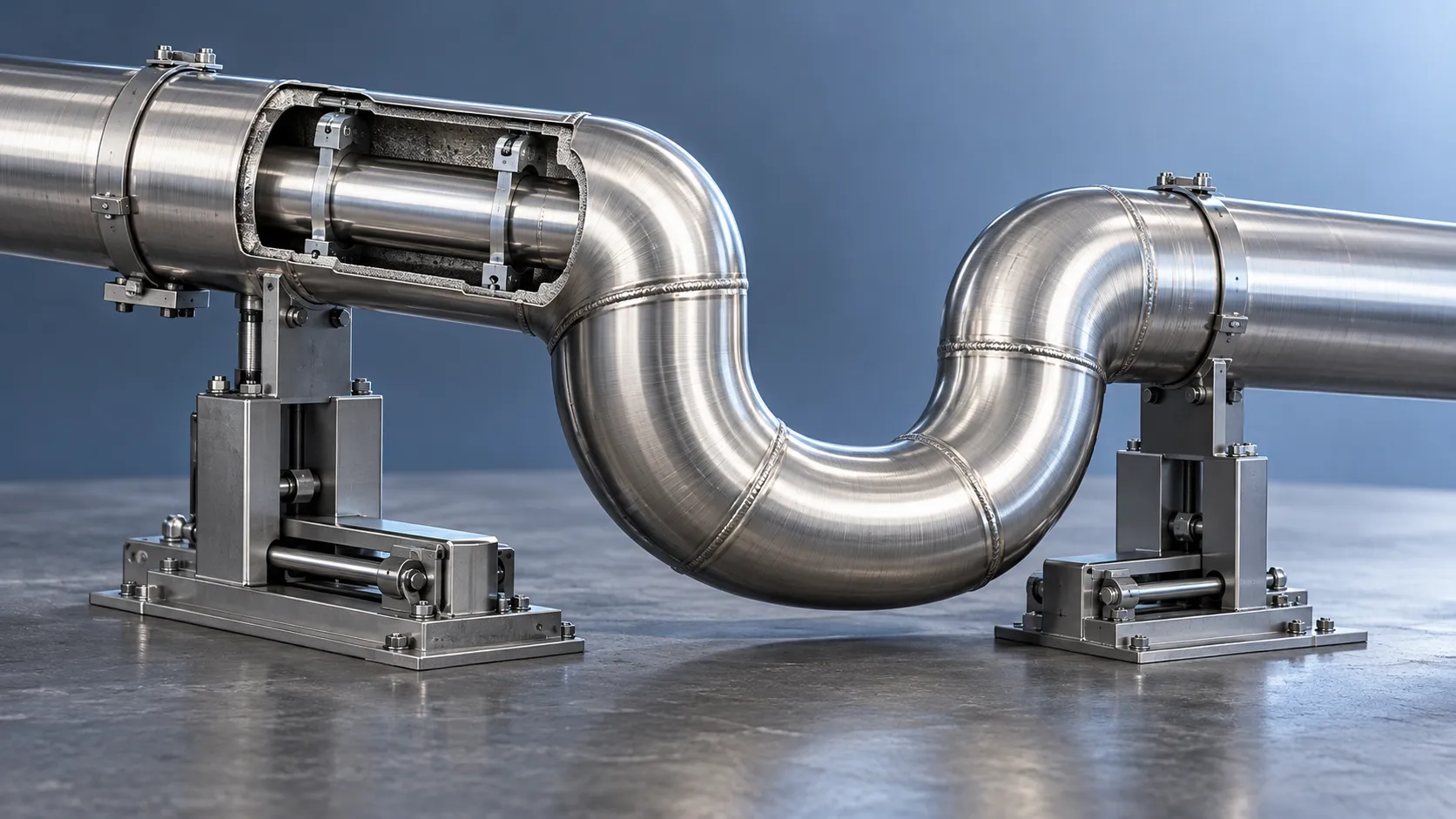
How does a rigid cryogenic transfer line handle thermal contraction?
Learn how a rigid cryogenic transfer line manages thermal contraction with bends, bellows, and guided supports. Discover key design checks for safe, reliable cryogenic performance.

How much does edge vision deployment cost beyond the hardware?
Understand edge vision deployment cost beyond hardware, from data and integration to security and support. Uncover hidden expenses and build a smarter lifecycle budget before you scale.

How does the purity of sputtering targets affect thin-film quality?
Discover how sputtering targets affect thin-film quality. Learn to assess purity, identify harmful impurities, and choose specifications that improve coating performance.

How high power laser cladding systems control substrate dilution
Discover how high power laser cladding systems control substrate dilution through beam shaping, material feed, and thermal management to deliver reliable bonds and coating performance.

How to check HS codes for customs compliance in international logistics
Strengthen international logistics customs compliance: learn how to verify HS codes, check official tariffs, and document classifications to reduce costly shipment delays.
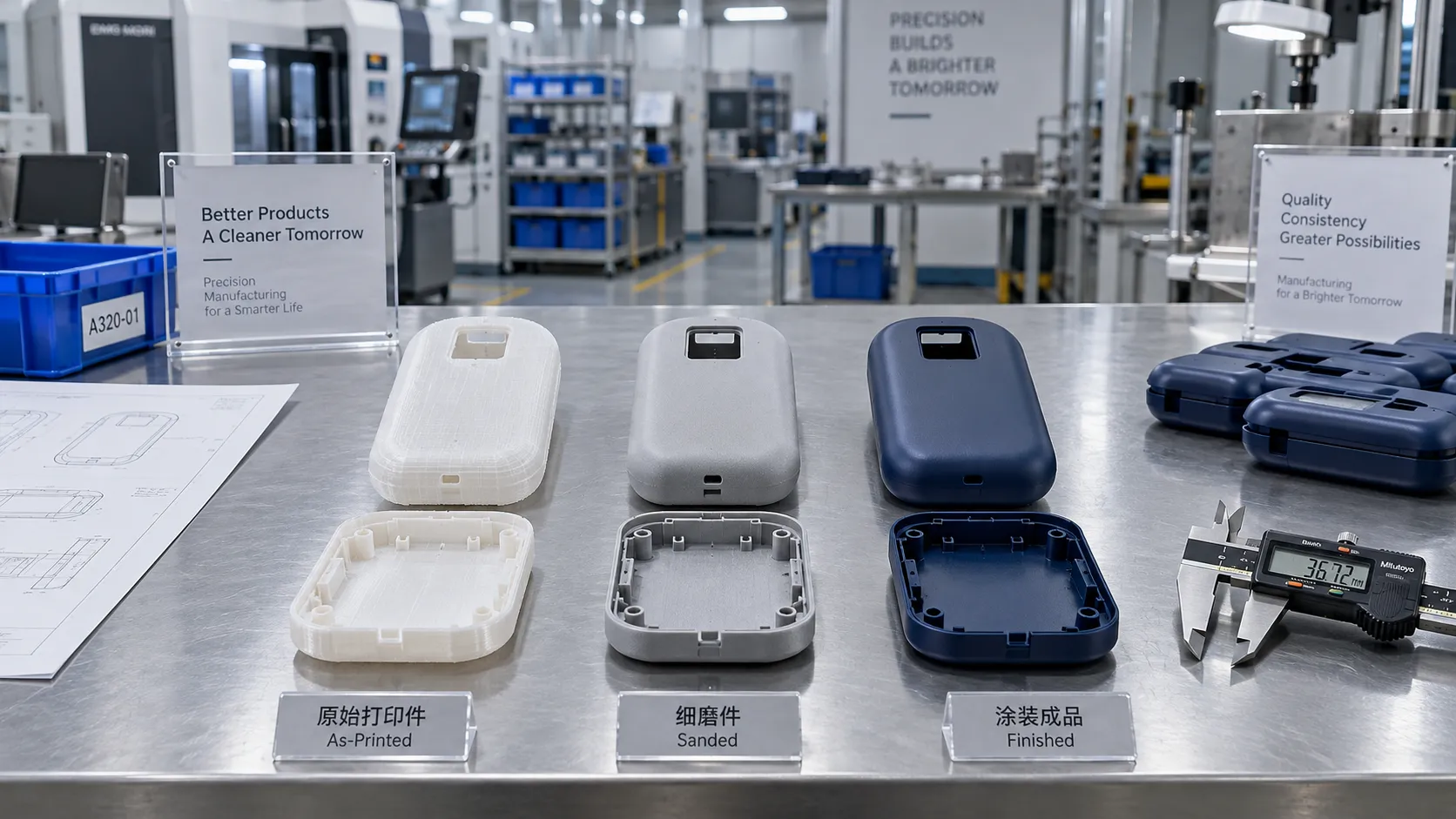
Choosing a 3D Printing Service for Consumer Products: Finish, Fit, and Cost
Compare 3d printing consumer good services by finish, fit, materials, and total cost. Learn how to choose a reliable supplier and avoid costly defects before ordering.

Which Consumer Goods Can Be 3D Printed, and What Are the Practical Limits?
Explore 3d printing consumer goods, from custom eyewear to replacement parts. Discover practical limits on materials, safety, and costs to make smarter production decisions.

From Prototype to Small Batch: Applying 3D Printing to Consumer Goods
Explore 3d printing in consumer goods: learn how to move from prototype to small-batch production with practical guidance on materials, quality validation, and cost control.
Related News
- 00
0000-00
How to verify part consistency before choosing a 3D printing OEM - 00
0000-00
How does a rigid cryogenic transfer line handle thermal contraction? - 00
0000-00
How much does edge vision deployment cost beyond the hardware? - 00
0000-00
How does the purity of sputtering targets affect thin-film quality? - 00
0000-00
How high power laser cladding systems control substrate dilution
Dr. Hideo Tanaka
Weekly Insights
Stay ahead with our curated technology reports delivered every Monday.