
International trade news updates that may change sourcing plans


International trade news updates are reshaping how distributors, agents, and sourcing partners evaluate risk, pricing, and supplier stability across advanced industrial sectors. For decision-makers tracking export controls, compliance shifts, and technology supply trends, timely market intelligence is no longer optional. This article highlights the latest developments that could influence sourcing strategies, supplier selection, and cross-border procurement planning.
Why recent trade signals deserve immediate attention
For distributors and channel partners in industrial technology, the value of international trade news updates has changed. They are no longer just background information for annual planning. They now affect weekly sourcing decisions, contract timing, inventory exposure, and even which markets remain commercially viable. In sectors tied to precision manufacturing, machine vision, additive manufacturing, graphene materials, and vacuum engineering, a single policy announcement can alter lead times, documentation requirements, or shipment approvals.
The most important shift is that trade risk is becoming multidimensional. It is not only about tariff changes. Buyers now have to watch export licensing rules, dual-use technology controls, sanctions screening, origin verification, customs enforcement, technical standards, and supplier financial resilience. This broader risk map matters especially in advanced industrial markets, where equipment often contains sensitive software, high-performance optics, semiconductor-grade components, or controlled materials.
As a result, international trade news updates increasingly shape sourcing plans before price negotiations even begin. Distributors that once focused on product availability and landed cost now need a more structured view of compliance exposure, alternate sourcing pathways, and policy-driven demand swings across regions.
The main changes now influencing sourcing plans
Several changes are appearing at the same time, and their combined effect is stronger than any single headline. The first is tighter control over advanced manufacturing technologies and related components. Governments are paying closer attention to products with military-adjacent, semiconductor, aerospace, photonics, and high-performance computing relevance. Even when a distributor is not dealing in defense items, customers may still face additional due diligence if equipment performance crosses certain technical thresholds.
The second shift is the growing role of supply chain security policy. Many countries are encouraging nearshoring, friend-shoring, or strategic diversification in critical industrial categories. This creates a market where some buyers accept higher short-term costs in exchange for stronger continuity, lower compliance uncertainty, or faster regional support.
The third change is customs and documentation scrutiny. Importers are seeing more pressure to prove product classification, end use, country of origin, technical conformity, and restricted-party screening. In practical terms, incomplete paperwork can now create delays that cost more than moderate price differences between suppliers.
What is driving these international trade news updates
Behind the headlines, four drivers explain why international trade news updates are becoming more relevant to industrial sourcing. First, technology competition is intensifying. Advanced lasers, inspection systems, additive manufacturing platforms, nanomaterials, and vacuum systems are no longer viewed only as commercial products. In some cases, they are strategic enablers for semiconductor, aerospace, medical, energy, and defense-adjacent industries.
Second, governments are trying to reduce dependence on vulnerable supply nodes. This encourages domestic production incentives, regionalization of key manufacturing steps, and more cautious treatment of cross-border technology transfers. Third, regulatory enforcement is getting more data-driven. Customs authorities, financial institutions, and logistics partners can now cross-check transactions more efficiently, which means weak declarations are more likely to be flagged. Fourth, buyers themselves have become more cautious after repeated disruptions. Procurement teams increasingly ask whether a supplier can keep shipping under changing rules, not just whether the unit price is attractive today.
Where the impact is strongest across industrial channels
Not every product category is affected equally. The strongest impact tends to appear where technical performance, software integration, and cross-border compliance overlap. For example, industrial laser systems may face attention because of output power, precision applications, or integration with automated production lines. Machine vision and optical inspection products may attract scrutiny when bundled with advanced analytics, AI-enabled functions, or high-end imaging modules. Additive manufacturing systems can raise sourcing questions when powders, design files, controlled software, or aerospace-grade production use cases are involved.
Graphene and nano-materials present another layer of complexity because purity, material characterization, and application context matter. Vacuum and cryogenic equipment can also require greater diligence, particularly where end-use sensitivity or ultra-high performance specifications apply. For distributors and agents, this means product knowledge alone is no longer enough. Commercial teams need a working understanding of technical thresholds, documentation needs, and end-customer application profiles.
How different business roles are affected
The effect of international trade news updates differs across the channel. Sales teams feel the pressure when quotes take longer to clear or when customers demand compliance proof before issuing orders. Sourcing teams face a narrower acceptable supplier base and more effort in validating origin, licensing status, and shipment feasibility. Operations teams must absorb route changes, customs delays, and partial shipment risks. Finance teams see greater exposure in payment timing, inventory carrying cost, and customer credit risk when shipments slip.
The sourcing signals smart channel partners should monitor now
For practical planning, distributors should not react to every headline equally. The more useful approach is to track a shortlist of signals that directly affect sourcing decisions. Watch for revisions to export control lists, changes in customs enforcement patterns, and new import documentation expectations in major destination markets. Also monitor whether key suppliers are shifting assembly locations, changing trade terms, or reducing exposure to certain markets.
Another strong signal is the behavior of Tier-1 buyers. When major OEMs or industrial integrators begin dual sourcing, qualifying regional alternatives, or demanding stronger traceability from component vendors, smaller distributors should treat that as a leading indicator. Customer procurement teams often move before the broader market narrative becomes obvious. International trade news updates are most valuable when they are connected to these operational signals rather than consumed as isolated news.
What may change in supplier selection criteria
One of the clearest consequences of current trade developments is that supplier evaluation is becoming more balanced between commercial and regulatory criteria. In the past, many channel businesses prioritized cost, quality consistency, and lead time. Those factors still matter, but they are now joined by questions such as: Can the supplier provide stable classification data? Does it understand restricted end-use exposure? Can it support technical files needed for customs or customer audits? Does it have production flexibility across more than one geography?
This is especially important in high-tech industrial sectors, where a technically excellent supplier may still create downstream risk if compliance support is weak. G-AIT’s industry focus highlights this reality: advanced equipment performance must increasingly be matched by documentation integrity, standards alignment, and reliable regulatory awareness.
Recommended actions for distributors, agents, and sourcing partners
The best response is not panic buying or aggressive supplier switching. It is a disciplined upgrade in sourcing governance. First, segment your product lines by trade sensitivity. High-performance systems, controlled components, software-linked devices, and specialty materials should not be managed with the same approval process as low-risk standard items. Second, create a supplier risk profile that includes ownership visibility, manufacturing footprint, document quality, compliance responsiveness, and alternative shipping routes.
Third, review contracts and quotes for flexibility. Lead times, force majeure language, document responsibilities, and licensing assumptions should be clearer than before. Fourth, invest in communication with customers. If buyers understand the reason for a revised sourcing plan, substitute component, or longer approval timeline, relationships are easier to preserve. Fifth, build scenario plans. A practical sourcing strategy now needs a primary source, a backup route, and a pre-checked substitute supplier for critical categories.
A simple framework for judging the next wave of trade changes
When reviewing future international trade news updates, channel partners can ask five questions. Does this change affect product eligibility, shipment timing, or only paperwork? Does it impact one country, one technology class, or a wider supplier network? Can current suppliers respond with adequate documentation? Will customers accept an alternative specification or origin? And does the issue require a short-term workaround or a permanent sourcing redesign?
These questions help separate noise from decision-grade intelligence. In a market crowded with commentary, the most effective sourcing teams focus on what changes operational feasibility, not what merely sounds dramatic.
FAQ: common questions behind international trade news updates
Should distributors change suppliers immediately after a policy update?
Usually not. First confirm whether the change affects your exact product classification, destination, end use, or customer profile. Many updates require closer review, not instant replacement.
Which products face the highest sourcing risk?
Products with advanced performance specs, software-enabled control functions, specialty materials, or sensitive industrial applications often face more risk than standard consumables or low-complexity parts.
How often should sourcing teams review trade developments?
For cross-border industrial businesses, a monthly formal review and weekly signal check is often more realistic than waiting for quarterly updates.
Final takeaway for current sourcing decisions
The real message in today’s international trade news updates is not simply that global trade is unstable. It is that sourcing advantage now comes from better judgment, not just better pricing. Distributors, agents, and industrial channel partners that combine technical understanding with trade awareness will be better positioned to protect margins, maintain delivery reliability, and support customers through uncertainty.
If your business wants to assess how these changes could affect future procurement plans, start by confirming three things: which products in your portfolio carry the highest regulatory sensitivity, which suppliers are most exposed to geographic or policy concentration, and which customer commitments would be hardest to fulfill during a trade disruption. Those answers provide the clearest basis for stronger sourcing decisions in the months ahead.
- supply chain
- global trade
- international trade news
- manufacturing
- precision manufacturing
- cement
- importers
- distributors
- international trade
- semiconductor
- energy
- international trade news updates
- Additive Manufacturing
- Machine Vision
- Optical Inspection
- Graphene Materials
- Nanomaterials
- Vacuum Engineering
- Export Control
- supply chain
- global trade
- international trade news
- manufacturing
- precision manufacturing
- cement
- importers
- distributors
- international trade
- semiconductor
- energy
- international trade news updates
- Additive Manufacturing
- Machine Vision
- Optical Inspection
- Graphene Materials
- Nanomaterials
- Vacuum Engineering
- Export Control
Related News

How to verify part consistency before choosing a 3D printing OEM
Choosing a 3D printing OEM? Learn how to verify part consistency with repeat-build trials, validated inspections, and traceability checks before committing to production.

How does a rigid cryogenic transfer line handle thermal contraction?
Learn how a rigid cryogenic transfer line manages thermal contraction with bends, bellows, and guided supports. Discover key design checks for safe, reliable cryogenic performance.

How much does edge vision deployment cost beyond the hardware?
Understand edge vision deployment cost beyond hardware, from data and integration to security and support. Uncover hidden expenses and build a smarter lifecycle budget before you scale.

How does the purity of sputtering targets affect thin-film quality?
Discover how sputtering targets affect thin-film quality. Learn to assess purity, identify harmful impurities, and choose specifications that improve coating performance.

How high power laser cladding systems control substrate dilution
Discover how high power laser cladding systems control substrate dilution through beam shaping, material feed, and thermal management to deliver reliable bonds and coating performance.

How to check HS codes for customs compliance in international logistics
Strengthen international logistics customs compliance: learn how to verify HS codes, check official tariffs, and document classifications to reduce costly shipment delays.
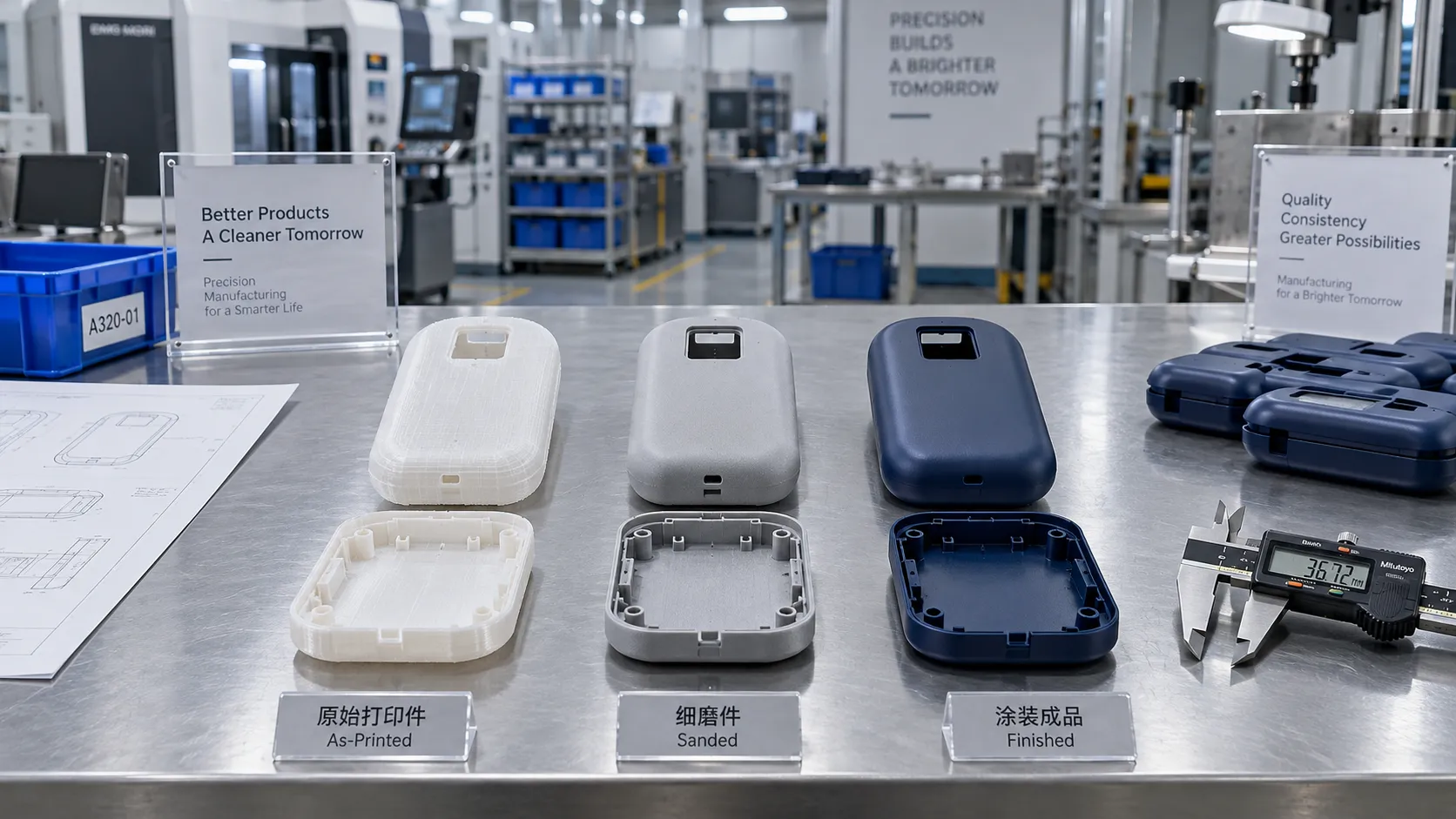
Choosing a 3D Printing Service for Consumer Products: Finish, Fit, and Cost
Compare 3d printing consumer good services by finish, fit, materials, and total cost. Learn how to choose a reliable supplier and avoid costly defects before ordering.

Which Consumer Goods Can Be 3D Printed, and What Are the Practical Limits?
Explore 3d printing consumer goods, from custom eyewear to replacement parts. Discover practical limits on materials, safety, and costs to make smarter production decisions.

From Prototype to Small Batch: Applying 3D Printing to Consumer Goods
Explore 3d printing in consumer goods: learn how to move from prototype to small-batch production with practical guidance on materials, quality validation, and cost control.
Related News
- 00
0000-00
How to verify part consistency before choosing a 3D printing OEM - 00
0000-00
How does a rigid cryogenic transfer line handle thermal contraction? - 00
0000-00
How much does edge vision deployment cost beyond the hardware? - 00
0000-00
How does the purity of sputtering targets affect thin-film quality? - 00
0000-00
How high power laser cladding systems control substrate dilution
Dr. Hideo Tanaka
Weekly Insights
Stay ahead with our curated technology reports delivered every Monday.