
Electronic components sourcing guide for quality and lead time

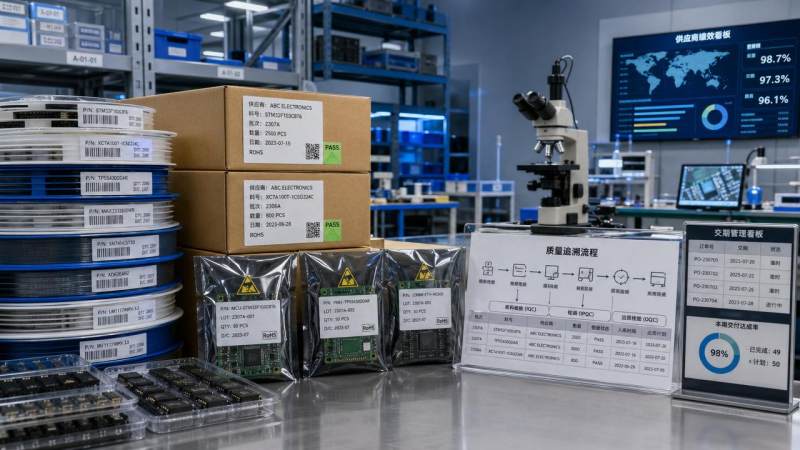
An effective electronic components sourcing guide helps quality control and safety managers reduce risk, secure stable lead times, and verify supplier reliability before defects disrupt production. In high-tech industrial supply chains, sourcing decisions must balance compliance, traceability, performance consistency, and delivery predictability. This guide outlines practical criteria for evaluating component sources while protecting product quality and operational continuity.
Why a checklist-based electronic components sourcing guide is essential
For quality and safety teams, sourcing is rarely just a purchasing task. A capacitor, connector, sensor, relay, PCB-mounted power module, or control IC can become a production stop, a field return, or a compliance issue if the source is weak. In many industrial programs, one delayed or inconsistent lot can affect 4 to 12 weeks of assembly scheduling, especially when replacement qualification is not pre-approved.
That is why an electronic components sourcing guide should be structured as a decision checklist rather than a broad market overview. Procurement may focus on price and lead time, but quality control personnel need documented traceability, lot consistency, inspection readiness, deviation handling, and evidence that the supplier can support corrective action within a defined response window such as 24 to 72 hours.
A checklist approach also helps safety managers compare component sources across mixed industrial environments, including automation systems, machine vision equipment, additive manufacturing controls, laser subsystems, vacuum instrumentation, and power electronics. In those settings, the risk profile changes quickly when products operate under elevated temperature, vibration, EMC exposure, or long service intervals of 3 to 7 years.
What should be confirmed before requesting quotes
- Confirm whether the component is standard catalog stock, made-to-order, or allocated supply, because lead time behavior differs significantly between a 7-day stocking item and a 20-week custom build.
- Define the minimum documentation package required: certificate of conformity, date code visibility, lot traceability, material declaration, test report, and change notification policy.
- Identify the application risk level in advance, such as non-critical auxiliary electronics, process-control boards, safety interlock circuits, or high-reliability sensing modules.
- Set internal acceptance criteria for substitutions, including footprint match, electrical tolerance range, lifecycle status, and requalification trigger points.
When these items are confirmed early, the electronic components sourcing guide becomes a practical risk filter. It reduces avoidable quote cycles, lowers the chance of emergency resourcing, and makes supplier comparisons more objective for both engineering and audit teams.
Core supplier evaluation checklist for quality and lead time
The most useful part of any electronic components sourcing guide is the supplier evaluation checklist. Quality managers should look beyond headline pricing and ask whether the supplier can repeatedly deliver the same specification, packaging condition, storage discipline, and traceability depth over multiple purchase cycles. For many industrial components, consistency across 3 to 5 lots matters more than a small unit-cost reduction.
Lead time should also be evaluated in layers. A supplier that promises 2 weeks but lacks buffer stock, approved alternates, or a stable upstream channel may be less dependable than a supplier quoting 6 weeks with transparent inventory and a documented replenishment cadence. The key point is not just nominal lead time, but lead time confidence.
The table below can be used as a first-pass supplier review tool for electronic components sourcing decisions in industrial and technology-driven purchasing programs.
For quality control and safety management, the strongest sourcing partner is usually the one that can present evidence quickly. If a supplier needs several days to confirm lot origin, storage conditions, or deviation history, that delay itself is a warning sign. In practice, mature suppliers can often provide basic traceability documents within 24 hours and a more detailed quality response within 3 business days.
Priority checks during supplier approval
- Review whether the supplier buys directly from original manufacturers, authorized channels, or mixed market sources.
- Check if moisture-sensitive, ESD-sensitive, or shelf-life-sensitive parts are stored and packed under defined controls.
- Verify response time for nonconforming material reports, returns, and replacement shipments.
- Confirm whether the supplier can flag end-of-life notices and process change notices before they affect production.
A practical acceptance threshold
For routine industrial applications, many teams use a tiered qualification model: approved, conditionally approved, and restricted source. A supplier may remain conditional until it completes 2 or 3 successful deliveries without labeling discrepancy, quantity shortage, packaging damage, or documentation gaps. This method is especially useful when global supply conditions force temporary onboarding of alternate sources.
Inspection, traceability, and compliance points that cannot be skipped
An electronic components sourcing guide is incomplete if it does not define what must be inspected at receiving and what documentation must follow the part through storage, assembly, and service support. For quality teams, traceability is not a paperwork formality. It is the fastest route to containment when a defect appears in one production batch and must be isolated before it spreads to 500 or 5,000 units.
Inspection depth should match risk. High-volume passive components may receive sampling by lot and packaging verification, while critical control semiconductors, power devices, or safety-relevant connectors may require stronger identity checks, date code confirmation, and visual review under magnification. In some industries, the difference between normal receiving and escalated inspection can be less than 30 minutes per lot but can prevent weeks of downstream disruption.
Compliance also deserves a separate review track. Depending on the application and destination market, teams may need environmental declarations, conflict mineral statements, export-control review, or evidence aligned with general standards such as ISO-managed quality systems and applicable IEC or ASTM references. The exact requirement varies, but missing documents frequently become a bigger delay than the physical shipment itself.
Receiving inspection checklist for sourced components
- Match manufacturer part number, supplier part number, revision status, and quantity against the purchase order and approved BOM.
- Inspect labels for lot code, date code, country of origin where applicable, and signs of re-labeling or over-sticker use.
- Check packaging condition, vacuum seal integrity where relevant, desiccant and humidity indicator presence for moisture-sensitive devices.
- Review certificates and declarations before releasing stock into production, not after assembly has started.
- Define escalation triggers such as mixed date codes, broken reels, incomplete labeling, or inconsistent documentation.
For many industrial sites, the best practice is to separate acceptance into three stages: document check, packaging and identity check, and risk-based sample inspection. Even a simple 3-step gate reduces the chance of uncontrolled material entering SMT lines, cable harness assembly, field service kits, or spare-parts inventory.
Documentation and compliance checklist
The next table summarizes the minimum document set that quality and safety managers often request when applying an electronic components sourcing guide to industrial procurement.
This document set should be matched to product criticality. A spare indicator LED and a control-board power MOSFET do not require the same scrutiny. The value of the electronic components sourcing guide is that it defines these differences clearly before urgency overrides discipline.
How to judge lead time reliability across different sourcing scenarios
Quoted lead time is only the visible layer of supply performance. Quality and safety managers should ask how that number is built: live stock, inbound shipment, factory slot, distributor allocation, or a brokered market position. Each path carries a different reliability level, and the same part may shift from 2 weeks to 18 weeks depending on package type, wafer allocation, or regional demand.
An electronic components sourcing guide should therefore separate lead time into at least three questions: how fast can the supplier ship, how likely is the date to hold, and what backup options exist if the first plan fails. This approach matters in advanced industrial environments where one delayed encoder IC, optical sensor, or vacuum-rated connector may hold a full subsystem shipment.
For planning purposes, many teams classify components into short-cycle, medium-cycle, and strategic long-cycle groups. Short-cycle items may be under 2 weeks, medium-cycle items between 3 and 8 weeks, and strategic items above 8 weeks. The exact threshold varies, but using categories helps determine where to hold safety stock and where to qualify alternates in advance.
Lead time risk signals to monitor
- Lead time changes by more than 30% within one quotation cycle without a clear supply explanation.
- Supplier cannot confirm whether the source is stock-backed or dependent on future inbound material.
- Partial shipment is offered without a documented balance delivery date.
- No process exists for allocation alerts, last-time-buy notice, or alternate recommendation.
A practical buffer strategy
If a component affects a safety circuit, core control board, or expensive final assembly, a buffer equivalent to 1 to 2 replenishment cycles is often safer than relying on just-in-time delivery. That does not mean building excessive inventory for every line item. It means identifying the 10% to 20% of parts that create 80% of schedule disruption when unavailable.
In this part of the electronic components sourcing guide, cross-functional review is critical. Procurement sees current supplier capacity, engineering sees substitution limits, and quality sees the inspection burden of each new source. Lead time decisions are more stable when these three views are aligned before purchase release.
Common sourcing mistakes that create quality and safety risk
Even experienced teams can miss basic controls when shortages, redesign pressure, or urgent customer orders appear. The most common failures are not always technical defects. Often they are process shortcuts: accepting incomplete labels, approving substitutes without verification, skipping storage checks, or assuming that a low-cost source can match the documentation discipline of a qualified channel.
A good electronic components sourcing guide should highlight these preventable errors because they usually appear under time pressure. Once material is mounted, mixed into stock, or shipped into the field, the containment cost can multiply quickly. A one-day review delay at receiving may prevent a 6-week recovery effort later.
Safety managers should be especially alert when sourced parts influence thermal protection, interlock logic, emergency stop interfaces, power conversion, or critical sensing. In these cases, sourcing quality directly affects operational safety, not just product yield.
Frequent oversights to eliminate
- Treating all alternates as equivalent without confirming derating limits, connector mating compatibility, or firmware interaction.
- Using old approvals for new date codes or revised packaging conditions without a fresh review.
- Ignoring shelf-life exposure for adhesives, batteries, moisture-sensitive semiconductors, or specialty materials.
- Failing to document who approved a deviation, how long it remains valid, and what requalification is required.
When to escalate immediately
Escalation is justified when there is any mismatch between product marking and paperwork, unexplained price deviation far below market expectation, broken traceability at lot level, or a supplier refusal to disclose source type. These are not minor commercial details. They are indicators that the sourcing path may not support the quality controls expected in industrial manufacturing and technical procurement.
Execution plan: how quality and safety teams can apply this guide
The most effective electronic components sourcing guide is one that can be used repeatedly across RFQs, supplier onboarding, incoming inspection, and change control. It should not stay as a static policy document. It should become a working review tool shared by procurement, engineering, warehouse, and quality personnel.
A simple execution model is to assign sourcing reviews in four stages: pre-quote definition, supplier screening, first-lot acceptance, and periodic performance review. Each stage should have a responsible owner and a short decision record. Even for mid-volume operations, this can often be managed with a compact review sheet updated every quarter or every 6 months.
Where supply risk is high, include a standing review of obsolescence, allocation exposure, and single-source dependency. In technical sectors such as machine vision, laser systems, vacuum equipment, and advanced manufacturing controls, some components remain highly specialized. Early visibility on lifecycle change can protect both product quality and service continuity.
Implementation checklist
- Prepare an approved vendor matrix by component category, risk level, and documentation level required.
- Define first-article or first-lot inspection rules for critical sourced components.
- Set measurable supplier KPIs such as on-time delivery, documentation completeness, and nonconformance rate per quarter.
- Create a deviation workflow for substitutions, expedited buys, and emergency source changes.
- Review strategic components every 6 to 12 months for lifecycle, compliance, and lead time stability.
When executed consistently, this guide supports fewer incoming surprises, more predictable lead times, stronger audit readiness, and faster reaction when supply conditions change. That is the practical value of a disciplined electronic components sourcing guide in modern industrial supply chains.
Why choose us for sourcing evaluation and technical supply intelligence
G-AIT supports industrial buyers, quality teams, and technical decision-makers who need more than a basic distributor list. Our focus is on verifiable engineering data, cross-sector benchmarking, and supply-chain intelligence relevant to advanced manufacturing environments where reliability, compliance, and operational continuity matter.
If you are refining an electronic components sourcing guide for high-performance equipment, specialized subsystems, or quality-sensitive procurement, we can help you organize the right review criteria before sourcing risk turns into production loss. This includes component screening logic, supplier evaluation priorities, documentation expectations, and lead time risk review for technically demanding industrial applications.
Contact us to discuss parameter confirmation, component selection, delivery cycle planning, custom sourcing scenarios, certification-related document needs, sample support, or quotation communication. If your team is managing supplier qualification, alternate approval, or risk-sensitive procurement in advanced industrial programs, we can help you structure the decision process with greater clarity and control.
Related News

When does 3d scanning and printing service save more time
3d scanning and printing service saves time when parts are complex, missing, or urgent. Discover when scan-to-print workflows beat traditional methods for faster prototypes and replacements.
How to judge a peek 3d printer manufacturer with less risk
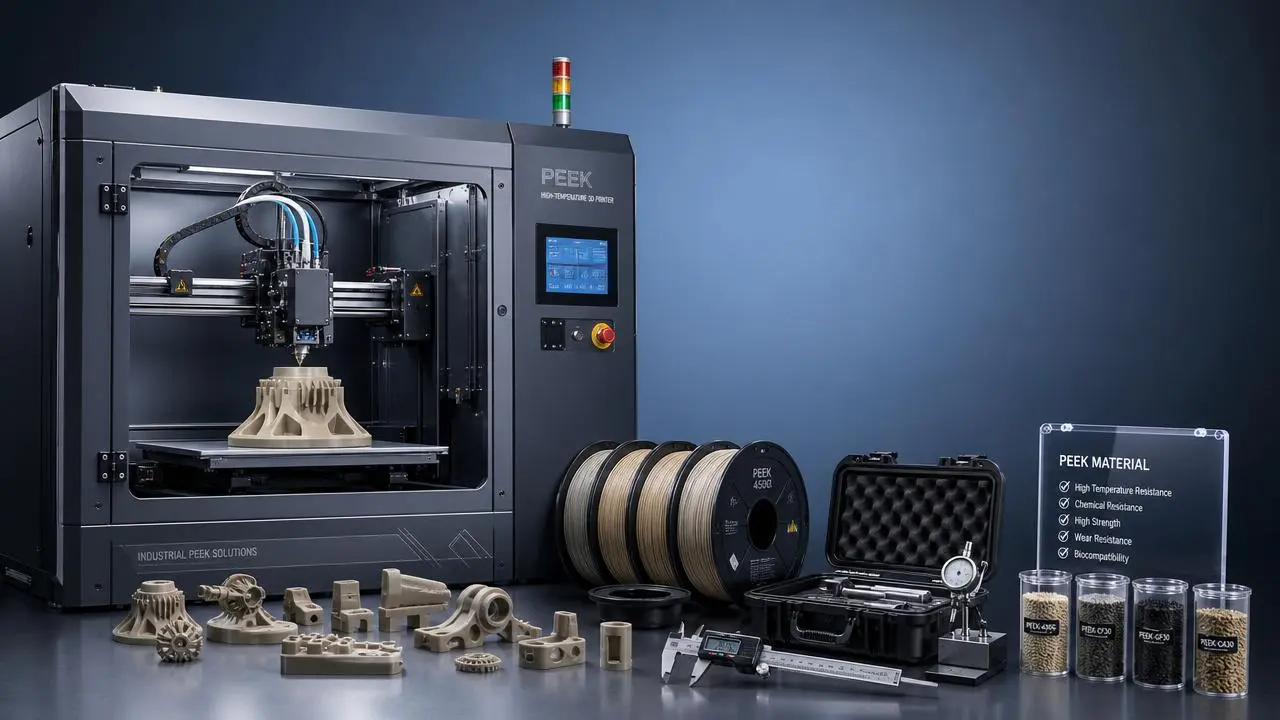
Peek 3d printer manufacturer evaluation made practical: learn how to reduce procurement risk, compare lifecycle cost, verify service and compliance, and choose with confidence.
Is multi-material 3d printer wholesale a growing channel in 2026
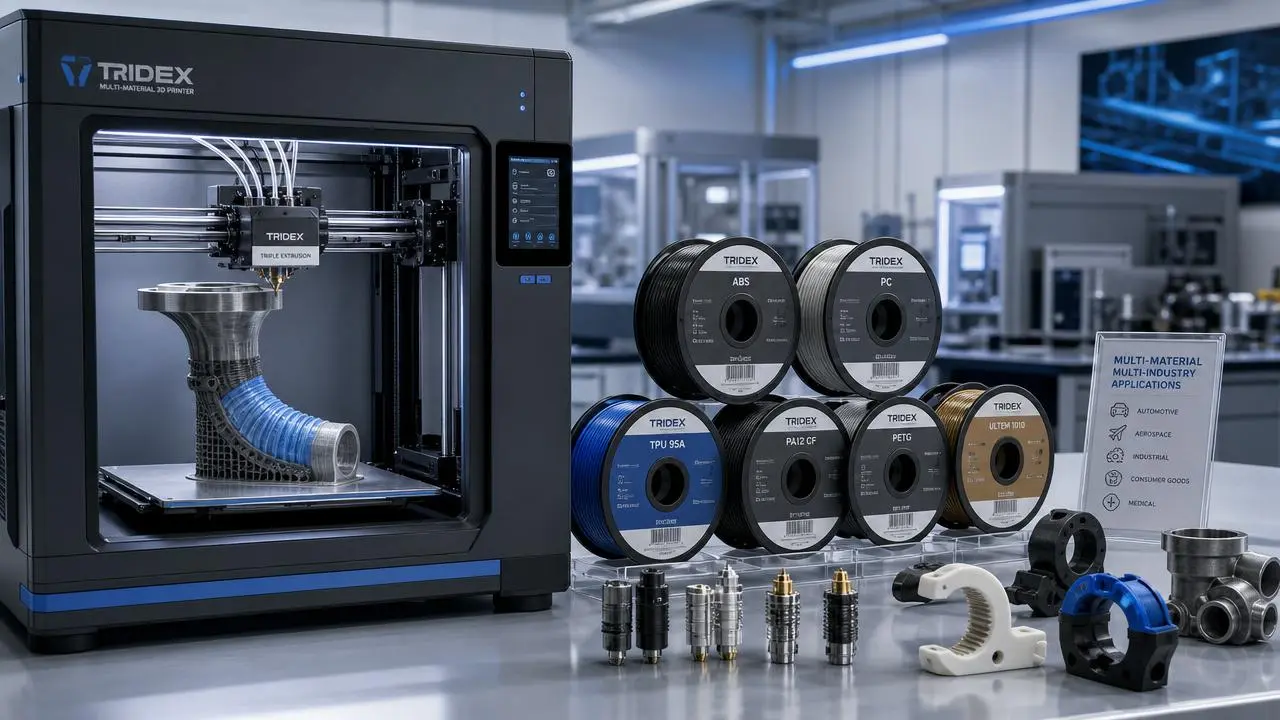
Multi-material 3d printer wholesale is becoming a high-growth channel in 2026. Discover key demand drivers, buyer needs, margins, and smart distributor strategies.

How metal powder atomization equipment affects powder quality
Metal powder atomization equipment directly shapes particle size, purity, flowability, and consistency. Learn how the right setup improves powder quality, lowers defects, and supports safer, more reliable production.

Why R&D Institutes need faster proof to production workflows
R&D Institutes need faster proof-to-production workflows to turn lab results into scalable, compliant outcomes. Learn how to cut validation delays, improve benchmarking, and speed industrial adoption.
What to check before choosing 3d printing slicing software oem
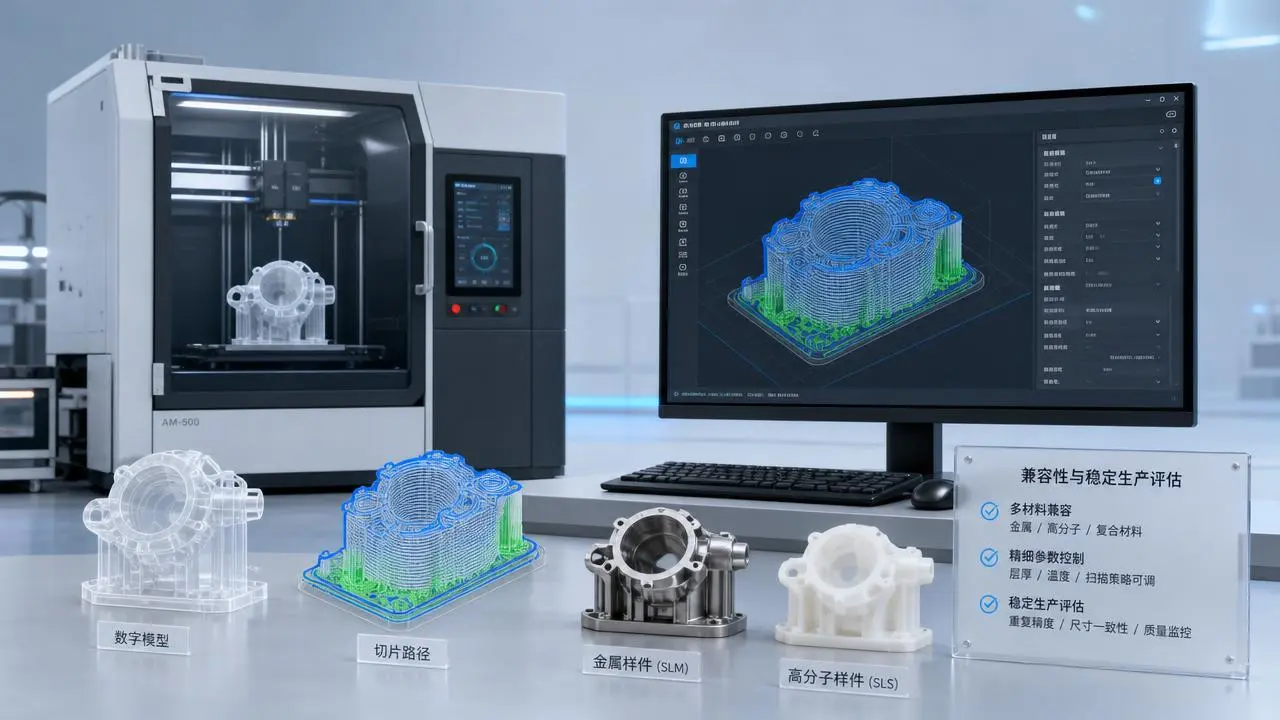
3d printing slicing software oem selection starts with the right checklist. Learn what to verify in compatibility, toolpath quality, security, and scalability before you decide.

Is continuous liquid interface production clip still faster
Continuous liquid interface production (clip) still faster? Explore real-world throughput, post-processing impact, material performance, and benchmarking insights for smarter manufacturing decisions.

Why a reliable 3d printing nozzle oem supplier matters
3d printing nozzle oem supplier selection directly impacts print consistency, wear life, and production stability. Learn how to evaluate quality, reduce hidden costs, and choose with confidence.

What makes a vacuum drying oven for 3d printing worth it
Vacuum drying oven for 3d printing: learn when it’s worth the investment for moisture-sensitive materials, fewer defects, better consistency, and stronger industrial production control.
Related News
- 00
0000-00
When does 3d scanning and printing service save more time - 00
0000-00
How to judge a peek 3d printer manufacturer with less risk - 00
0000-00
Is multi-material 3d printer wholesale a growing channel in 2026 - 00
0000-00
How metal powder atomization equipment affects powder quality - 00
0000-00
Why R&D Institutes need faster proof to production workflows
Dr. Victor Gear
Weekly Insights
Stay ahead with our curated technology reports delivered every Monday.