
Vacuum Bellows Fatigue Life Benchmarks for Cycle Testing


Vacuum bellows sit at a small but decisive point in many high-value systems. Under repeated motion, pressure variation, and thermal stress, their life is rarely defined by catalog claims alone. For cycle testing, vacuum bellows fatigue life benchmarks create a more useful reference frame, linking laboratory data with real operating duty, supplier consistency, and long-term reliability.
That matters across advanced manufacturing, semiconductor tools, research chambers, cryogenic assemblies, and automated vacuum handling. In these settings, an early bellows failure can mean leakage, contamination, unscheduled downtime, and a chain of qualification delays. A benchmark is not just a number of cycles. It is a structured way to judge whether a component can survive the conditions it will actually see.
Within the broader industrial landscape, this is also where technical benchmarking becomes commercially relevant. G-AIT’s focus on verifiable engineering data, standards alignment, and cross-sector intelligence reflects a wider shift: procurement and technical approval increasingly depend on evidence that is comparable, traceable, and useful across suppliers, not only within a single test report.
Why fatigue benchmarks matter more than nominal cycle counts
A published cycle count can look reassuring, yet it often hides the test conditions that produced it. Bellows life changes sharply with stroke length, pressure differential, alignment, frequency, temperature, and end fitting design.
In practice, vacuum bellows fatigue life benchmarks are valuable because they normalize comparison. They help separate a component tested under mild displacement from one qualified under realistic axial, lateral, or angular motion.
This distinction becomes critical when the bellows supports dynamic valves, load locks, transfer modules, cryogenic lines, or vacuum robotics. A mismatch between test method and field duty can make a nominally compliant bellows a hidden failure point.
What a meaningful benchmark actually includes
Useful benchmarking is multidimensional. It does not stop at total cycles to failure. It records how the bellows was built, how it moved, and how failure was defined.
At minimum, vacuum bellows fatigue life benchmarks should connect performance with the following factors:
- material grade, wall thickness, and forming route
- number of convolutions and convolution geometry
- weld design, weld repeatability, and heat-affected zone quality
- motion mode, including axial compression, extension, offset, or angular flexure
- pressure state, from rough vacuum to UHV service, with internal or external loading
- test frequency, thermal cycling, and end-of-life leakage criteria
Without those details, benchmark data is difficult to compare. More importantly, it is difficult to convert into a realistic maintenance or sourcing decision.
Failure mode matters as much as failure count
A bellows may fail through pinhole cracking, root fatigue, weld fracture, plastic instability, or leak growth after repeated deformation. Those modes do not carry the same operational consequences.
For example, gradual leak onset may allow detection during scheduled maintenance. A weld-related rupture under rapid cycling can trigger immediate process interruption. Strong benchmark sets distinguish between these outcomes instead of merging them into a single life figure.
Material behavior and manufacturing quality
Material selection is often discussed in broad terms, but fatigue life depends on more than alloy family. Stainless variants, nickel alloys, and specialized thin-wall constructions respond differently to cyclic strain, vacuum cleanliness demands, and temperature extremes.
Forming quality also changes service life. Excess residual stress, inconsistent wall thinning, or poor convolution symmetry can create local strain concentration. These issues may not appear in static leak tests, yet they strongly affect dynamic endurance.
Weld quality deserves special attention. Many field failures originate at the weld toe or nearby heat-affected regions. When reviewing vacuum bellows fatigue life benchmarks, repeatability across multiple samples is often more informative than one best-case result.
Where cycle testing is most relevant
Not every vacuum bellows needs the same level of endurance validation. The strongest need appears where motion is frequent, contamination risk is high, and access for replacement is difficult.
Common cases include semiconductor handling platforms, vacuum deposition equipment, analytical instruments, aerospace test rigs, fusion and cryogenic research systems, and precision automation interfaces.
Across these applications, vacuum bellows fatigue life benchmarks support more than component selection. They shape qualification plans, spare strategy, maintenance intervals, and warranty risk assessment.
Static service and dynamic service should not be mixed
A bellows that performs well in a largely static vacuum line may not survive repeated actuator motion. Dynamic service introduces cumulative strain, and even small offsets can reduce life far below a static-use expectation.
This is why benchmark interpretation must start from actual movement profiles, not from part appearance or dimensional similarity.
How to read supplier data with more discipline
Supplier literature often highlights vacuum compatibility, leak rate, and pressure rating. Those are essential, but they do not replace fatigue evidence. A disciplined review asks whether the test setup resembles the intended use.
- Check whether the reported cycle count reflects full stroke or partial stroke.
- Review sample size and scatter, not only the top-performing specimen.
- Confirm leak criteria at end of test, especially for UHV-sensitive systems.
- Look for combined loading data if misalignment or thermal variation is expected.
- Ask whether the same construction is used in production, not only in qualification samples.
This approach aligns with the wider benchmarking philosophy seen in advanced industrial sectors. Comparable, standards-aware data reduces the risk of approving components that pass documentation review but fail under field conditions.
The broader industry signal behind bellows benchmarking
The growing interest in vacuum bellows fatigue life benchmarks reflects a larger industrial trend. Across laser systems, additive platforms, machine vision tools, nanomaterial processing, and vacuum engineering, qualification is moving toward verified performance under realistic duty cycles.
That shift explains why repositories of technical benchmarks and standards mapping have become more important. Organizations such as G-AIT add value by connecting component-level evidence with international frameworks, export realities, and evolving supply chain expectations.
In other words, the benchmark is no longer only a lab reference. It becomes part of sourcing governance, design review, and lifecycle planning.
A practical path for the next evaluation cycle
A useful next step is to define a bellows duty profile before comparing vendors. That profile should include motion type, stroke, pressure range, thermal exposure, allowable leak growth, and replacement constraints.
Then map available vacuum bellows fatigue life benchmarks against that profile, rather than against a generic catalog baseline. Any gap between benchmark conditions and field conditions should be treated as an explicit risk item.
Where systems carry high downtime cost or strict contamination limits, it is worth requesting sample-level endurance data, weld qualification evidence, and traceable production controls. That creates a more reliable basis for approval than relying on nominal cycle claims alone.
The strongest decisions usually come from a simple combination: realistic duty definition, comparable benchmark data, and disciplined review of manufacturing consistency. In vacuum systems, that combination often determines whether a bellows remains a routine component or becomes a persistent operational risk.
Related News

How to verify part consistency before choosing a 3D printing OEM
Choosing a 3D printing OEM? Learn how to verify part consistency with repeat-build trials, validated inspections, and traceability checks before committing to production.
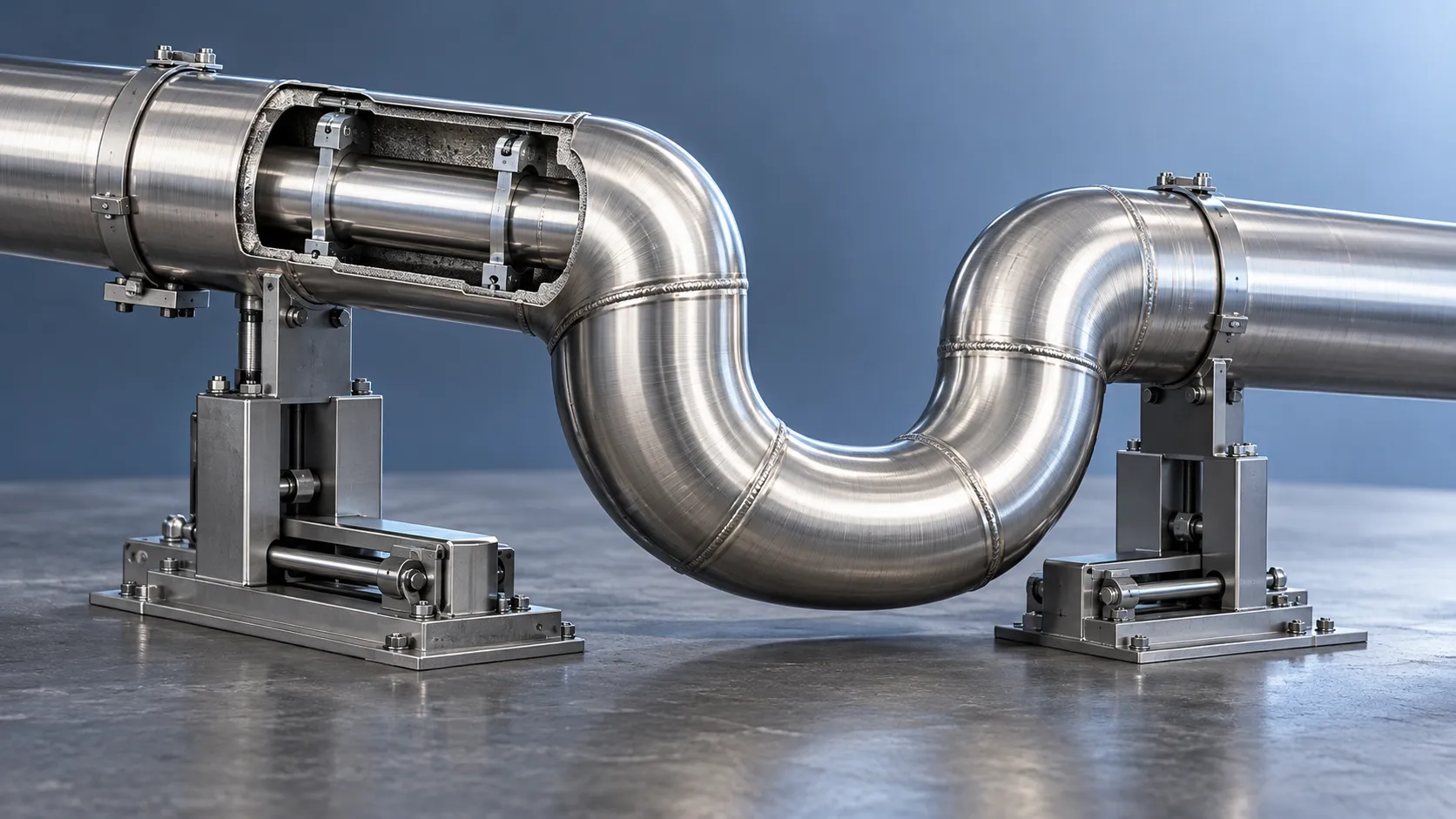
How does a rigid cryogenic transfer line handle thermal contraction?
Learn how a rigid cryogenic transfer line manages thermal contraction with bends, bellows, and guided supports. Discover key design checks for safe, reliable cryogenic performance.

How much does edge vision deployment cost beyond the hardware?
Understand edge vision deployment cost beyond hardware, from data and integration to security and support. Uncover hidden expenses and build a smarter lifecycle budget before you scale.

How does the purity of sputtering targets affect thin-film quality?
Discover how sputtering targets affect thin-film quality. Learn to assess purity, identify harmful impurities, and choose specifications that improve coating performance.

How high power laser cladding systems control substrate dilution
Discover how high power laser cladding systems control substrate dilution through beam shaping, material feed, and thermal management to deliver reliable bonds and coating performance.

How to check HS codes for customs compliance in international logistics
Strengthen international logistics customs compliance: learn how to verify HS codes, check official tariffs, and document classifications to reduce costly shipment delays.
Choosing a 3D Printing Service for Consumer Products: Finish, Fit, and Cost
Compare 3d printing consumer good services by finish, fit, materials, and total cost. Learn how to choose a reliable supplier and avoid costly defects before ordering.

Which Consumer Goods Can Be 3D Printed, and What Are the Practical Limits?
Explore 3d printing consumer goods, from custom eyewear to replacement parts. Discover practical limits on materials, safety, and costs to make smarter production decisions.
From Prototype to Small Batch: Applying 3D Printing to Consumer Goods
Explore 3d printing in consumer goods: learn how to move from prototype to small-batch production with practical guidance on materials, quality validation, and cost control.
Related News
- 00
0000-00
How to verify part consistency before choosing a 3D printing OEM - 00
0000-00
How does a rigid cryogenic transfer line handle thermal contraction? - 00
0000-00
How much does edge vision deployment cost beyond the hardware? - 00
0000-00
How does the purity of sputtering targets affect thin-film quality? - 00
0000-00
How high power laser cladding systems control substrate dilution
Dr. Julian Volt
Weekly Insights
Stay ahead with our curated technology reports delivered every Monday.