
How R&D Institutes Are Driving 3D Printing Progress

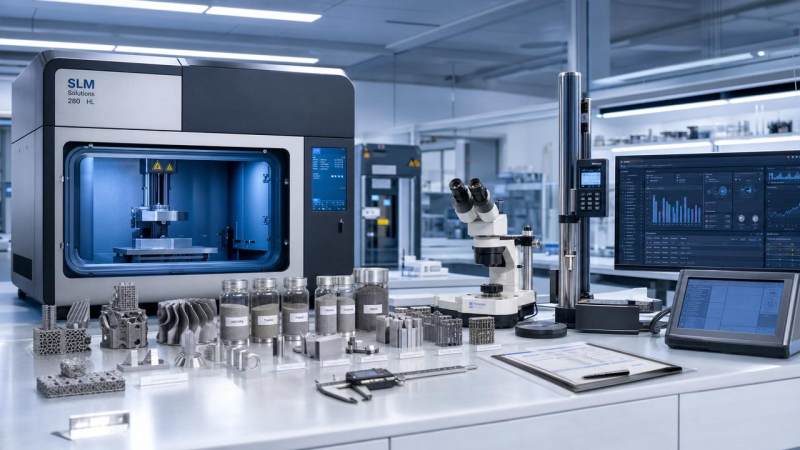
R&D Institutes are accelerating 3D printing progress by transforming experimental concepts into scalable industrial solutions. From advanced materials and process optimization to standards validation and application benchmarking, their work helps manufacturers reduce risk and adopt additive manufacturing with greater confidence. For information researchers, understanding how these institutes shape innovation reveals where technical breakthroughs, commercial readiness, and future competitive advantages are emerging.
In the broader industrial landscape, additive manufacturing is no longer evaluated only by prototype speed. Buyers, procurement teams, and technical analysts now look at repeatability, qualification cycles, material traceability, post-processing demands, and compliance with standards such as ISO and ASTM. This is where R&D Institutes play a decisive role.
For information researchers tracking industrial technology, the value of these institutes lies in their ability to reduce uncertainty across 3 to 5 critical decision areas: process stability, material performance, application feasibility, cost-to-scale, and regulatory readiness. Their work often determines whether a promising laboratory concept can survive industrial scrutiny.
Why R&D Institutes Matter in Industrial 3D Printing
3D printing development depends on more than machine vendors. R&D Institutes provide neutral testing environments, long-cycle experiments, and cross-disciplinary expertise that many private manufacturers cannot sustain internally for 12 to 36 months. This makes them central to technology maturation.
In B2B settings, industrial adoption often fails not because a part cannot be printed once, but because it cannot be printed 100 times within tolerance, qualified across multiple lots, and documented for procurement or compliance review. R&D Institutes help close that gap.
From experimental proof to production readiness
Most additive technologies move through at least 4 stages: material screening, parameter development, part validation, and pilot-scale production. R&D Institutes contribute at each stage by generating verified process windows, comparing machine behaviors, and defining acceptable performance thresholds.
For example, a metal powder bed fusion process may require optimization across laser power, layer thickness, scan speed, hatch spacing, and shielding gas quality. Even a 10% change in energy density can shift porosity, surface finish, and fatigue behavior. Institutes map these interactions in structured test campaigns.
Typical industrial questions they answer
- Can a printed component meet dimensional tolerance within ±0.1 mm to ±0.3 mm after finishing?
- How stable is a process over 20, 50, or 100 build cycles?
- Which feedstock conditions increase defect risk after 3 to 5 reuse loops?
- What post-processing route best balances hardness, density, and lead time?
The table below outlines how R&D Institutes typically contribute across different industrial maturity stages in additive manufacturing programs.
The key takeaway is that R&D Institutes are not just research performers. They function as validation engines that turn additive manufacturing from a technical possibility into a lower-risk sourcing and production option.
Why this matters to information researchers
Researchers evaluating markets, technologies, or supplier ecosystems should watch where institutes are investing time and test capacity. A concentration of work in large-format metal printing, multimaterial polymer systems, or in-situ monitoring often signals where industrial demand is strengthening over the next 2 to 5 years.
Institutes also reveal which technologies are struggling. If repeated studies continue to focus on distortion control, powder recycling limits, or weak interlayer bonding, the market may still be in an early-risk phase despite strong promotional claims from equipment suppliers.
The Core Areas Where R&D Institutes Drive 3D Printing Progress
The impact of R&D Institutes is most visible in five operational areas: materials, process control, inspection, standards, and application benchmarking. Together, these areas shape whether a printed part can move from engineering interest to procurement acceptance.
1. Advanced materials development
Many industrial limitations in additive manufacturing begin with materials rather than machines. Institutes test metal powders, ceramic blends, photopolymers, and composite feedstocks for particle size distribution, thermal response, shrinkage behavior, and storage sensitivity. Typical evaluation cycles range from 4 to 12 weeks.
This is especially important when industries demand higher strength-to-weight ratios, corrosion resistance, or thermal performance. A promising alloy may print successfully, yet fail after heat treatment or show unacceptable anisotropy under cyclic loading. R&D Institutes identify these risks early.
2. Process parameter optimization
In production environments, a process window is more valuable than a single successful print. R&D Institutes run designed experiments to identify stable ranges for key variables such as layer height, exposure energy, chamber temperature, scan pattern, and recoating consistency. This often reduces trial-and-error costs by 20% to 40% compared with unstructured in-house tuning.
For procurement and manufacturing teams, that means better predictability in cycle time, yield, and secondary finishing workload. For analysts, it provides a clearer signal of whether a technology is maturing or still operationally fragile.
3. Inspection and quality assurance integration
Printed parts often fail inspection planning before they fail mechanical testing. Institutes increasingly combine additive manufacturing with machine vision, optical inspection, computed tomography, and AI-supported defect review. This supports layered quality control from powder input to final part geometry.
In many programs, 3 inspection stages are common: in-process monitoring, post-build dimensional verification, and destructive or non-destructive material validation. That layered approach helps manufacturers identify whether defects originate in the machine, the material, or downstream handling.
4. Standards validation and documentation
A major reason R&D Institutes matter is their ability to translate test results into documentation that aligns with recognized frameworks. Industrial buyers rarely accept additive claims without traceable records, repeatable methods, and consistent test logic. Institutes support this with benchmark protocols tied to ISO, ASTM, SEMI, or IEEE expectations where relevant.
This is not limited to regulated sectors. Even in general industrial procurement, supplier qualification often requires 6 to 10 documentation checkpoints, including feedstock traceability, machine calibration records, inspection data, and post-process verification notes.
5. Application benchmarking
Not every part benefits from additive manufacturing. R&D Institutes compare candidate applications against conventional machining, casting, molding, or hybrid manufacturing routes. The decision may depend on batch volume, geometry complexity, lead time targets, and part criticality.
For instance, a low-volume part with internal channels, 8 to 12 assembled features, and long conventional tooling lead times may strongly favor additive production. A high-volume, low-complexity bracket may not. Benchmarking clarifies where the value is real.
How Information Researchers Can Evaluate Institute-Led Innovation Signals
For researchers, the challenge is not simply identifying active R&D Institutes, but judging the industrial relevance of their work. Useful signals come from test depth, standard alignment, equipment diversity, collaboration patterns, and whether the research addresses scale-up rather than only novelty.
Key indicators to monitor
- Whether studies report repeatability across multiple builds instead of one-off samples
- Whether material studies include post-processing and lifecycle considerations
- Whether inspection and benchmarking data are linked to practical manufacturing use cases
- Whether outputs support supplier qualification, sourcing, or production transfer decisions
The following framework helps information researchers assess the practical value of institute activity when reviewing additive manufacturing developments.
This type of structured review is useful because it separates visible innovation from bankable innovation. In many sectors, commercial traction depends less on press visibility and more on whether the technical evidence can support procurement, engineering approval, and repeatable supply.
Common interpretation mistakes
Mistake 1: Equating new materials with immediate readiness
A new printable alloy or resin can be strategically important, but readiness depends on more than initial printability. Researchers should check whether data cover aging, finishing, dimensional drift, recyclability, and consistency across at least several build rounds.
Mistake 2: Ignoring post-processing economics
Some additive parts achieve geometric success only to face 30% to 50% of total cost in support removal, heat treatment, machining, or inspection. R&D Institutes that study full workflow economics provide more reliable indicators than those focused only on print-stage performance.
Mistake 3: Overlooking standardization progress
Industrial buying teams often move cautiously until test methods, terminology, and qualification pathways become clearer. Institute-led work on standards and benchmarks can therefore be a stronger market signal than isolated performance records.
What This Means for Procurement, Strategy, and Market Intelligence
The influence of R&D Institutes extends beyond laboratories. Their findings shape sourcing requirements, supplier qualification frameworks, competitive positioning, and long-range investment decisions. In many industrial segments, the fastest-growing additive opportunities appear where validation infrastructure is strongest.
Practical implications for B2B decision-makers
- Use institute benchmarks to compare technology claims across multiple vendors.
- Prioritize applications with documented repeatability, not only design novelty.
- Assess whether standards alignment can shorten qualification by 1 to 2 review cycles.
- Monitor inspection integration, since quality assurance often defines production viability.
- Track material and export-control developments that may affect future sourcing strategy.
This aligns closely with the role of technical intelligence platforms such as G-AIT, where verified engineering data, standards-based benchmarking, and cross-sector industrial analysis help buyers and researchers move from fragmented information to decision-ready insight.
Because additive manufacturing intersects with industrial laser processing, machine vision, advanced materials, and controlled-environment engineering, the most useful market intelligence is multidisciplinary. That is precisely why institute activity deserves close attention: it often reveals how these technologies converge before the market fully prices in the opportunity.
R&D Institutes are driving 3D printing progress by making additive manufacturing more measurable, more comparable, and more deployable in real industrial settings. Their work helps information researchers identify which technologies are moving toward scalable adoption, which applications are commercially realistic, and which risks still need to be managed.
For organizations evaluating advanced manufacturing investments, supplier landscapes, or next-stage product strategies, access to verified benchmark data and regulatory foresight can significantly improve decision quality. To explore more additive manufacturing intelligence, benchmark comparisons, or tailored research support, contact us to get a customized solution and learn more about the right pathway for your industrial objectives.
Related News
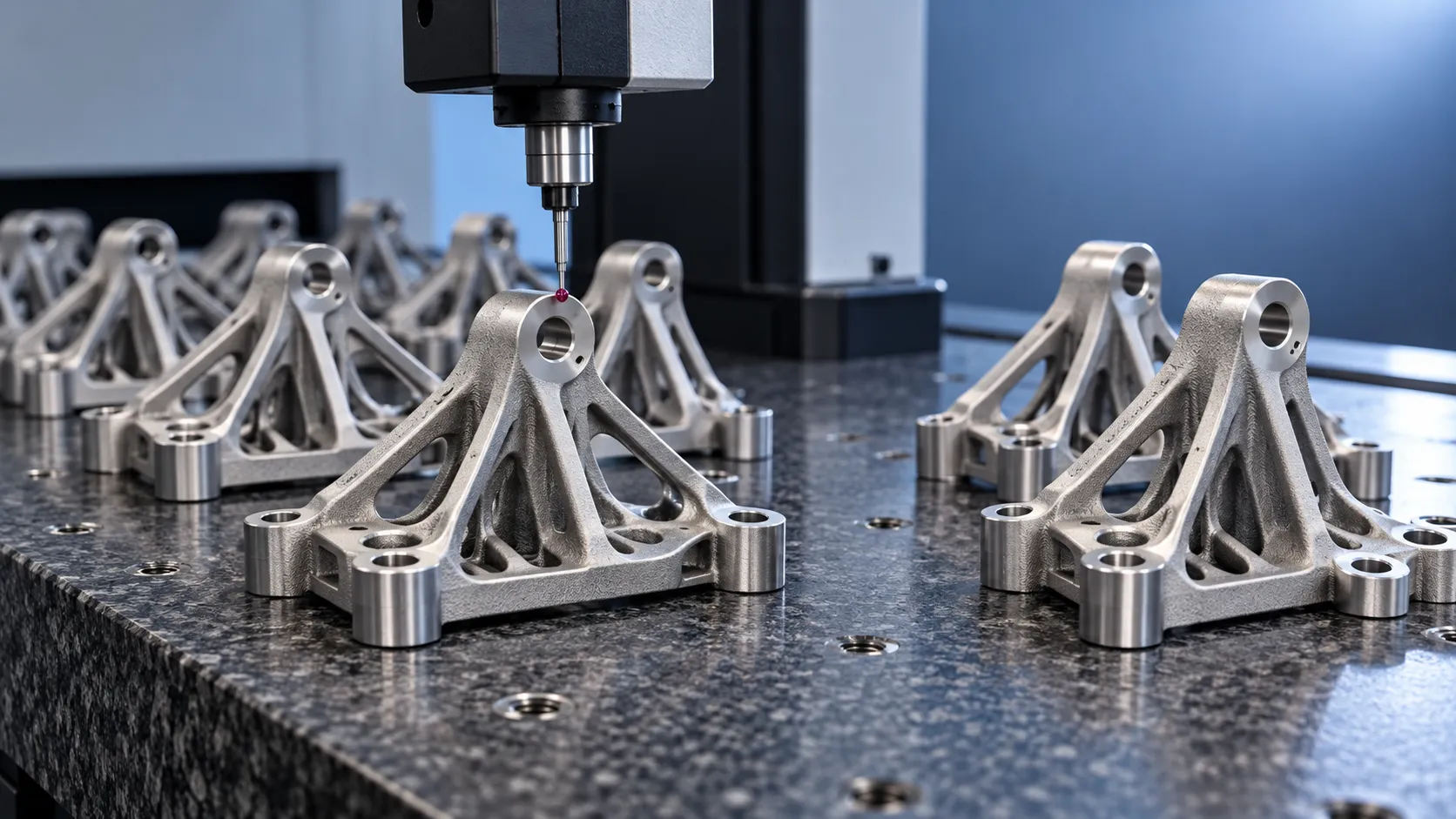
How to verify part consistency before choosing a 3D printing OEM
Choosing a 3D printing OEM? Learn how to verify part consistency with repeat-build trials, validated inspections, and traceability checks before committing to production.
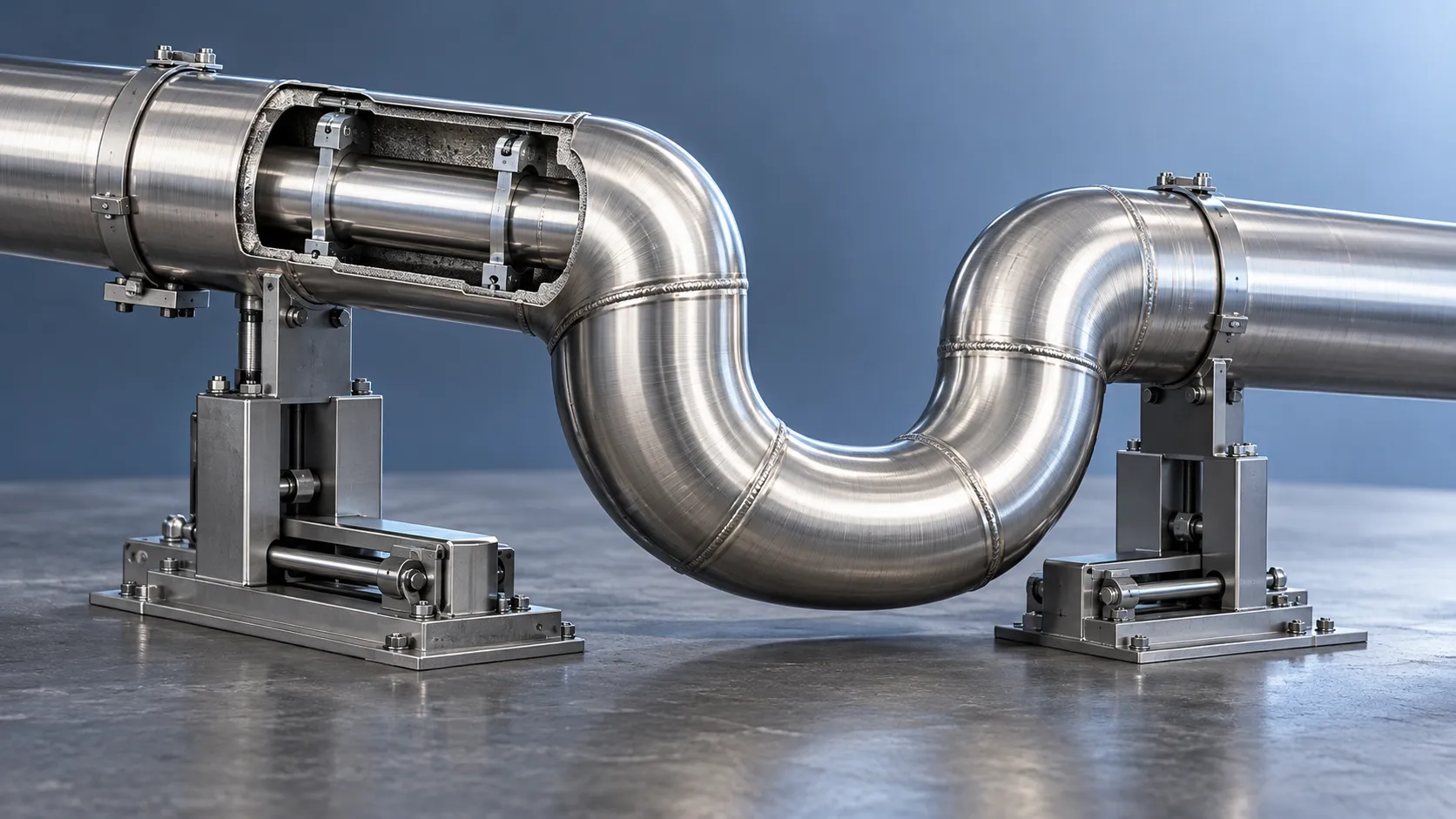
How does a rigid cryogenic transfer line handle thermal contraction?
Learn how a rigid cryogenic transfer line manages thermal contraction with bends, bellows, and guided supports. Discover key design checks for safe, reliable cryogenic performance.
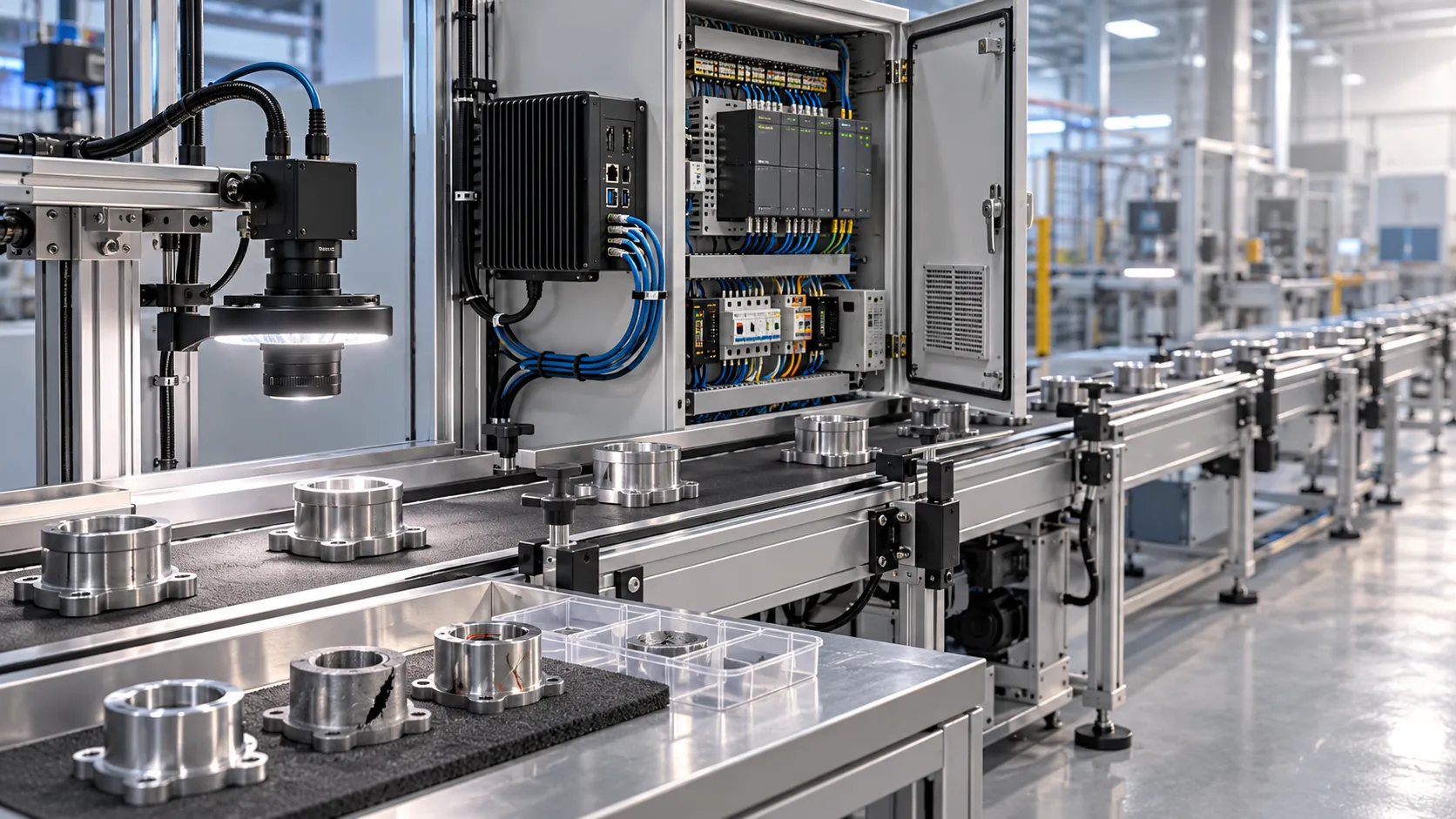
How much does edge vision deployment cost beyond the hardware?
Understand edge vision deployment cost beyond hardware, from data and integration to security and support. Uncover hidden expenses and build a smarter lifecycle budget before you scale.
How does the purity of sputtering targets affect thin-film quality?
Discover how sputtering targets affect thin-film quality. Learn to assess purity, identify harmful impurities, and choose specifications that improve coating performance.
How high power laser cladding systems control substrate dilution
Discover how high power laser cladding systems control substrate dilution through beam shaping, material feed, and thermal management to deliver reliable bonds and coating performance.

How to check HS codes for customs compliance in international logistics
Strengthen international logistics customs compliance: learn how to verify HS codes, check official tariffs, and document classifications to reduce costly shipment delays.
Choosing a 3D Printing Service for Consumer Products: Finish, Fit, and Cost
Compare 3d printing consumer good services by finish, fit, materials, and total cost. Learn how to choose a reliable supplier and avoid costly defects before ordering.
Which Consumer Goods Can Be 3D Printed, and What Are the Practical Limits?
Explore 3d printing consumer goods, from custom eyewear to replacement parts. Discover practical limits on materials, safety, and costs to make smarter production decisions.
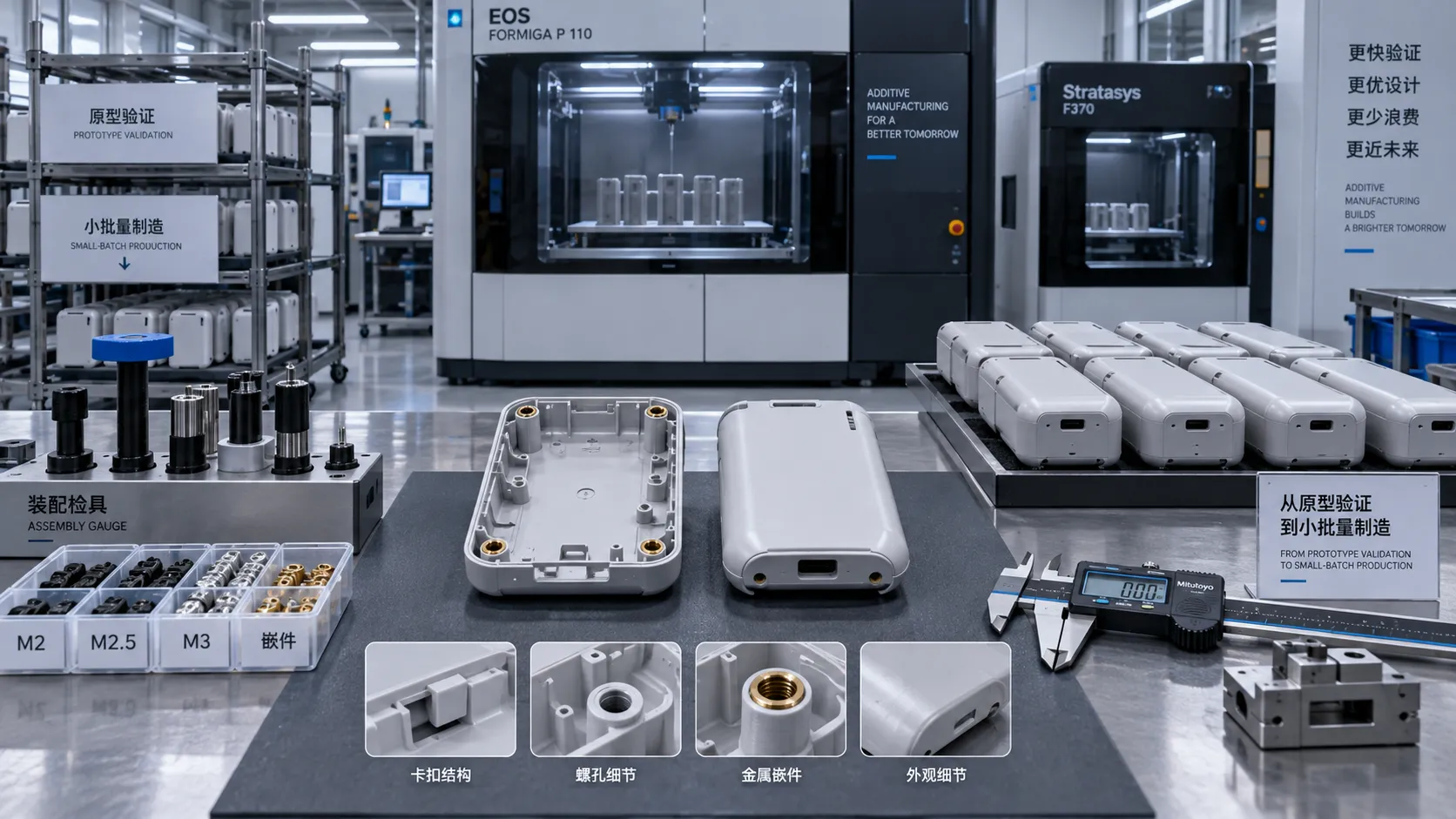
From Prototype to Small Batch: Applying 3D Printing to Consumer Goods
Explore 3d printing in consumer goods: learn how to move from prototype to small-batch production with practical guidance on materials, quality validation, and cost control.
Related News
- 00
0000-00
How to verify part consistency before choosing a 3D printing OEM - 00
0000-00
How does a rigid cryogenic transfer line handle thermal contraction? - 00
0000-00
How much does edge vision deployment cost beyond the hardware? - 00
0000-00
How does the purity of sputtering targets affect thin-film quality? - 00
0000-00
How high power laser cladding systems control substrate dilution
Marcus Print
Weekly Insights
Stay ahead with our curated technology reports delivered every Monday.