
Where Laser Cladding Equipment OEM Projects Often Stall

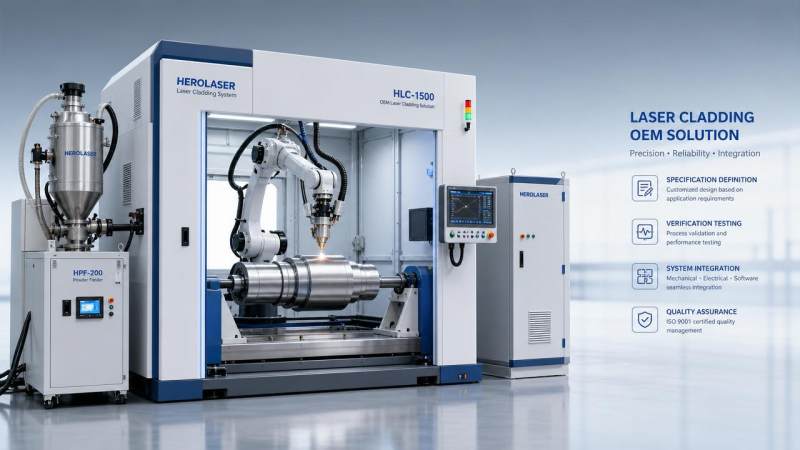
Many laser cladding equipment OEM projects do not fail on technology alone—they stall when specifications, validation standards, and cross-functional coordination fall out of sync. For project managers and engineering leads, understanding these friction points early is essential to keeping timelines, compliance, and supplier performance under control. This article explores where delays typically begin and how to prevent them before they escalate.
In industrial laser processing, a delayed OEM build can impact far more than equipment delivery. It can disrupt sample qualification, factory acceptance testing, line integration, operator training, spare parts planning, and even export compliance reviews.
For organizations managing a laser cladding equipment OEM program, the problem is rarely a single missed milestone. More often, delays emerge across 3 to 5 linked stages, each seemingly minor at first, but costly when combined.
From the perspective of project governance, the most common bottlenecks appear in requirement definition, process validation, subsystem alignment, acceptance criteria, and post-installation support. These are manageable risks when identified early and translated into measurable controls.
Why Laser Cladding Equipment OEM Projects Slow Down So Early
A typical laser cladding equipment OEM project moves through 4 major phases: technical scoping, engineering design, manufacturing and assembly, then validation and handover. Stalls often begin in phase 1, long before hardware is built.
Project managers often inherit a specification package that describes output goals, but not process boundaries. A request may define deposition rate, part size, and target material, yet omit powder characteristics, shielding gas limits, thermal distortion thresholds, or software interface requirements.
Specification Gaps Create Hidden Rework
In laser cladding, small omissions quickly become engineering changes. If the OEM supplier receives only a broad process brief, the first 2 to 4 weeks can be consumed by clarification cycles rather than design execution.
This is especially common when the end user, process engineer, automation team, EHS function, and procurement office each review different versions of the requirement file. Even a 1-page mismatch on enclosure class or powder feed architecture can delay purchasing and assembly.
Commonly Missed Inputs
- Target cladding materials and acceptable composition ranges
- Required laser power band, often within 3kW to 12kW for industrial builds
- Part geometry envelope, fixture access, and robot travel limits
- Powder delivery mode, hopper capacity, and contamination control requirements
- Cooling utility conditions, electrical load, and site ventilation constraints
- MES, PLC, or traceability interface requirements for production environments
The table below summarizes where OEM specification packages most often become insufficient for laser cladding equipment procurement and project execution.
The pattern is clear: the laser cladding equipment OEM supplier may build exactly what was ordered, but still miss operational expectations if technical intent was not converted into measurable engineering inputs.
Validation Criteria Are Often Defined Too Late
Another major reason projects stall is that validation logic is discussed after assembly begins. In high-value systems, this is too late. Acceptance must be linked to the process window, not only machine motion and power-on checks.
For example, a laser cladding equipment OEM project may pass axis repeatability, laser startup, and powder feeding tests, yet still fail customer approval if the clad layer shows porosity above an agreed threshold or dilution outside the target range.
A more robust plan defines at least 3 validation levels: subsystem verification, process sample qualification, and full FAT or SAT acceptance. Each level should include numeric tolerances, sample counts, and documentation outputs.
Where Cross-Functional Alignment Breaks Down
Even when the technology is mature, laser cladding equipment OEM programs involve multiple disciplines that do not always share the same priorities. Engineering wants process control, procurement wants cost stability, operations wants maintainability, and compliance wants documented conformity.
If these functions align only at milestone reviews, not at decision gates, the project can drift for 6 to 8 weeks through repeated approvals, redesign requests, and unresolved exceptions.
Ownership Is Frequently Split but Not Governed
A common issue is fragmented authority. The process team may select the cladding head, the automation group may define controls, and procurement may negotiate commercial scope, but no single owner reconciles the technical dependencies.
This becomes critical when a design choice affects several layers at once. A different powder feeder, for instance, may alter enclosure layout, gas consumption, maintenance intervals, and spare parts stocking. Without coordinated change control, each change extends the schedule.
A Practical Governance Model
- Assign one technical owner and one commercial owner from day 1.
- Freeze version-controlled specifications before detailed design release.
- Run weekly issue reviews with open, overdue, and blocked items visible.
- Define escalation timing, such as 48-hour response for critical engineering blockers.
- Use a formal deviation log for any change affecting safety, quality, or cycle time.
The following comparison shows how coordination models influence delivery risk in complex OEM procurement.
For project leaders, the key takeaway is that the laser cladding equipment OEM supplier should not be used as the default integrator of unresolved internal decisions. The buying organization must govern its own interfaces first.
Procurement and Engineering Often Measure Success Differently
Commercial teams may prioritize unit price, payment terms, and stated lead time. Engineering teams usually care more about process stability, maintainability, and expandability. When these metrics are not translated into a shared scorecard, supplier selection becomes inconsistent.
In practice, two OEM quotations within a 7% price gap can differ far more in downstream value. One may include documented parameter development support, traceable FAT protocols, and remote diagnostics, while another includes only basic assembly and startup tests.
Technical and Compliance Triggers That Commonly Delay Delivery
Laser cladding equipment OEM delivery schedules are especially vulnerable when compliance obligations are treated as paperwork rather than engineering inputs. Safety, controls, dust and fume management, and export restrictions all need early review.
Safety Architecture Cannot Be Added at the End
A high-power cladding system may combine a fiber laser, robot or multi-axis platform, powder handling, vision devices, and gas systems. If enclosure design, interlocks, and emergency logic are finalized late, mechanical and electrical redesign becomes likely.
For most industrial programs, project teams should review at least 6 compliance items before purchase order release: laser safety concept, extraction design, powder exposure controls, electrical standards, software alarm philosophy, and site utility conformity.
Typical Delay Triggers
- Late decision on enclosure class or observation window specification
- No agreed method for validating powder containment and housekeeping
- Inadequate electrical or cooling capacity at installation site
- Undefined format for quality records, calibration, or maintenance logs
- Unreviewed export control implications for laser source or motion system components
These issues are not rare exceptions. In cross-border industrial procurement, each one can trigger a hold of several days or a full rescheduling of FAT, shipment, or site commissioning.
Factory Acceptance and Site Acceptance Need Different Logic
A disciplined laser cladding equipment OEM program distinguishes FAT from SAT. FAT should confirm build completeness, subsystem function, and pre-agreed process evidence at the supplier site. SAT should confirm utility matching, installation integrity, safety readiness, and production suitability at the customer site.
Problems occur when project teams expect FAT to represent final production proof, even though the real substrate, fixtures, ambient conditions, or peripheral automation are available only after installation.
A practical approach is to define 2 sample sets: one for supplier-controlled validation and one for customer-site confirmation. This reduces disputes over whether a failure was caused by machine build, process setup, or plant conditions.
How to Keep a Laser Cladding Equipment OEM Project Moving
The most effective prevention strategy is not more meetings. It is better definition, earlier validation logic, and tighter issue ownership. Project managers need a framework that converts technical complexity into controllable milestones.
Build a Requirement Matrix Before Design Freeze
A requirement matrix should include process, mechanical, controls, safety, quality, utility, and service categories. Each line item should have an owner, target value, validation method, and approval status.
For many projects, 25 to 40 line items are enough to expose hidden gaps before they affect fabrication. This is significantly more effective than relying on a quotation and a high-level statement of work alone.
Recommended Control Points
- Kickoff review within 5 business days of PO release
- Requirement freeze before long-lead component ordering
- Design review at approximately 30% and 80% completion
- Pre-FAT checklist closure 7 to 10 days before witness testing
- SAT readiness review before shipment arrival at site
Evaluate Suppliers Beyond Machine Performance Alone
When selecting a laser cladding equipment OEM partner, project teams should score not only hardware capability, but also process engineering support, documentation discipline, integration experience, and post-installation service response.
The table below offers a practical supplier evaluation structure for project managers and engineering leads.
This evaluation method helps separate a capable machine builder from a capable project partner. For complex industrial systems, that distinction often determines whether the OEM program reaches production on time.
Treat Early Samples as a Schedule Tool, Not Just a Quality Tool
Many delays in laser cladding equipment OEM projects can be reduced by requesting representative sample work earlier. Even 2 to 3 substrate and powder combinations can reveal fixture issues, heat input sensitivity, or post-processing requirements before final build decisions are locked.
This is particularly valuable for sectors where coating geometry, metallurgical bonding, or refurbishment repeatability must be demonstrated before capital approval or production release.
Operational Lessons for Project Managers and Engineering Leads
For leaders overseeing industrial equipment programs, the lesson is straightforward: a laser cladding equipment OEM project stalls when requirements are interpreted instead of verified, when validation is assumed instead of defined, and when ownership is shared without governance.
Projects move faster when the technical scope is measurable, the acceptance path is staged, and the supplier is evaluated on integration discipline as much as on machine performance. In most cases, preventing a 2-week delay is far less expensive than recovering from a 2-month slip after build completion.
For organizations navigating high-value industrial laser procurement, G-AIT supports decision-making with technical benchmarking, standards-oriented evaluation, and cross-disciplinary insight into advanced manufacturing systems. If you are planning a laser cladding equipment OEM project and need a clearer framework for specification review, supplier assessment, or risk control, contact us to discuss a tailored solution and explore more implementation-focused guidance.
Related News
How to verify part consistency before choosing a 3D printing OEM
Choosing a 3D printing OEM? Learn how to verify part consistency with repeat-build trials, validated inspections, and traceability checks before committing to production.
How does a rigid cryogenic transfer line handle thermal contraction?
Learn how a rigid cryogenic transfer line manages thermal contraction with bends, bellows, and guided supports. Discover key design checks for safe, reliable cryogenic performance.

How much does edge vision deployment cost beyond the hardware?
Understand edge vision deployment cost beyond hardware, from data and integration to security and support. Uncover hidden expenses and build a smarter lifecycle budget before you scale.

How does the purity of sputtering targets affect thin-film quality?
Discover how sputtering targets affect thin-film quality. Learn to assess purity, identify harmful impurities, and choose specifications that improve coating performance.

How high power laser cladding systems control substrate dilution
Discover how high power laser cladding systems control substrate dilution through beam shaping, material feed, and thermal management to deliver reliable bonds and coating performance.

How to check HS codes for customs compliance in international logistics
Strengthen international logistics customs compliance: learn how to verify HS codes, check official tariffs, and document classifications to reduce costly shipment delays.
Choosing a 3D Printing Service for Consumer Products: Finish, Fit, and Cost
Compare 3d printing consumer good services by finish, fit, materials, and total cost. Learn how to choose a reliable supplier and avoid costly defects before ordering.
Which Consumer Goods Can Be 3D Printed, and What Are the Practical Limits?
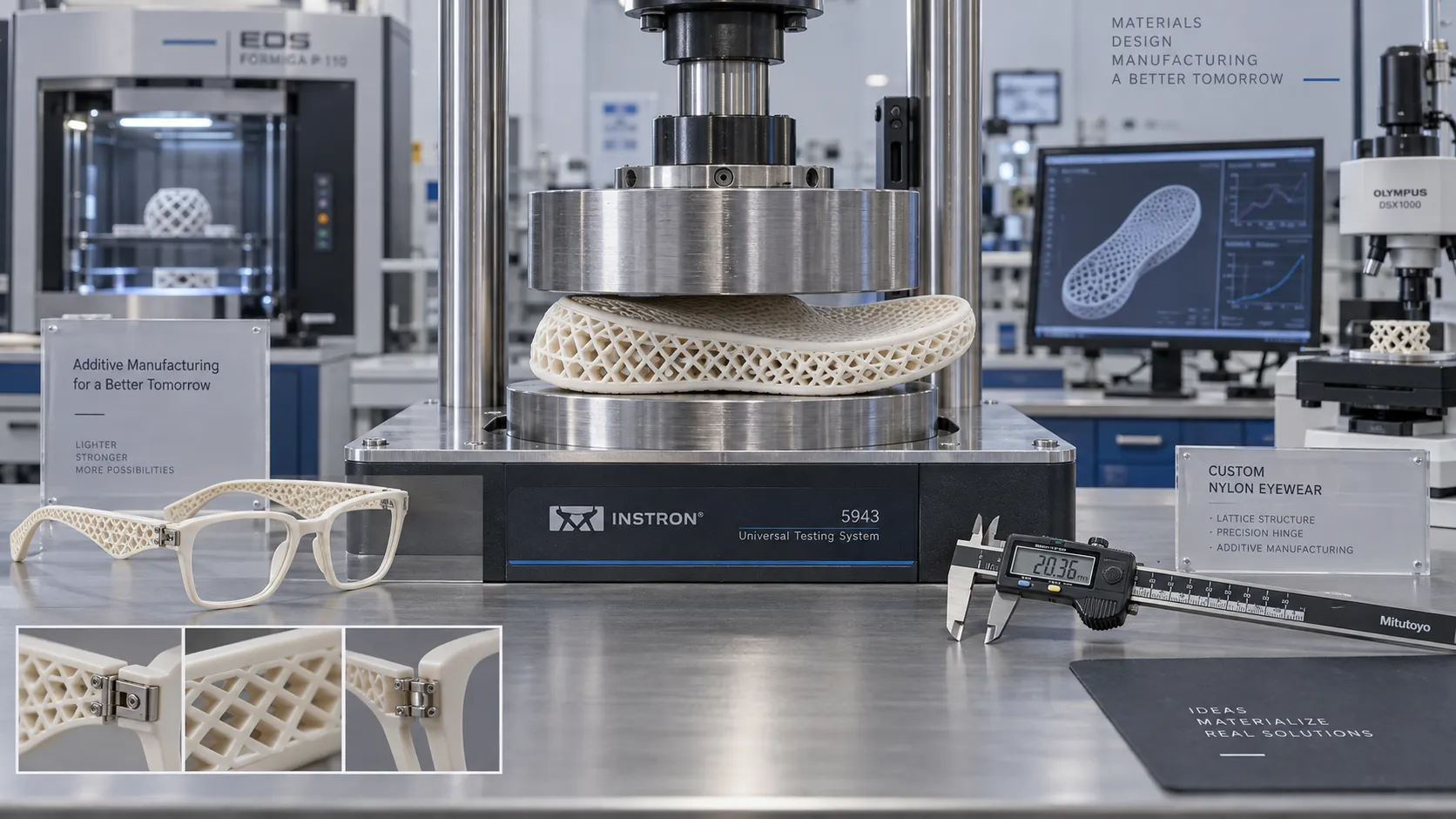
Explore 3d printing consumer goods, from custom eyewear to replacement parts. Discover practical limits on materials, safety, and costs to make smarter production decisions.

From Prototype to Small Batch: Applying 3D Printing to Consumer Goods
Explore 3d printing in consumer goods: learn how to move from prototype to small-batch production with practical guidance on materials, quality validation, and cost control.
Related News
- 00
0000-00
How to verify part consistency before choosing a 3D printing OEM - 00
0000-00
How does a rigid cryogenic transfer line handle thermal contraction? - 00
0000-00
How much does edge vision deployment cost beyond the hardware? - 00
0000-00
How does the purity of sputtering targets affect thin-film quality? - 00
0000-00
How high power laser cladding systems control substrate dilution
Marcus Print
Weekly Insights
Stay ahead with our curated technology reports delivered every Monday.