
How to Source Powder Materials Without Quality Issues

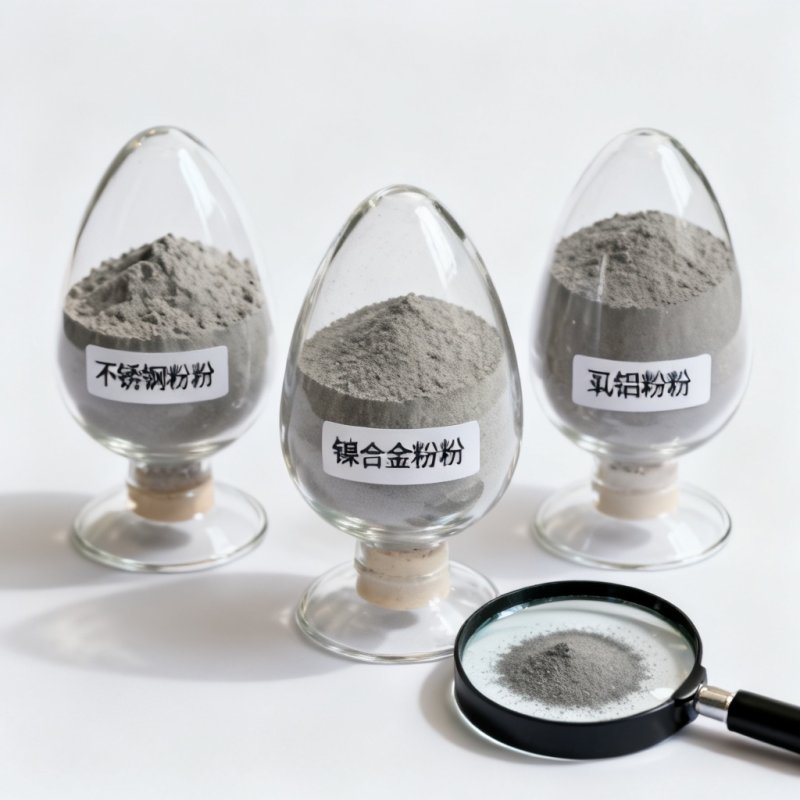
Sourcing powder materials without quality issues is critical to 3D Printing, Metal 3D Printers, and broader Additive Manufacturing workflows, where consistency directly affects precision manufacturing, safety, and cost. From Nanomaterials purity and Technical Specifications to Industrial Standards, Machine Vision inspection, and Export Control compliance, buyers must evaluate more than price. This guide helps procurement teams, engineers, and quality managers identify reliable suppliers and reduce supply-chain risk.
Across industrial sectors, powder materials are now tied to tighter tolerances, shorter qualification windows, and stricter compliance expectations. Whether the powder is used in metal additive manufacturing, laser cladding, thermal processes, battery applications, coatings, ceramics, or advanced composites, one inconsistent lot can interrupt a 2-week production plan, trigger rework, or compromise final part performance.
For B2B buyers and technical decision-makers, the real challenge is not simply finding a supplier. It is building a sourcing method that links particle quality, documentation, logistics, traceability, and incoming inspection into one controllable process. That is especially important when teams must align purchasing, engineering, quality control, EHS, and commercial evaluation under one approval path.
A robust sourcing strategy should answer five questions early: what properties matter, what can go wrong, how to verify claims, how to compare suppliers fairly, and how to protect continuity when market conditions change. The sections below break these questions into practical checkpoints that support lower-risk powder procurement in high-value industrial environments.
Define Material Requirements Before Contacting Suppliers
Many powder sourcing problems begin long before a purchase order is issued. Teams often request quotes with only a basic material name, such as stainless steel powder, alumina powder, nickel alloy powder, or graphene-enhanced additive feedstock. That is not enough. A usable sourcing brief should define the application, required particle size distribution, acceptable oxygen or moisture range, purity thresholds, flowability expectations, packing method, and target lot size.
For additive manufacturing, particle shape and size distribution are often central to performance. A 15–45 μm range may be suitable for one powder-bed process, while a 45–106 μm range may better fit another feed system. If the powder is used in thermal spray, compaction, or specialty coating applications, the window may differ again. Procurement teams should ask engineering and operations to define at least 6 to 10 measurable parameters before supplier evaluation starts.
The sourcing specification should also reflect use-case risk. For example, aerospace, medical, electronics, and energy projects usually require tighter control over contamination, trace metals, batch consistency, and storage conditions than general prototyping or low-load tooling. In many cases, an oxygen variation of less than 0.03% or moisture control within a narrow threshold can materially affect print stability, sintering behavior, or shelf life.
A practical internal checklist prevents expensive confusion later. It helps commercial teams compare offers on a like-for-like basis, and it gives quality managers a documented foundation for incoming inspection and supplier scorecards.
Core data points to define
- Material chemistry, alloy or compound family, and any prohibited contaminants.
- Particle size distribution, such as D10, D50, and D90 values or a usable screen range.
- Morphology expectations, including spherical, irregular, flake, porous, or agglomerated forms.
- Critical limits for oxygen, nitrogen, moisture, ash, density, flow rate, or tap density.
- Packaging format, storage conditions, shelf-life target, and traceability requirements per lot.
The table below shows how requirement depth affects sourcing quality and supplier comparability in industrial procurement.
The main takeaway is simple: quality issues become much easier to prevent when specifications are defined upstream. A supplier cannot consistently meet a requirement that the buyer has not clearly documented. Strong RFQs reduce ambiguity, shorten technical review cycles by 20–30% in many industrial buying processes, and make supplier audits more objective.
Assess Supplier Capability Beyond the Certificate of Analysis
A certificate of analysis is necessary, but it is not a complete supplier qualification tool. Powder quality depends on atomization method, milling stability, classification control, contamination prevention, environmental handling, and batch release discipline. Two suppliers can provide similar chemistry on paper while delivering very different flow behavior, particle morphology, or repeatability from batch to batch.
In B2B sourcing, buyers should examine at least four capability layers: manufacturing process control, laboratory competence, documentation discipline, and delivery reliability. A technically strong supplier should explain how lots are produced, segregated, sampled, tested, packed, and retained for reference. If answers remain vague after 2 or 3 rounds of technical questions, risk is likely higher than the initial price suggests.
Site audits, video audits, and controlled sample evaluation are especially valuable for strategic materials. Even when a physical visit is not possible, buyers can request process flow diagrams, packaging photos, retained sample policy, calibration practices, and nonconformance handling procedures. For critical applications, a qualification sequence of sample lot, pilot lot, and commercial lot is often safer than jumping directly into bulk purchasing.
Capability assessment should include business continuity as well. A supplier with good laboratory data but unstable export routes, weak customer communication, or a 10- to 12-week lead-time swing may still create unacceptable supply-chain risk. That matters for project managers who must align procurement with machine utilization, installation windows, or customer delivery milestones.
Questions to ask during supplier qualification
- How many production stages directly affect particle morphology and contamination risk?
- What is the standard batch size, and how much lot-to-lot variation is typically controlled?
- Which test methods are used for particle size, chemistry, moisture, and flowability?
- How are nonconforming lots isolated, investigated, and reported to customers?
- What is the normal lead time for sample orders, first bulk orders, and repeat orders?
Why process transparency matters
Powder behavior can change due to subtle production differences. For example, recycled fines, inconsistent sieving, humidity exposure above target conditions, or poor inert handling can produce defects that only appear during printing, laser melting, sintering, or coating. By the time the issue surfaces, the hidden cost may include machine downtime, rejected parts, extra machine vision inspection, and delayed customer acceptance.
The comparison table below helps teams evaluate supplier maturity with a broader industrial lens.
A disciplined supplier review often reveals hidden cost drivers that are more important than a 5% or 8% price difference. In industrial powder sourcing, repeatability, response speed, and root-cause transparency often protect margin far more effectively than selecting the cheapest initial quote.
Verify Quality Through Incoming Inspection and Cross-Functional Controls
Even qualified suppliers should not replace internal verification. Incoming inspection is the point where procurement, quality, engineering, and operations convert supplier claims into operational confidence. The scope of inspection should match application risk. A low-risk development powder may need basic identity and packaging checks, while a critical production powder may require chemistry review, particle size confirmation, moisture testing, morphology review, and trial-process validation.
An effective incoming quality plan usually has 3 layers. First, document verification confirms that the lot number, quantity, packaging, SDS, and COA match the order. Second, physical and analytical checks confirm parameters such as PSD, moisture, density, or visual contamination. Third, process-level validation confirms the powder behaves correctly in the target equipment, whether that means print coupons, flow tests, sintering checks, or coating trials.
Machine vision and optical inspection can also strengthen control in certain environments. While these systems do not replace chemistry testing, they can support rapid screening for foreign particles, agglomeration patterns, or package integrity issues. In plants handling multiple powders, digital inspection records improve traceability and reduce operator subjectivity, especially when several incoming lots arrive within the same 24- to 48-hour receiving window.
Quality managers should also define clear acceptance criteria and escalation paths. If a lot fails one parameter but passes others, what happens next? Is there a conditional release process for noncritical applications? Who owns final disposition within 8 working hours or 24 working hours? Without these rules, even a strong inspection program can slow production and create internal conflict.
Typical incoming inspection framework
- Document review: PO match, lot number, shipping condition, SDS, COA, and packaging condition.
- Identity check: label control, visual consistency, and material code confirmation.
- Analytical confirmation: PSD, moisture, purity, density, or targeted contamination checks.
- Functional validation: print coupon, spreadability test, flow assessment, or process simulation.
- Disposition record: accept, quarantine, retest, or reject with CAPA linkage.
When to tighten inspection frequency
Inspection should be intensified when any of the following occurs: new supplier onboarding, new material grade, packaging changes, route changes in international shipping, seasonal humidity risk, repeated complaints within 3 lots, or return to production after a long sourcing gap of 6 months or more. These triggers are common in global industrial procurement and should be written into the control plan.
The key conclusion is that quality verification must be operational, not theoretical. Reliable powder sourcing depends on a closed loop between supplier qualification, receiving inspection, process validation, and documented feedback. That loop helps reduce reject rates, supports faster root-cause analysis, and gives enterprise decision-makers a more accurate view of supply risk.
Manage Logistics, Storage, and Export Control Risks
A high-quality powder can still become a problem if logistics and storage are poorly controlled. Sensitive materials may react to humidity, oxygen exposure, static risk, temperature fluctuation, or mechanical shock during transport. International shipments introduce another layer of complexity: customs delays, export control review, improper labeling, and extended dwell times at ports or freight hubs.
For many industrial powders, packaging is part of the quality system, not just a shipping detail. Buyers should confirm whether material is shipped in sealed foil bags, inert gas packaging, anti-static containers, drums with tamper control, or vacuum-sealed liners. Storage recommendations such as 15–25°C, dry indoor conditions, and controlled opening procedures should be matched to the buyer’s warehouse and shop-floor reality before a long-term contract is signed.
Export control and regulatory review are also increasingly relevant. Advanced metallic powders, nanomaterials, dual-use materials, or powders linked to aerospace and semiconductor supply chains may require documentation checks before cross-border movement. Procurement and trade compliance teams should confirm classification, shipping restrictions, destination limits, and any required declarations before finalizing supplier selection.
Project managers should treat lead time as a variable, not a fixed promise. A listed lead time of 2–4 weeks can stretch to 6–8 weeks if specialized packaging, customs inspection, or carrier disruption is involved. That is why strategic buyers often use dual planning metrics: nominal lead time and risk-adjusted lead time.
Common logistics controls for powder materials
- Validate packaging method against powder sensitivity and transport duration.
- Request shipment labels, lot mapping, and packing photos before dispatch.
- Define warehouse opening and resealing procedures for partial use.
- Review trade compliance obligations for destination country and end use.
- Build safety stock for critical programs, often covering 4 to 8 weeks of demand.
The table below summarizes typical logistics risks and practical control responses.
Powder quality is therefore not only a manufacturing question. It is also a logistics discipline. Companies that align supplier packaging, import procedures, storage control, and usage planning are better positioned to avoid hidden degradation and expensive schedule variance.
Build a Repeatable Supplier Scorecard and Long-Term Sourcing Strategy
Once the first good orders are completed, many companies relax their controls too early. A more resilient approach is to convert early lessons into a repeatable supplier scorecard. This helps distributors, project owners, quality teams, and enterprise decision-makers compare suppliers over time rather than making each purchase as a separate event. It also supports more structured reviews every quarter or every 6 months.
A practical scorecard should combine technical, operational, and commercial indicators. Typical categories include conformity rate, on-time delivery, documentation accuracy, response time to technical issues, complaint closure speed, packaging consistency, and forecast support. Some organizations use weighted scoring, such as 35% quality, 25% delivery, 20% technical support, and 20% commercial stability, though the mix should reflect business priorities.
Long-term sourcing strategy may also require segmentation. Not every powder should be sourced in the same way. Strategic materials for production lines, regulated applications, or high-value R&D should usually have backup suppliers, qualification samples on file, and a documented revalidation process. Lower-risk materials may be handled through simpler commercial frameworks, but they still need baseline control.
This is where intelligence-led sourcing adds value. Buyers who monitor technical change, standards alignment, supplier process evolution, and export control developments can make better decisions before disruptions occur. In advanced industrial environments, procurement is no longer just a price negotiation function. It is a risk management function tied directly to quality, project delivery, and market responsiveness.
Recommended supplier scorecard metrics
- Lot acceptance rate over the last 6 to 12 months.
- Average on-time delivery performance and lead-time deviation.
- Correct document rate, including COA, SDS, and shipping labels.
- Average response time for quality investigations, such as 24 hours, 48 hours, or 5 working days.
- Commercial resilience, including backup capacity, forecast collaboration, and contract flexibility.
Common sourcing mistakes to avoid
Three mistakes appear frequently across industries. First, selecting by unit price without calculating reject and downtime exposure. Second, assuming one successful trial lot guarantees stable commercial production. Third, failing to align procurement with quality and operations on acceptance criteria. Each of these mistakes can look small during supplier onboarding but become costly once demand scales from 5 kg samples to recurring industrial volumes.
FAQ
How many suppliers should be qualified for critical powder materials?
For high-risk or production-critical materials, qualifying at least 2 suppliers is often advisable. One may serve as the primary source and the other as a contingency source. If the material is highly specialized, companies should at minimum keep a second source under technical review and maintain safety stock for 4–8 weeks, depending on lead time volatility.
What documents should buyers request before the first bulk order?
At a minimum, request a current COA, SDS, lot identification method, packaging description, storage guidance, and basic test method references. For more demanding applications, ask for retained sample policy, traceability details, nonconformance handling workflow, and shipping compliance information. These documents help quality, EHS, and procurement teams work from the same evidence base.
How long does powder qualification usually take?
The timeline depends on application risk and internal review structure. A straightforward industrial evaluation may take 2–4 weeks from sample receipt to approval. More demanding programs with pilot runs, machine trials, and multi-department signoff may require 6–12 weeks. Rushing this stage often creates larger delays later if a commercial lot fails process validation.
Sourcing powder materials without quality issues requires more than checking price and chemistry. The strongest results come from clear specifications, disciplined supplier qualification, risk-based incoming inspection, controlled logistics, and a long-term scorecard that links technical performance with supply continuity. For organizations operating across additive manufacturing, advanced materials, machine vision inspection, and high-tech industrial procurement, this integrated approach reduces uncertainty and supports more reliable project execution.
If your team is evaluating powder suppliers, benchmarking technical requirements, or building a lower-risk sourcing framework for advanced industrial applications, now is the right time to structure the process before quality issues appear. Contact us to discuss your sourcing criteria, request a tailored evaluation framework, or explore broader industrial intelligence solutions for material selection, compliance review, and supplier benchmarking.
- supply chain
- manufacturing
- precision manufacturing
- stainless steel
- trade compliance
- distributors
- packaging
- electronics
- semiconductor
- energy
- 3D Printing
- Additive Manufacturing
- Machine Vision
- Optical Inspection
- Nanomaterials
- Metal 3D Printers
- Technical Specifications
- Export Control
- Industrial Standards
- supply chain
- manufacturing
- precision manufacturing
- stainless steel
- trade compliance
- distributors
- packaging
- electronics
- semiconductor
- energy
- 3D Printing
- Additive Manufacturing
- Machine Vision
- Optical Inspection
- Nanomaterials
- Metal 3D Printers
- Technical Specifications
- Export Control
- Industrial Standards
Related News
How to verify part consistency before choosing a 3D printing OEM
Choosing a 3D printing OEM? Learn how to verify part consistency with repeat-build trials, validated inspections, and traceability checks before committing to production.
How does a rigid cryogenic transfer line handle thermal contraction?
Learn how a rigid cryogenic transfer line manages thermal contraction with bends, bellows, and guided supports. Discover key design checks for safe, reliable cryogenic performance.

How much does edge vision deployment cost beyond the hardware?
Understand edge vision deployment cost beyond hardware, from data and integration to security and support. Uncover hidden expenses and build a smarter lifecycle budget before you scale.
How does the purity of sputtering targets affect thin-film quality?
Discover how sputtering targets affect thin-film quality. Learn to assess purity, identify harmful impurities, and choose specifications that improve coating performance.
How high power laser cladding systems control substrate dilution
Discover how high power laser cladding systems control substrate dilution through beam shaping, material feed, and thermal management to deliver reliable bonds and coating performance.
How to check HS codes for customs compliance in international logistics
Strengthen international logistics customs compliance: learn how to verify HS codes, check official tariffs, and document classifications to reduce costly shipment delays.
Choosing a 3D Printing Service for Consumer Products: Finish, Fit, and Cost
Compare 3d printing consumer good services by finish, fit, materials, and total cost. Learn how to choose a reliable supplier and avoid costly defects before ordering.
Which Consumer Goods Can Be 3D Printed, and What Are the Practical Limits?
Explore 3d printing consumer goods, from custom eyewear to replacement parts. Discover practical limits on materials, safety, and costs to make smarter production decisions.
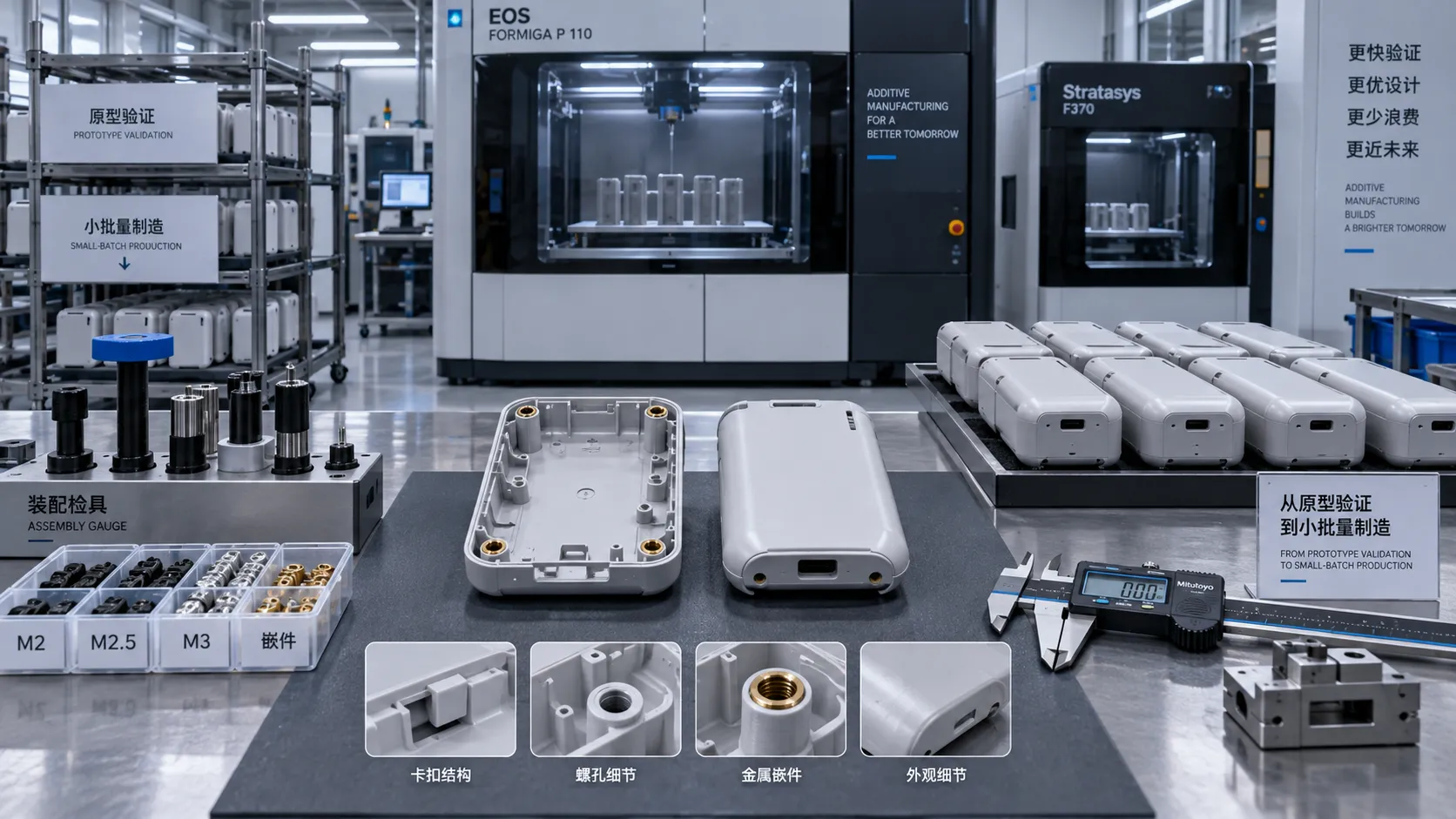
From Prototype to Small Batch: Applying 3D Printing to Consumer Goods
Explore 3d printing in consumer goods: learn how to move from prototype to small-batch production with practical guidance on materials, quality validation, and cost control.
Related News
- 00
0000-00
How to verify part consistency before choosing a 3D printing OEM - 00
0000-00
How does a rigid cryogenic transfer line handle thermal contraction? - 00
0000-00
How much does edge vision deployment cost beyond the hardware? - 00
0000-00
How does the purity of sputtering targets affect thin-film quality? - 00
0000-00
How high power laser cladding systems control substrate dilution
Marcus Print
Weekly Insights
Stay ahead with our curated technology reports delivered every Monday.