
Why powder size distribution changes print consistency

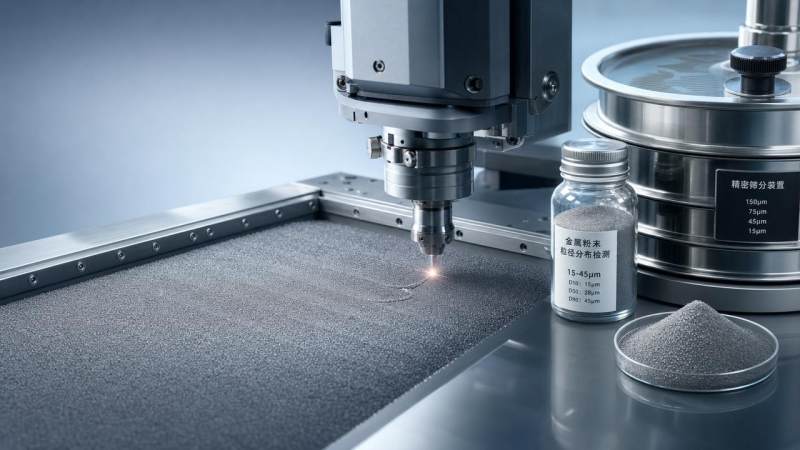
In metal additive manufacturing, print stability often depends on variables that seem minor at first glance. One of the most decisive is metal powder particle size distribution.
When metal powder particle size distribution shifts outside a validated window, layers spread differently, melting behavior changes, and repeatability declines across builds.
That matters in aerospace, medical, energy, tooling, and advanced prototyping. It also matters in qualification, supplier control, and cost management.
For organizations operating under strict technical benchmarks, understanding why powder size distribution changes print consistency is essential for controlling defects before they appear.
When print consistency becomes a scenario-specific quality risk
Print consistency is not judged the same way in every production environment. The acceptable variation window depends on geometry, alloy, machine settings, and downstream inspection demands.
In one scenario, a slight shift in metal powder particle size distribution may only affect surface roughness. In another, it can reduce density and trigger part rejection.
This is why particle distribution must be evaluated against the actual use case. A generic pass or fail approach rarely supports reliable industrial decisions.
Why the same powder performs differently across machines
Different systems apply different recoating forces, laser spot sizes, scan speeds, and layer thicknesses. Each parameter changes how powder packing and melting respond.
A metal powder particle size distribution that works well in a thin-layer laser powder bed process may behave poorly in a thicker-layer platform.
Scenario 1: Thin-wall and high-detail parts demand narrow distribution control
Small channels, lattice structures, and thin walls are highly sensitive to feedstock behavior. Here, powder flow and even spreading are often more critical than bulk throughput.
If metal powder particle size distribution includes too many coarse particles, layer uniformity can suffer. Local unevenness may lead to incomplete fusion or dimensional drift.
If it includes too many fines, powder cohesion increases. That can reduce flowability, create recoating defects, and raise the risk of porosity or spatter instability.
Core judgment points for fine-feature builds
- Layer thickness versus D10, D50, and D90 range
- Powder flow under low-energy recoating conditions
- Edge sharpness and small-feature dimensional repeatability
- Surface finish consistency after support removal
Scenario 2: Dense structural parts are sensitive to packing and melt stability
For brackets, manifolds, heat exchangers, and load-bearing housings, the main concern is often density, internal integrity, and repeatable mechanical performance.
In this scenario, metal powder particle size distribution influences packing density before the laser or electron beam even interacts with the material.
A balanced distribution can improve powder bed uniformity. It supports stable energy absorption and more predictable melt pool behavior.
An unstable distribution may produce variable pore content between builds. It can also increase contour inconsistency and post-process machining allowance.
What changes when the distribution drifts
- Packing density shifts, changing local energy needs
- Melt tracks become less uniform across the platform
- Porosity trends become harder to predict
- Mechanical test variation increases between lots
Scenario 3: Reused powder loops create hidden consistency problems
Powder reuse is common for cost control, but reused material rarely remains identical to virgin feedstock. This is where many consistency issues begin.
During printing, sieving, handling, and transport, the metal powder particle size distribution can gradually change. Fines may be lost, agglomerates may form, and contaminants may enter.
A reused lot can still pass a basic visual check while failing to deliver stable layer formation. That creates a dangerous gap between apparent compliance and actual process reliability.
Signals that reuse is affecting consistency
- More frequent recoater streaks or powder bed marks
- Shifting density results without parameter changes
- Higher oxygen pickup or altered surface oxidation
- Different behavior between center and edge build areas
Scenario 4: Qualification and regulated production require tighter evidence
In audited or regulated production, consistency is not only a process goal. It is a documented requirement linked to traceability and change control.
Here, metal powder particle size distribution becomes part of the evidence chain. Distribution data must connect to batch identity, print records, and part acceptance criteria.
A material lot that seems acceptable in development may be unacceptable in qualified production if the distribution window is broader than the approved baseline.
Key judgment points in controlled environments
- Whether distribution limits are tied to a validated process window
- Whether reuse rules are defined by measurable thresholds
- Whether test methods align with ASTM or internal quality protocols
- Whether supplier certificates match incoming inspection data
How scenario needs differ when evaluating powder size distribution
Practical adaptation steps for each operating scenario
A useful strategy is to treat metal powder particle size distribution as a process-fit metric, not only a material specification line.
- Define acceptable distribution windows by machine, alloy, and layer thickness.
- Track virgin and reused powder separately in qualification records.
- Compare supplier data with in-house particle analysis at receiving.
- Correlate distribution changes with density, roughness, and defect maps.
- Set escalation triggers when D-values drift beyond tested limits.
This approach reduces guesswork. It also supports more consistent scaling from development to serial production.
Common misjudgments that distort print consistency decisions
One common mistake is assuming average particle size tells the full story. In reality, the shape of the full distribution often matters more than a single midpoint value.
Another mistake is evaluating metal powder particle size distribution without linking it to machine settings. Material data alone cannot predict print consistency.
A third error is treating recycled powder as stable after sieving. Sieving removes some issues, but it does not restore the original distribution profile or chemistry.
There is also a tendency to overlook sampling quality. Poor sampling can mask real distribution shifts and create false confidence in incoming material control.
Next-step actions for stronger control of powder-driven variability
The most effective next step is to map metal powder particle size distribution against actual print outcomes in the specific production scenario being managed.
Build a reference set that includes particle data, reuse count, machine parameters, density results, and surface observations. Trends become visible quickly when data is connected.
For teams benchmarking advanced manufacturing systems, this evidence-based method supports stronger material qualification, more reliable supplier comparison, and better process governance.
G-AIT’s technical benchmarking perspective shows a clear pattern across global industrial programs: stable printing begins with stable feedstock behavior, and feedstock behavior begins with distribution control.
If print consistency is under pressure, review the powder first. In many cases, the most important answer is already inside the metal powder particle size distribution.
Related News
How to verify part consistency before choosing a 3D printing OEM
Choosing a 3D printing OEM? Learn how to verify part consistency with repeat-build trials, validated inspections, and traceability checks before committing to production.
How does a rigid cryogenic transfer line handle thermal contraction?
Learn how a rigid cryogenic transfer line manages thermal contraction with bends, bellows, and guided supports. Discover key design checks for safe, reliable cryogenic performance.

How much does edge vision deployment cost beyond the hardware?
Understand edge vision deployment cost beyond hardware, from data and integration to security and support. Uncover hidden expenses and build a smarter lifecycle budget before you scale.
How does the purity of sputtering targets affect thin-film quality?
Discover how sputtering targets affect thin-film quality. Learn to assess purity, identify harmful impurities, and choose specifications that improve coating performance.
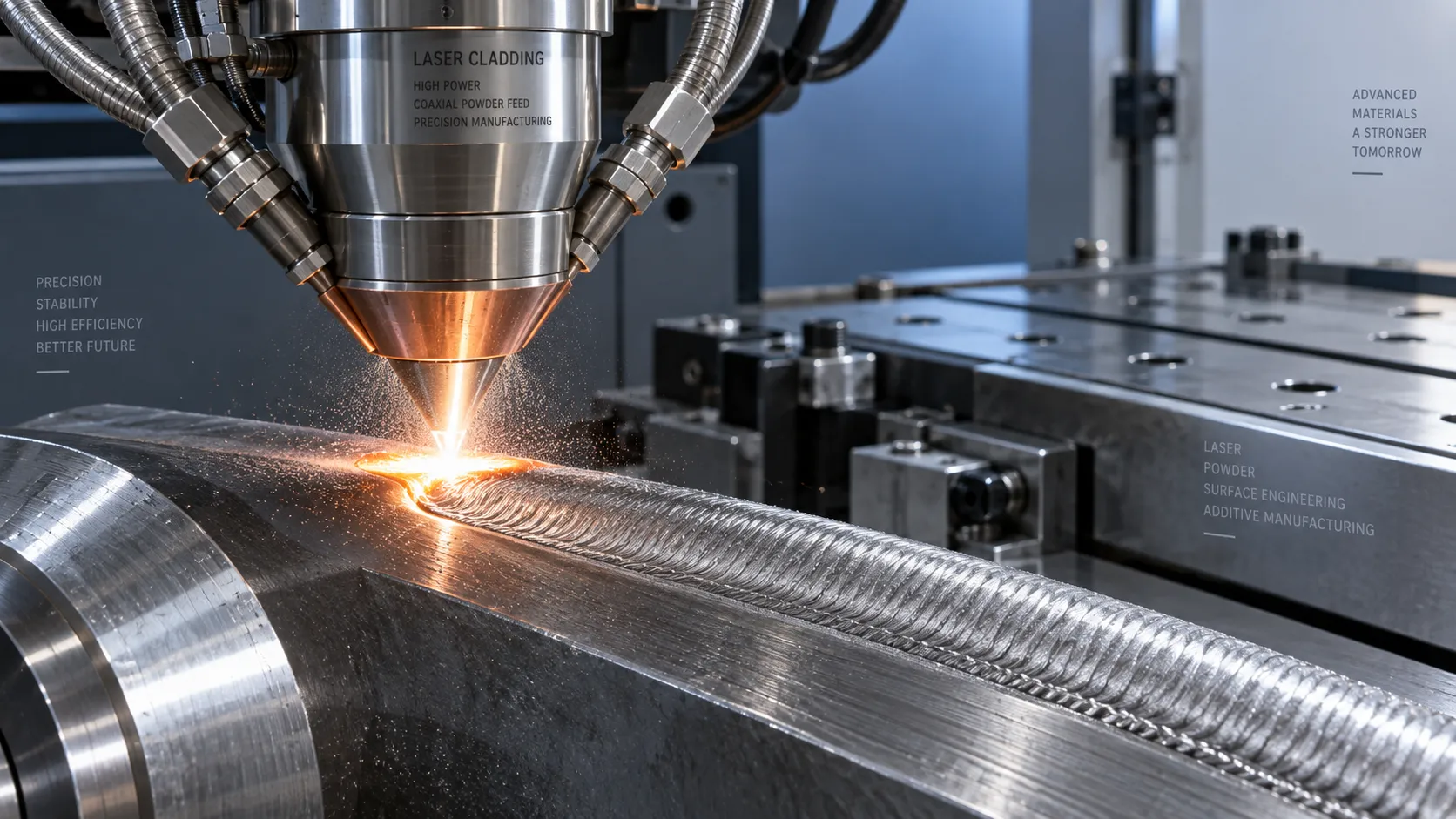
How high power laser cladding systems control substrate dilution
Discover how high power laser cladding systems control substrate dilution through beam shaping, material feed, and thermal management to deliver reliable bonds and coating performance.

How to check HS codes for customs compliance in international logistics
Strengthen international logistics customs compliance: learn how to verify HS codes, check official tariffs, and document classifications to reduce costly shipment delays.

Choosing a 3D Printing Service for Consumer Products: Finish, Fit, and Cost
Compare 3d printing consumer good services by finish, fit, materials, and total cost. Learn how to choose a reliable supplier and avoid costly defects before ordering.
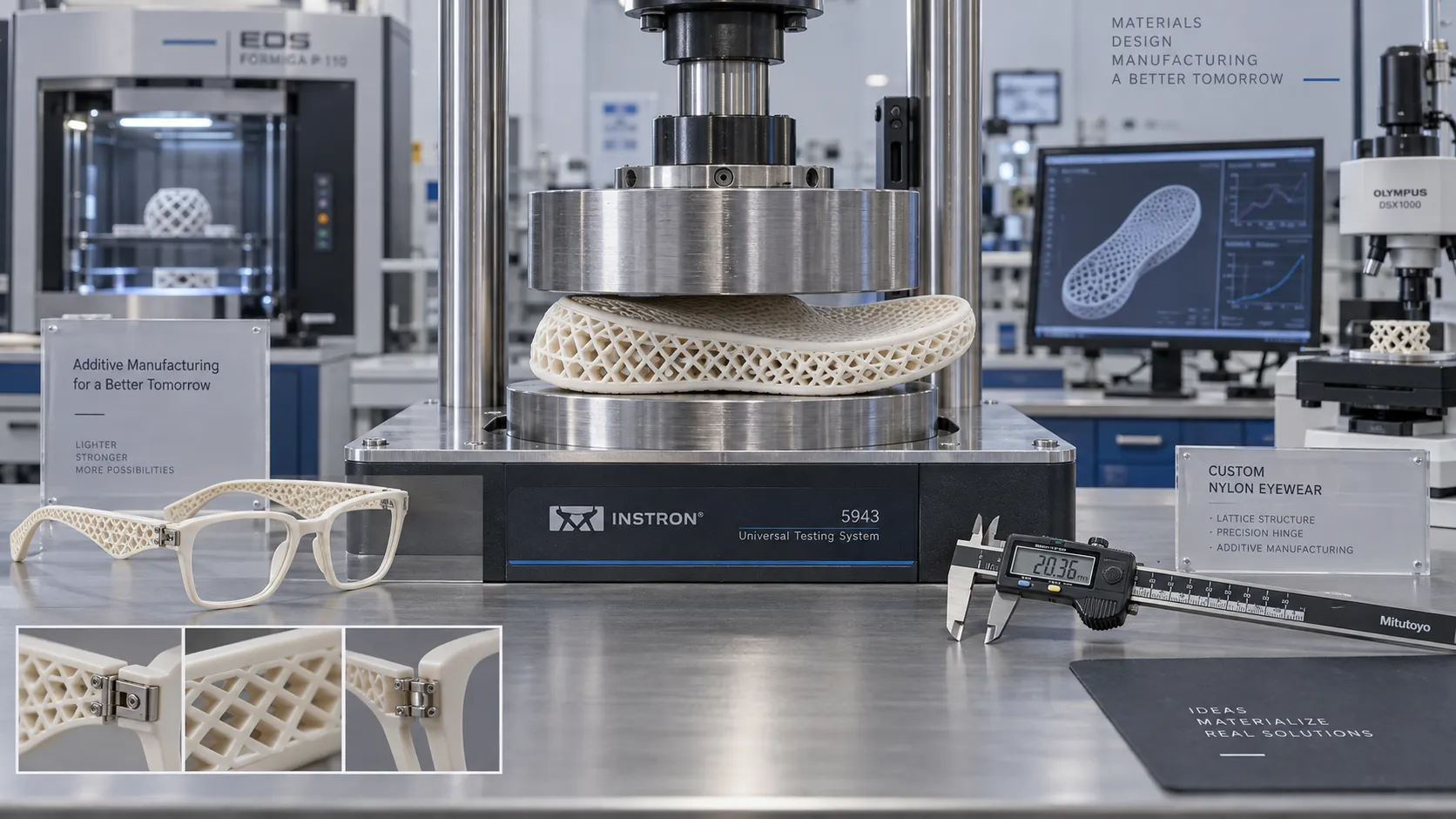
Which Consumer Goods Can Be 3D Printed, and What Are the Practical Limits?
Explore 3d printing consumer goods, from custom eyewear to replacement parts. Discover practical limits on materials, safety, and costs to make smarter production decisions.

From Prototype to Small Batch: Applying 3D Printing to Consumer Goods
Explore 3d printing in consumer goods: learn how to move from prototype to small-batch production with practical guidance on materials, quality validation, and cost control.
Related News
- 00
0000-00
How to verify part consistency before choosing a 3D printing OEM - 00
0000-00
How does a rigid cryogenic transfer line handle thermal contraction? - 00
0000-00
How much does edge vision deployment cost beyond the hardware? - 00
0000-00
How does the purity of sputtering targets affect thin-film quality? - 00
0000-00
How high power laser cladding systems control substrate dilution
Marcus Print
Weekly Insights
Stay ahead with our curated technology reports delivered every Monday.