
How reliable is fiber laser lifetime MTBF data in practice?

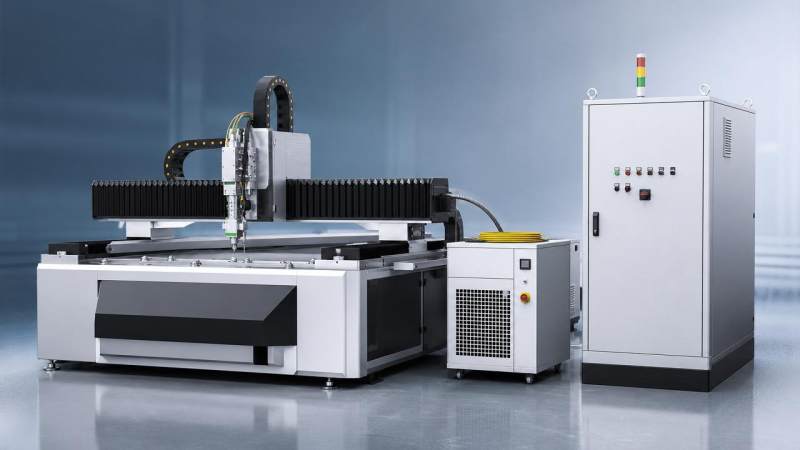
For after-sales maintenance teams, fiber laser lifetime (mtbf) data can be a useful reference, but its real-world reliability depends on operating conditions, component quality, cooling stability, and maintenance discipline. This article examines how to interpret published MTBF figures in practice, helping service professionals distinguish marketing claims from actionable reliability indicators for troubleshooting, spare-parts planning, and long-term system support.
Why published fiber laser lifetime (mtbf) data often looks better than field reality
Many maintenance teams receive a headline MTBF number from a supplier and assume it predicts actual service intervals. In practice, it rarely works that cleanly. MTBF is a statistical indicator, not a promise of uninterrupted operation for every installed system.
For industrial laser processing lines, the reliability gap usually appears when lab assumptions meet factory variables. Ambient dust, unstable grid power, water quality, duty cycle changes, and operator behavior all reshape the useful meaning of fiber laser lifetime (mtbf) data.
A maintenance engineer should therefore read MTBF as one data point inside a broader reliability framework. G-AIT’s cross-sector benchmarking approach is especially useful here because it connects laser source data with cooling, optics, controls, inspection, and compliance considerations rather than isolating one component.
- MTBF may be derived from component-level models instead of full machine field returns.
- Reported values may assume stable thermal loads, clean electrical input, and correct preventive maintenance.
- Some figures cover the laser source only, while service teams support the complete production asset.
- A high MTBF does not automatically reduce downtime if replacement logistics and diagnostics are weak.
What MTBF actually tells an after-sales team
Used correctly, MTBF helps estimate failure frequency across a population of systems. It supports spare module planning, service contract assumptions, and maintenance staffing. Used incorrectly, it creates unrealistic expectations and underestimates site-specific failure modes.
How to read fiber laser lifetime data beyond the marketing headline
After-sales personnel should ask how the published number was built. Was it based on accelerated life testing, component derating, Weibull modeling, or actual installed base history? The answer changes how much confidence you can place in fiber laser lifetime (mtbf) data for service planning.
The table below highlights the difference between a headline reliability claim and a maintenance-useful interpretation.
This distinction matters because a maintenance contract is priced on response reality, not on brochure arithmetic. A service team needs clarity on failure thresholds, repairability, and module replacement pathways, especially for high-throughput lines where one laser stoppage can block multiple downstream steps.
Questions that make MTBF numbers more trustworthy
- Does the figure apply to the pump diodes, the complete source, or the full laser workstation?
- What operating temperature, humidity, and duty cycle were assumed?
- How was failure defined: output drop, shutdown, alarm frequency, or total loss of function?
- Is there field-return data by industry segment such as cutting, welding, cleaning, or additive manufacturing?
- What supporting subsystems most often cause effective downtime before the source itself fails?
Which operating conditions distort fiber laser lifetime (mtbf) data in practice?
Real-world reliability changes fastest at the system boundary. After-sales staff usually discover that the laser source survives better than the installation environment. That is why interpreting fiber laser lifetime (mtbf) data requires attention to facility discipline as much as to source design.
Cooling and thermal load
Insufficient chiller capacity, fouled heat exchangers, unstable coolant temperature, and poor water chemistry all accelerate stress on pump modules and control electronics. In multi-shift facilities, small thermal deviations repeated daily can matter more than occasional production peaks.
Power quality and electrical protection
Voltage fluctuation, grounding errors, harmonics, and surge events are common hidden causes behind “unexpected” failures. A strong MTBF figure means little when incoming power conditions are outside the supplier’s assumed range.
Optical contamination and process back-reflection
In cutting and welding systems, dirty optics, poor gas flow, and reflective materials can destabilize performance and trigger protective shutdowns. The result may not count as a source failure on paper, but it still creates service calls, downtime, and replacement cost.
Maintenance maturity at the site
Sites that document chiller trends, connector inspections, filter intervals, and alarm histories usually achieve a closer match between expected and actual reliability. Sites that react only after faults appear often experience lower practical value from the same fiber laser lifetime (mtbf) data.
What should after-sales teams track besides MTBF?
MTBF becomes much more useful when paired with field metrics that describe repair effort and service impact. For maintenance teams, uptime performance is built from detection speed, troubleshooting accuracy, spare availability, and restart stability.
The following table shows which indicators better complement fiber laser lifetime (mtbf) data in real service environments.
A system with moderate MTBF but short MTTR may outperform a system with superior brochure reliability but long replacement delays. That tradeoff is highly relevant for global support organizations managing dispersed industrial assets.
How to use fiber laser lifetime (mtbf) data for spare-parts planning and troubleshooting
The best use of MTBF is operational, not promotional. After-sales teams should convert reliability data into service decisions: which spares to stock, which alarms require escalation, and which site conditions justify preventive intervention before a shutdown occurs.
A practical maintenance workflow
- Segment the installed base by power class, application type, and operating hours rather than treating all lasers as one population.
- Match published fiber laser lifetime (mtbf) data against site logs for alarms, coolant stability, and output drift.
- Flag environments with unstable utilities, reflective processing, or contamination exposure as separate risk classes.
- Stock critical modules based on downtime cost and lead time, not only on nominal failure probability.
- Use recurring failure signatures to refine future procurement specifications and service-level agreements.
Why cross-functional data matters
A laser rarely fails in isolation from the broader machine ecosystem. G-AIT’s multidisciplinary scope is relevant because service outcomes often depend on machine vision alignment, additive process stability, vacuum behavior, thermal control, and electronics robustness across adjacent subsystems.
For example, a laser cleaning or welding line may present beam instability symptoms that appear source-related but are actually linked to cooling variation, scanner contamination, inspection trigger errors, or power interface issues. Reliability interpretation improves when these dependencies are benchmarked together.
What buyers and service teams should ask before accepting MTBF claims
In procurement reviews, after-sales stakeholders should not wait until installation to challenge reliability assumptions. The more precise the technical review during sourcing, the less confusion later when field performance deviates from the published fiber laser lifetime (mtbf) data.
This evaluation table can be used in supplier meetings or internal qualification reviews.
This approach is especially valuable in multinational manufacturing environments where service agreements must account for regional compliance, shipping risk, and different utility conditions. A robust reliability discussion should therefore include not only engineering numbers but also delivery and regulatory realities.
Standards, documentation, and compliance signals that improve confidence
No universal single standard can validate every MTBF claim, but disciplined documentation improves credibility. Maintenance teams should look for consistency with recognized engineering and safety practices, clear failure definitions, and traceable service records.
- Reliability assumptions should be documented in a way that engineers can audit and compare over time.
- Laser equipment safety, electrical integration, and cooling system requirements should align with relevant ISO, IEC, IEEE, SEMI, or ASTM context where applicable.
- Alarm taxonomy and maintenance logs should be standardized across sites to separate source failures from peripheral issues.
- Service documentation should state recommended inspection intervals, derating conditions, and environmental limits.
This is one area where G-AIT adds value for industrial organizations. Its benchmarking perspective links equipment performance with international standards, technical due diligence, and global sourcing intelligence, helping maintenance and procurement teams make decisions on evidence rather than on isolated claims.
Common misconceptions about fiber laser lifetime (mtbf) data
“A higher MTBF means lower total downtime”
Not always. Downtime depends on detection, spare availability, technician access, and repair design. A system with better maintainability may deliver stronger uptime even if its nominal MTBF is lower.
“MTBF covers the entire machine”
Often it does not. Many figures refer only to the laser source or even a subassembly. After-sales teams must verify the scope before building support plans or customer expectations around fiber laser lifetime (mtbf) data.
“If output is stable today, aging is not a concern”
Early-stage degradation can appear first in thermal sensitivity, alarm frequency, or process inconsistency rather than obvious power loss. Trend data is more useful than isolated snapshots.
“Published numbers are comparable across all suppliers”
They are comparable only if test assumptions, failure definitions, and operational boundaries are comparable. Without that context, side-by-side MTBF values can be misleading.
FAQ for after-sales maintenance teams
How should I use fiber laser lifetime (mtbf) data in troubleshooting?
Use it as a probability reference, not as a fault verdict. Combine the MTBF context with alarm history, coolant trends, power quality records, optics inspection, and recent process changes. In many cases, peripheral instability explains symptoms faster than source replacement does.
Which sites are most likely to underperform the published MTBF figure?
Sites with unstable chillers, inconsistent preventive maintenance, poor water management, reflective material processing, dusty environments, and weak power conditioning are the most common candidates. High-shift production with frequent thermal cycling also deserves closer monitoring.
What is more important for service planning: MTBF or spare-parts lead time?
For critical production lines, lead time often has the larger financial effect. A rare failure that takes weeks to resolve may cost more than several minor events repaired quickly. That is why fiber laser lifetime (mtbf) data must be reviewed alongside supply continuity and field replaceability.
When should a maintenance team challenge the supplier’s reliability assumptions?
Challenge them before purchase, during site acceptance, and whenever repeated alarms appear in operating conditions that differ from the assumed baseline. Early clarification avoids later disputes about warranty, service scope, and environmental responsibility.
Why work with us for reliability benchmarking and service decision support
G-AIT helps industrial organizations interpret fiber laser lifetime (mtbf) data with a broader engineering and commercial lens. Instead of treating reliability as a single brochure metric, we connect source performance with cooling systems, inspection architecture, procurement risk, standards context, and global supply-chain realities.
If your after-sales team needs support, you can consult us on parameter confirmation, supplier data review, reliability comparison across solution paths, spare-parts strategy, service workflow design, delivery-risk assessment, export-control implications, and technical benchmarking aligned with ISO, SEMI, IEEE, or ASTM-related industrial contexts.
For organizations planning new installations or upgrading support contracts, we can also help structure qualification questions, compare maintainability assumptions, assess field documentation quality, and identify where published MTBF figures are likely to diverge from real operating conditions. That makes troubleshooting faster, sourcing decisions sharper, and long-term system support more predictable.
Related News
Technical Specifications That Matter Most in Fiber Laser Marking Systems
Technical Specifications define speed, precision, and uptime in fiber laser marking systems. Discover the key specs that improve quality, efficiency, and smarter buying decisions.
How to Evaluate a Fiber Laser Marking Machine Supplier Before Ordering
Fiber laser marking machine supplier evaluation starts with real samples, clear specs, and service support. Learn how to compare quotes, reduce sourcing risk, and order with confidence.
Servo Systems Selection Guide for Motion Stability and Energy Efficiency
Servo systems selection guide for better motion stability and energy efficiency. Learn how to compare sizing, control, and lifecycle factors to reduce downtime and lower operating costs.

Vacuum Gauge Measurement Accuracy: Common Errors and Calibration Checks
Vacuum gauge measurement accuracy explained: discover common errors, calibration checks, and practical tips to reduce drift, improve process reliability, and protect product quality.

How to Compare Cryogenic Heat Exchanger OEMs for Stable Low-Temperature Performance
Cryogenic heat exchanger OEM selection starts with the right criteria. Learn how to compare design, materials, testing, and support for stable low-temperature performance.

Tier-1 Suppliers vs Others: What Matters Before You Commit
Tier-1 Suppliers vs other vendors: learn how to compare risk, compliance, delivery resilience, and total cost before you commit to the right sourcing partner.

Cross-Border E-Commerce Logistics Solutions: How to Cut Delays
Cross-border e-commerce logistics solutions that reduce delays by improving customs data, route planning, packaging, and compliance control for faster, more reliable global delivery.

Energy Industry Supply Chain Management: Key Risk Control Points
Energy industry supply chain management starts with scenario-based risk control. Learn how to reduce delays, improve compliance, and strengthen supplier resilience across energy projects.

Clean Energy Policy Updates That Could Reshape 2026 Planning
Clean energy policy updates are redefining 2026 planning, from incentives and grid rules to supplier risk and compliance. Discover the shifts that could impact investment, operations, and growth.
Related News
- 00
0000-00
Technical Specifications That Matter Most in Fiber Laser Marking Systems - 00
0000-00
How to Evaluate a Fiber Laser Marking Machine Supplier Before Ordering - 00
0000-00
Servo Systems Selection Guide for Motion Stability and Energy Efficiency - 00
0000-00
Vacuum Gauge Measurement Accuracy: Common Errors and Calibration Checks - 00
0000-00
How to Compare Cryogenic Heat Exchanger OEMs for Stable Low-Temperature Performance
Dr. Hideo Tanaka
Weekly Insights
Stay ahead with our curated technology reports delivered every Monday.