
Clean Energy Policy Updates That Could Reshape 2026 Planning


Clean energy policy updates are moving from policy pages into operating plans
Clean energy policy updates now shape investment logic well before a project reaches approval.
That shift matters because 2026 planning is being built under tighter capital discipline, higher compliance exposure, and faster technology replacement cycles.
In many regions, incentives are becoming more selective, reporting rules are becoming more measurable, and grid policy is becoming more industrial in focus.
For companies with energy-intensive assets, clean energy policy updates are no longer peripheral sustainability news.
They increasingly influence siting decisions, equipment timing, supplier qualification, and exposure to future cost volatility.
The broader signal is clear.
Governments are shifting from broad ambition statements toward implementation rules that reward traceability, domestic resilience, and real operational performance.
That is especially relevant across advanced industrial sectors, where power quality, process stability, materials integrity, and export controls already intersect.
Seen through the lens of G-AIT, the most important implication is not only cleaner energy sourcing.
It is the growing need to connect policy interpretation with engineering benchmarks, standards alignment, and cross-border supply chain reliability.
What is changing now feels more practical than symbolic
Recent clean energy policy updates show a distinct move away from headline targets alone.
The new focus is on how projects are financed, how emissions are verified, and how grid-connected assets actually perform.
Three changes stand out across major markets.
- Incentives are becoming conditional on domestic content, local manufacturing, or documented lifecycle performance.
- Industrial decarbonization programs are favoring measurable retrofits, electrification, and process efficiency over generic pledges.
- Grid modernization rules increasingly support storage, flexibility, and digital monitoring rather than simple generation additions.
This has a direct planning consequence.
A project that looked bankable under older incentive logic may now require stronger data on origin, performance, or interoperability.
That affects not only renewable developers, but also industrial operators upgrading laser systems, vacuum environments, inspection lines, and additive manufacturing capacity.
In those settings, energy policy is beginning to shape technical architecture.
Why these clean energy policy updates are gaining force
The policy momentum is not driven by climate commitments alone.
It is also a response to industrial competition, grid fragility, and geopolitical pressure on strategic technologies.
More governments now see energy policy as industrial policy.
This combination explains why clean energy policy updates now reach far beyond utilities and project developers.
They are steadily influencing high-value industrial systems where uptime, precision, and documentation are non-negotiable.
The impact is spreading across more business layers than expected
One common mistake is to treat policy change as a cost issue only.
In practice, clean energy policy updates affect timing, technical choices, and commercial positioning at the same time.
Capital planning is becoming more conditional
Budget models now need to account for policy-linked qualification thresholds, not just energy prices.
If tax credits or subsidies depend on sourcing rules, project returns can change before procurement starts.
Supplier selection is becoming a compliance decision
A technically strong supplier may still create policy risk if traceability, standards evidence, or export exposure is weak.
That is why documentation quality is gaining strategic value alongside price and lead time.
Operations are being pulled toward energy-aware engineering
More facilities must now prove load flexibility, emissions visibility, or efficiency gains at process level.
This matters in sectors using high-power lasers, thermal systems, advanced coatings, cryogenic processes, or continuous optical inspection.
For these environments, clean energy policy updates often reshape retrofit priorities before they alter brand messaging.
Advanced industry is seeing a tighter link between policy and technical standards
A more important signal sits beneath the policy headlines.
Clean energy policy updates are increasingly effective only when paired with credible technical verification.
That is where industrial benchmarking becomes practical rather than academic.
In laser processing, energy efficiency claims now matter more when they can be tied to throughput stability and maintenance performance.
In additive manufacturing, electrification and material optimization are becoming easier to finance when process repeatability is proven.
In machine vision, better inspection data strengthens carbon accounting because defect reduction lowers waste, rework, and hidden energy use.
In graphene, nano-materials, vacuum, and cryogenic engineering, policy exposure often intersects with export rules, safety standards, and infrastructure intensity.
This is closely aligned with the role G-AIT plays across its five industrial pillars.
Its value lies in connecting engineering evidence, global standards, and regulatory foresight before a strategic decision becomes a costly lock-in.
What deserves closer attention before 2026 plans are finalized
From recent market behavior, several signals deserve closer monitoring than broad policy announcements.
- Eligibility details for tax credits, grants, and industrial efficiency funds.
- Grid access rules that favor storage, dispatchability, or digital load response.
- Reporting obligations tied to carbon intensity, product footprint, or facility-level energy data.
- Trade and export measures affecting components used in electrification, sensing, vacuum systems, and advanced materials.
- Updates to ISO, ASTM, IEEE, SEMI, or related frameworks that may become compliance shortcuts in policy-driven programs.
More interestingly, these signals rarely move alone.
When incentives tighten, reporting depth often increases.
When grid policy evolves, equipment qualification usually follows.
That is why clean energy policy updates should be read as linked market signals, not isolated policy items.
A practical response starts with decision architecture, not slogans
The strongest response to clean energy policy updates is usually organizational clarity.
Companies that respond well tend to connect policy review with engineering, sourcing, legal, and investment planning early.
That reduces the risk of treating compliance as a late-stage adjustment.
Useful next steps often include
- Map which facilities, product lines, or technology programs are most exposed to policy-linked energy cost changes.
- Review whether critical suppliers can support origin data, standards documentation, and performance verification.
- Stress-test 2026 capital cases under multiple policy scenarios rather than a single incentive assumption.
- Prioritize retrofits that improve both energy performance and process resilience.
- Build a recurring watchlist for clean energy policy updates, export controls, patents, and benchmark shifts.
This kind of response is more durable because it does not depend on one country or one subsidy cycle.
It creates room to adapt as policy and technology continue to converge.
The next advantage may come from reading policy as an engineering signal
By 2026, the biggest winners may not be those reacting fastest to headlines.
They are more likely to be those interpreting clean energy policy updates as early indicators of future technical expectations.
That includes power flexibility, auditable efficiency, trusted materials provenance, and standards-ready system design.
The direction is becoming harder to miss.
Policy is no longer sitting outside industrial strategy.
It is steadily becoming one of the inputs that shapes how advanced production systems are specified, funded, and scaled.
The most practical move now is to keep a live view of clean energy policy updates, compare them against technical benchmarks, and translate them into staged planning choices.
That approach will likely prove more valuable than waiting for policy certainty that never fully arrives.
Related News

How to verify part consistency before choosing a 3D printing OEM
Choosing a 3D printing OEM? Learn how to verify part consistency with repeat-build trials, validated inspections, and traceability checks before committing to production.

How does a rigid cryogenic transfer line handle thermal contraction?
Learn how a rigid cryogenic transfer line manages thermal contraction with bends, bellows, and guided supports. Discover key design checks for safe, reliable cryogenic performance.

How much does edge vision deployment cost beyond the hardware?
Understand edge vision deployment cost beyond hardware, from data and integration to security and support. Uncover hidden expenses and build a smarter lifecycle budget before you scale.

How does the purity of sputtering targets affect thin-film quality?
Discover how sputtering targets affect thin-film quality. Learn to assess purity, identify harmful impurities, and choose specifications that improve coating performance.

How high power laser cladding systems control substrate dilution
Discover how high power laser cladding systems control substrate dilution through beam shaping, material feed, and thermal management to deliver reliable bonds and coating performance.

How to check HS codes for customs compliance in international logistics
Strengthen international logistics customs compliance: learn how to verify HS codes, check official tariffs, and document classifications to reduce costly shipment delays.
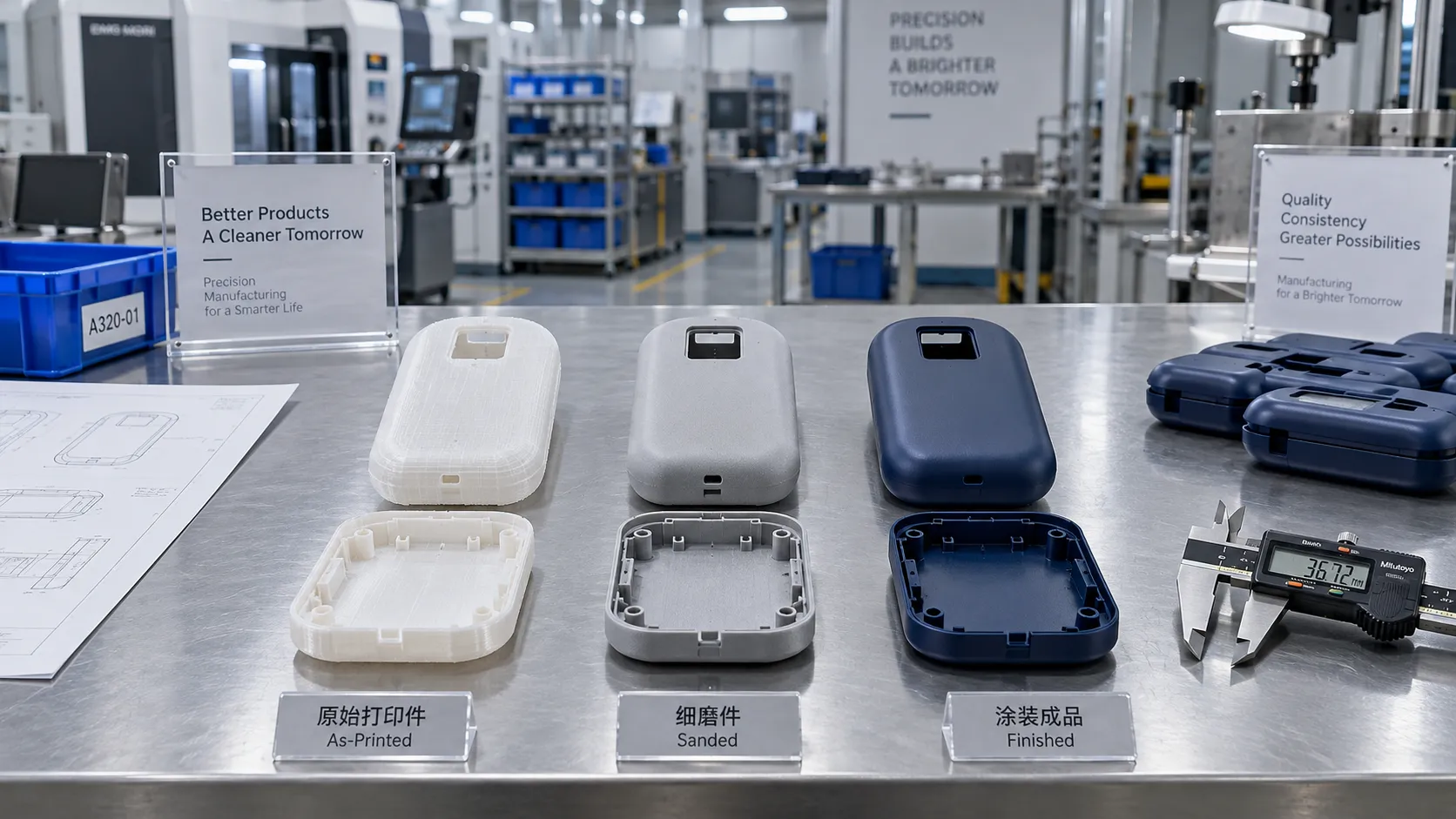
Choosing a 3D Printing Service for Consumer Products: Finish, Fit, and Cost
Compare 3d printing consumer good services by finish, fit, materials, and total cost. Learn how to choose a reliable supplier and avoid costly defects before ordering.

Which Consumer Goods Can Be 3D Printed, and What Are the Practical Limits?
Explore 3d printing consumer goods, from custom eyewear to replacement parts. Discover practical limits on materials, safety, and costs to make smarter production decisions.

From Prototype to Small Batch: Applying 3D Printing to Consumer Goods
Explore 3d printing in consumer goods: learn how to move from prototype to small-batch production with practical guidance on materials, quality validation, and cost control.
Related News
- 00
0000-00
How to verify part consistency before choosing a 3D printing OEM - 00
0000-00
How does a rigid cryogenic transfer line handle thermal contraction? - 00
0000-00
How much does edge vision deployment cost beyond the hardware? - 00
0000-00
How does the purity of sputtering targets affect thin-film quality? - 00
0000-00
How high power laser cladding systems control substrate dilution
Dr. Hideo Tanaka
Weekly Insights
Stay ahead with our curated technology reports delivered every Monday.