
Supplier Sourcing Strategies for Stable Lead Times


Why do supplier sourcing strategies matter so much for lead time stability?
Stable lead times rarely come from luck. They usually come from disciplined supplier sourcing strategies built around risk visibility, technical fit, and backup capacity.
When supply chains stretch across regions, even a minor disruption can delay production, testing, shipment, or final integration. That pressure is stronger in advanced industrial categories.
Components tied to laser systems, additive manufacturing, optical inspection, graphene materials, or vacuum engineering often have long qualification cycles and limited substitutes.
That is why supplier sourcing strategies should go beyond price comparison. A low quote means little if the supplier cannot hold process consistency or shipping predictability.
In practical terms, the best sourcing approach connects three layers: supplier capability, market timing, and operational resilience. If one layer is ignored, lead times become fragile.
This is also where data-backed benchmarking becomes useful. Platforms such as G-AIT help interpret technical claims against standards like ISO, SEMI, IEEE, and ASTM.
That kind of context supports more stable decisions, especially when a part looks available on paper but carries hidden qualification or compliance risk.
What should be checked before shortlisting a supplier?
A shortlist should answer one question clearly: can this source deliver repeatable output within the required time window, not just once, but consistently?
A common mistake is to treat sourcing as a vendor search only. It should start with specification clarity, tolerance priorities, and the cost of delay.
Before comparing suppliers, confirm these points:
- Critical drawings, performance parameters, and revision control are current.
- Required certifications, testing methods, and traceability rules are defined.
- Acceptable lead time range is linked to actual production needs.
- Single-point dependency is identified early.
- Export control or cross-border restrictions are understood.
Once those basics are clear, supplier sourcing strategies become more precise. You can then judge not only who can supply, but who can recover fastest when conditions shift.
For technically complex categories, it helps to compare manufacturing maturity, inspection capability, and engineering responsiveness rather than quoting speed alone.
In sectors tracked by G-AIT, that distinction matters. A supplier with benchmarked process data often provides stronger lead time reliability than one with only attractive commercial terms.
A quick decision table for early screening
The table below helps separate promising options from risky ones before deeper audits begin.
Is single sourcing ever safe, or should dual sourcing be the default?
There is no universal rule. Some categories justify single sourcing, but only when the technical barrier is high and recovery plans are already in place.
For example, a highly specialized UHV chamber component or an AI-integrated optical module may have very few qualified sources worldwide. In that case, forcing a second source too early can add cost without reducing risk.
Even so, stable supplier sourcing strategies still require a fallback structure. That may include approved alternates for raw materials, reserved production slots, or prequalified substitute assemblies.
Dual sourcing becomes more valuable when specifications are transferable and the business impact of delay is severe. Fasteners, machined housings, standard optics, and some additive feedstocks often fit this model.
A balanced way to decide is to map parts into two dimensions: substitution difficulty and downtime cost. If both are high, supplier sourcing strategies must be deeper than ordinary quote collection.
- Low substitution difficulty, low downtime cost: competitive sourcing is usually enough.
- Low substitution difficulty, high downtime cost: keep at least one qualified backup.
- High substitution difficulty, low downtime cost: monitor supplier health closely.
- High substitution difficulty, high downtime cost: create a resilience plan before the next order cycle.
This is where commercial intelligence matters. Patent activity, tender movements, and export control shifts can signal whether a seemingly stable source may tighten in the near term.
How can supplier sourcing strategies reduce delays that do not appear in quotations?
Quoted lead time is only the visible part of the timeline. Real delays often hide in engineering review, sample approval, customs clearance, or inspection backlog.
That is why effective supplier sourcing strategies follow the full path from purchase order to usable inventory. Looking only at factory dispatch dates creates false confidence.
In actual sourcing reviews, the less visible delays often come from these areas:
- Incomplete drawings that trigger clarification loops.
- Material substitutions proposed after order release.
- Missing test reports for regulated or high-spec parts.
- Packaging standards not aligned with fragile components.
- Brokered supply chains with poor traceability.
A stronger method is to request milestone visibility. Instead of asking only for shipment date, ask for material readiness, in-process inspection, final test, and release status.
For advanced industrial procurement, benchmarked data can make that review more objective. G-AIT’s cross-sector intelligence model is relevant because lead time risk often begins with technical mismatch, not logistics alone.
When suppliers are assessed against standards and application context, hidden schedule risk becomes easier to spot before an urgent order is placed.
What are the most common sourcing mistakes that increase lead time risk?
Some delays are caused by market shocks. Many others are self-inflicted through weak sourcing discipline.
One frequent mistake is awarding business to a supplier that matches the drawing, but not the real application. This happens with thermal loads, contamination limits, and long-life reliability requirements.
Another issue is assuming certification equals readiness. A compliant document set does not guarantee stable throughput, engineering support, or raw material continuity.
Some teams also underuse market signals. If export restrictions tighten or a patent race increases demand in one technology segment, lead times can shift before standard reports catch up.
The following warning signs deserve attention:
- Repeated quote revisions without scope change.
- No clear explanation of subcontracted operations.
- Test capability outsourced with long handoff time.
- Very short quoted lead times unsupported by process detail.
- Weak answers on standards, traceability, or revision control.
Better supplier sourcing strategies treat these not as minor concerns, but as early indicators of schedule instability. A small warning now is cheaper than an emergency later.
How should a practical sourcing plan be built for the next buying cycle?
A workable plan does not need to be complicated. It needs to link demand reality with supplier capability and external market movement.
Start by segmenting purchases into critical, constrained, and routine categories. Those groups should not be managed with the same sourcing rhythm.
Then define decision rules for each group. Critical items may require benchmark validation, executive escalation thresholds, and backup inventory triggers. Routine items may only need periodic competitiveness checks.
A practical cycle often includes these actions:
- Review actual lead time performance against promised dates.
- Reassess sourcing risk after design changes or new regulations.
- Maintain alternate source files before disruption occurs.
- Use technical and commercial intelligence together, not separately.
- Track supplier recovery speed after the first deviation.
This is where supplier sourcing strategies become operational instead of theoretical. The goal is not perfect prediction. The goal is faster, better-informed adjustment.
For organizations buying across advanced equipment and materials, G-AIT-style benchmarking can support that process by linking performance claims, standards, and market developments into a more usable sourcing view.
If the next cycle includes complex components, begin with a structured review of technical requirements, lead time exposure, and source concentration. That step usually reveals where action is needed first.
Related News

How to verify part consistency before choosing a 3D printing OEM
Choosing a 3D printing OEM? Learn how to verify part consistency with repeat-build trials, validated inspections, and traceability checks before committing to production.

How does a rigid cryogenic transfer line handle thermal contraction?
Learn how a rigid cryogenic transfer line manages thermal contraction with bends, bellows, and guided supports. Discover key design checks for safe, reliable cryogenic performance.

How much does edge vision deployment cost beyond the hardware?
Understand edge vision deployment cost beyond hardware, from data and integration to security and support. Uncover hidden expenses and build a smarter lifecycle budget before you scale.

How does the purity of sputtering targets affect thin-film quality?
Discover how sputtering targets affect thin-film quality. Learn to assess purity, identify harmful impurities, and choose specifications that improve coating performance.

How high power laser cladding systems control substrate dilution
Discover how high power laser cladding systems control substrate dilution through beam shaping, material feed, and thermal management to deliver reliable bonds and coating performance.

How to check HS codes for customs compliance in international logistics
Strengthen international logistics customs compliance: learn how to verify HS codes, check official tariffs, and document classifications to reduce costly shipment delays.
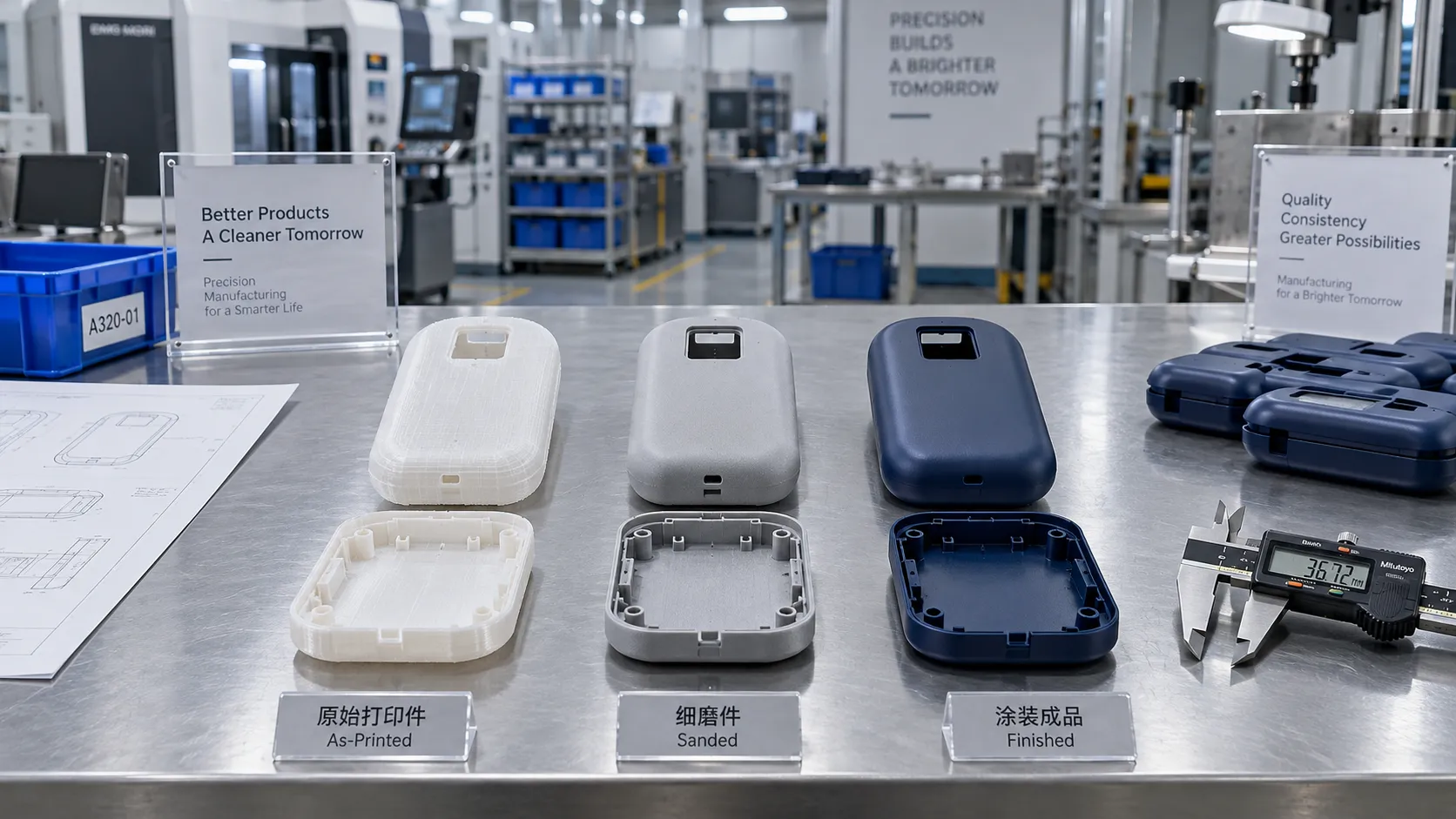
Choosing a 3D Printing Service for Consumer Products: Finish, Fit, and Cost
Compare 3d printing consumer good services by finish, fit, materials, and total cost. Learn how to choose a reliable supplier and avoid costly defects before ordering.

Which Consumer Goods Can Be 3D Printed, and What Are the Practical Limits?
Explore 3d printing consumer goods, from custom eyewear to replacement parts. Discover practical limits on materials, safety, and costs to make smarter production decisions.

From Prototype to Small Batch: Applying 3D Printing to Consumer Goods
Explore 3d printing in consumer goods: learn how to move from prototype to small-batch production with practical guidance on materials, quality validation, and cost control.
Related News
- 00
0000-00
How to verify part consistency before choosing a 3D printing OEM - 00
0000-00
How does a rigid cryogenic transfer line handle thermal contraction? - 00
0000-00
How much does edge vision deployment cost beyond the hardware? - 00
0000-00
How does the purity of sputtering targets affect thin-film quality? - 00
0000-00
How high power laser cladding systems control substrate dilution
Dr. Hideo Tanaka
Weekly Insights
Stay ahead with our curated technology reports delivered every Monday.