
Supply Chain Risk Management Strategies That Work


Supply Chain Risk Management Strategies That Work
In volatile industrial markets, supply chain risk management strategies are no longer optional. They shape cost control, delivery reliability, quality stability, and project confidence.
When one supplier fails, the impact rarely stays isolated. It spreads into schedules, certification plans, customer commitments, and internal resource allocation.
That is why effective supply chain risk management strategies focus on visibility, response speed, and better decisions before disruption becomes expensive.
In practice, strong risk planning is not about predicting everything. It is about preparing teams to react early, recover faster, and protect critical outcomes.
For industrial buyers and engineering-led organizations, that means connecting supplier data, technical standards, compliance updates, and sourcing options into one workable process.
Why Supply Chain Risk Has Become Harder to Ignore
Recent market shifts make disruptions more frequent and more technical. Lead time problems now mix with export controls, material traceability, and component redesign risks.
This is especially true in advanced sectors. Industrial laser systems, additive manufacturing, machine vision, graphene materials, and vacuum engineering depend on specialized supply networks.
A delayed optical sensor or restricted vacuum component can stop installation, testing, and commissioning. The commercial issue quickly becomes a technical delivery problem.
This also explains why supply chain risk management strategies must move beyond basic vendor lists. They need technical depth, market intelligence, and scenario-based planning.
Start with a Clear Risk Map
One of the most practical supply chain risk management strategies is building a risk map tied to project milestones. This creates focus and prevents generic planning.
Map the supply chain by part, subsystem, supplier, geography, qualification status, and regulatory exposure. Then rank each item by impact and recovery difficulty.
A useful risk map should answer simple questions:
- Which components can stop the project entirely?
- Which suppliers have single-source dependency?
- Which materials face price or availability volatility?
- Which parts require long validation or recertification?
- Which regions carry logistics or policy uncertainty?
Once this map is visible, supply chain risk management strategies become more targeted. Teams stop reacting emotionally and start acting on measured priorities.
Segment Suppliers by Criticality, Not Just Spend
Many companies still rank suppliers mainly by annual spend. That is useful for procurement, but not enough for real supply chain risk management strategies.
A low-cost custom seal, firmware board, or inspection optic may be more critical than a high-value standard item. If it fails, the project stalls.
Build supplier segments around operational risk factors:
- Single-source or dual-source status
- Technical uniqueness and switching difficulty
- Compliance burden and certification impact
- Financial resilience and capacity stability
- Delivery history and responsiveness under pressure
This approach makes supply chain risk management strategies far more practical. It helps teams spend attention where disruption would hurt most.
Use Early Warning Indicators That Actually Matter
Good supply chain risk management strategies depend on signals, not assumptions. The earlier the signal, the lower the cost of intervention.
The mistake is tracking too many weak indicators. Focus instead on a short list tied to technical and commercial consequences.
Useful indicators often include:
- Lead time changes on critical components
- Supplier quality drift or rising defect rates
- Missed documentation, testing, or audit deadlines
- Export control updates affecting shipment routes
- Patent or licensing pressure around enabling technologies
- Abnormal price movements in specialty materials
In advanced manufacturing environments, these indicators create a more realistic picture. They support supply chain risk management strategies that are timely and evidence-based.
Build Multi-Layer Mitigation Plans
The best supply chain risk management strategies do not rely on one fix. They combine sourcing, engineering, inventory, and governance actions.
This matters because not every risk can be solved by adding stock. Some problems require design flexibility or faster approval pathways.
Strong mitigation plans usually include several layers:
- Qualified backup suppliers for the most exposed items
- Approved substitute materials or equivalent components
- Safety stock for long-lead, hard-to-replace parts
- Design choices that reduce proprietary dependency
- Fast escalation rules for quality and delivery risks
What works in real operations is layered resilience. That is the difference between theoretical planning and supply chain risk management strategies that hold up under pressure.
Connect Engineering, Procurement, and Compliance
Supply chain failures often start in the gaps between functions. Procurement sees cost, engineering sees performance, and compliance sees documentation risk.
If those views stay disconnected, response time slows down. Teams discover problems late, usually when options are already limited.
More effective supply chain risk management strategies create one shared review rhythm. Critical supplier changes should trigger technical, commercial, and regulatory checks together.
A simple cross-functional routine can include:
- Weekly risk review for critical purchase items
- Shared status on qualification and test completion
- Immediate review of compliance-sensitive shipments
- Decision logs for substitution and design changes
This sounds basic, but it works. Many successful supply chain risk management strategies improve outcomes simply by reducing internal blind spots.
Benchmark Suppliers Against Standards and Capability
In technical industries, supplier risk is rarely just about delivery. It also involves process capability, repeatability, and conformance to recognized standards.
That is why mature supply chain risk management strategies use benchmarking, not only questionnaires. Verifiable data reduces guesswork and improves supplier selection.
Benchmarking is especially valuable for high-spec equipment and materials. ISO, SEMI, IEEE, and ASTM alignment often reveals whether a supplier can scale reliably.
For organizations navigating advanced manufacturing ecosystems, intelligence sources like G-AIT help connect technical performance, regulatory foresight, and commercial risk signals in one place.
A Simple Action Framework for Immediate Use
If current planning feels too reactive, start small. The most effective supply chain risk management strategies usually begin with a repeatable operating routine.
This framework is simple on purpose. Supply chain risk management strategies succeed when they are used consistently, not when they look impressive on paper.
Final Thoughts
The most reliable supply chain risk management strategies combine visibility, prioritization, technical benchmarking, and fast cross-functional action. That mix protects both schedules and engineering integrity.
In uncertain markets, resilience is built through routine decisions. Teams that review weak signals early usually avoid larger cost and delivery failures later.
If the goal is steadier execution, start by mapping critical dependencies, ranking true exposure, and formalizing response triggers. Those are supply chain risk management strategies that work in the real world.
From there, continuous benchmarking and better intelligence make every next decision stronger. That is how supply chains become more resilient, practical, and ready for complex industrial growth.
Related News

How to verify part consistency before choosing a 3D printing OEM
Choosing a 3D printing OEM? Learn how to verify part consistency with repeat-build trials, validated inspections, and traceability checks before committing to production.

How does a rigid cryogenic transfer line handle thermal contraction?
Learn how a rigid cryogenic transfer line manages thermal contraction with bends, bellows, and guided supports. Discover key design checks for safe, reliable cryogenic performance.

How much does edge vision deployment cost beyond the hardware?
Understand edge vision deployment cost beyond hardware, from data and integration to security and support. Uncover hidden expenses and build a smarter lifecycle budget before you scale.

How does the purity of sputtering targets affect thin-film quality?
Discover how sputtering targets affect thin-film quality. Learn to assess purity, identify harmful impurities, and choose specifications that improve coating performance.

How high power laser cladding systems control substrate dilution
Discover how high power laser cladding systems control substrate dilution through beam shaping, material feed, and thermal management to deliver reliable bonds and coating performance.
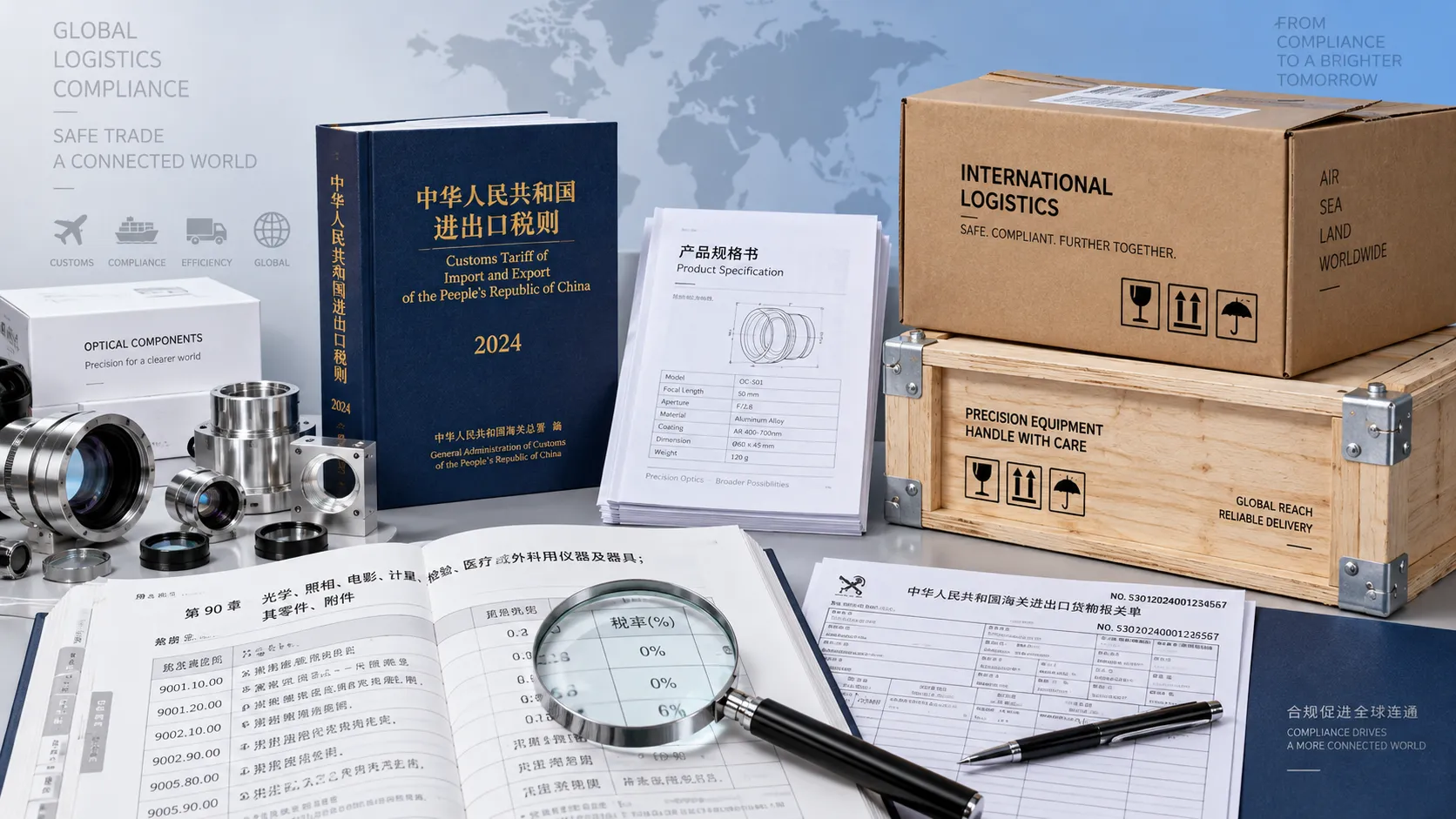
How to check HS codes for customs compliance in international logistics
Strengthen international logistics customs compliance: learn how to verify HS codes, check official tariffs, and document classifications to reduce costly shipment delays.

Choosing a 3D Printing Service for Consumer Products: Finish, Fit, and Cost
Compare 3d printing consumer good services by finish, fit, materials, and total cost. Learn how to choose a reliable supplier and avoid costly defects before ordering.

Which Consumer Goods Can Be 3D Printed, and What Are the Practical Limits?
Explore 3d printing consumer goods, from custom eyewear to replacement parts. Discover practical limits on materials, safety, and costs to make smarter production decisions.

From Prototype to Small Batch: Applying 3D Printing to Consumer Goods
Explore 3d printing in consumer goods: learn how to move from prototype to small-batch production with practical guidance on materials, quality validation, and cost control.
Related News
- 00
0000-00
How to verify part consistency before choosing a 3D printing OEM - 00
0000-00
How does a rigid cryogenic transfer line handle thermal contraction? - 00
0000-00
How much does edge vision deployment cost beyond the hardware? - 00
0000-00
How does the purity of sputtering targets affect thin-film quality? - 00
0000-00
How high power laser cladding systems control substrate dilution
Dr. Hideo Tanaka
Weekly Insights
Stay ahead with our curated technology reports delivered every Monday.