
How 3D Profilometers Improve Surface Inspection

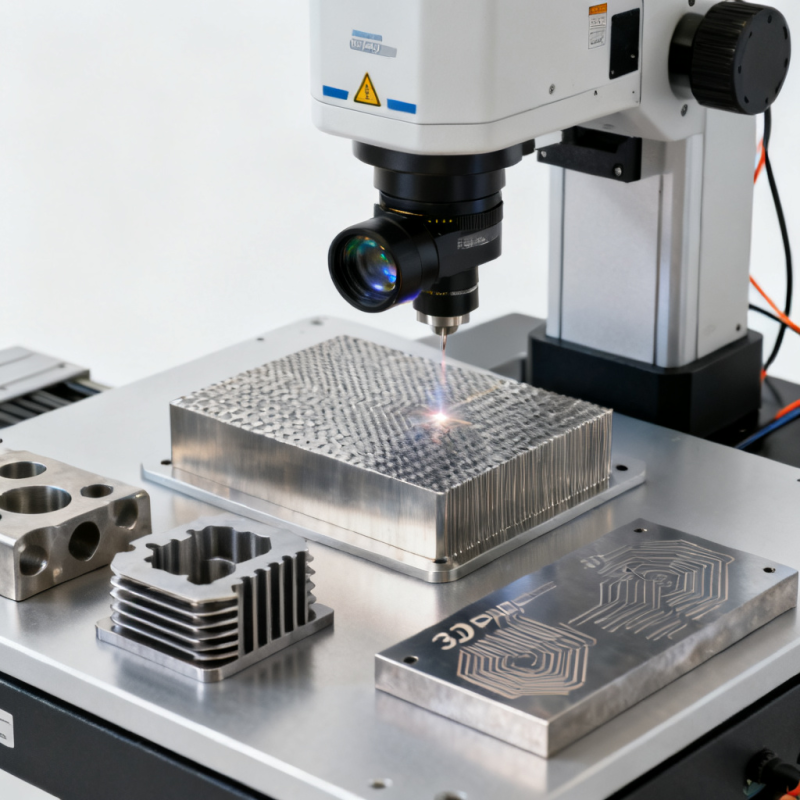
From precision manufacturing and Machine Vision to 3D Printing and Additive Manufacturing, modern industries rely on accurate surface data to verify quality and process stability. This article explains how 3D profilometers enhance surface inspection by capturing critical Technical Specifications, supporting Industrial Standards compliance, and helping buyers, engineers, and quality teams make smarter decisions across Metal 3D Printers, Fiber Lasers, and advanced Nanomaterials applications.
Why surface inspection has become a strategic issue across industries
Surface condition is no longer a narrow metrology topic. In electronics, medical devices, aerospace parts, battery components, optical assemblies, industrial coatings, and semiconductor-adjacent processes, microscopic height variation can influence adhesion, friction, wear, sealing, fatigue life, and optical response. A defect measured in microns may decide whether a batch passes, whether a supplier remains approved, or whether a production line stops for root-cause analysis.
Traditional inspection methods still matter, but many teams now face a harder reality: visual checks miss depth information, contact stylus methods may be too slow for delicate or high-mix parts, and 2D images often fail to describe true topography. In production environments with tighter tolerances, shorter qualification windows, and 2–4 week ramp-up schedules, companies need surface inspection tools that support both engineering analysis and fast operational decisions.
This is where 3D profilometers improve surface inspection. They capture areal surface data rather than a single line trace, allowing users to evaluate height maps, roughness behavior, step height, waviness, defect morphology, and process signatures in one workflow. For procurement teams, that means less ambiguity during equipment comparison. For operators and quality managers, it means clearer pass/fail logic and stronger traceability.
At G-AIT, the value of 3D profilometry is evaluated in a broader industrial context. Surface inspection rarely stands alone. It often connects with machine vision, additive manufacturing validation, laser process tuning, nanomaterial surface engineering, and vacuum-compatible component verification. That cross-sector view is critical when decision makers must align technical performance, standards compliance, supplier benchmarking, and long-term project risk.
What does a 3D profilometer actually add?
A 3D profilometer adds measurable topographic intelligence. Instead of relying only on appearance, the system builds a surface map over a defined field of view and converts height variation into quantifiable parameters. Depending on the technology platform, teams can inspect smooth polished parts, laser-processed textures, printed layers, coated surfaces, and micro-structured materials across millimeter-scale and sub-millimeter-scale features.
- It supports multi-parameter decisions by combining roughness, step height, flatness tendency, defect depth, and texture distribution in one inspection sequence.
- It reduces interpretation gaps between R&D, production, and quality teams because 3D surface maps are easier to review than isolated line scans.
- It improves process control when measurements are repeated at fixed intervals such as every shift, every lot, or during first-article inspection.
For global industrial buyers, the key point is practical: better surface inspection shortens the distance between defect detection and corrective action. That can save one qualification cycle, one delayed shipment, or one rejected supplier transfer. In complex programs, those avoided delays often matter more than the instrument price alone.
How 3D profilometers improve inspection accuracy, repeatability, and decision quality
The strongest advantage of 3D profilometers is not a single metric. It is the combination of non-contact or low-impact measurement, areal data capture, and software-driven analysis. In many industrial workflows, this combination improves repeatability over manual inspection and provides richer information than purely visual systems. That is particularly useful when parts come from multiple suppliers or when process changes must be validated within 3–5 trial runs.
Inspection accuracy also improves because surface defects are described by depth, area, and distribution rather than by appearance alone. A scratch, pit, unmelted powder signature, coating void, or laser-induced ridge may look similar in 2D but behave very differently in service. By measuring topography directly, teams can separate cosmetic variation from functional risk and avoid unnecessary scrap or missed failures.
Repeatability matters just as much as resolution. If results shift when a new operator takes over, when ambient vibration changes, or when a part is moved between stations, quality decisions become unstable. A well-matched 3D profilometer setup improves repeatability through fixed recipes, controlled lighting or optical settings, and consistent scan areas. In many facilities, this creates a more reliable inspection baseline over weekly and quarterly audits.
Decision quality improves because 3D data can be linked to process windows. For example, a laser-textured part may require a target roughness band, while an additive part may require layer fusion consistency and a defined maximum peak height. Once those thresholds are tied to qualification documents, procurement, QA, and engineering teams can compare systems based on measurable outcomes instead of vendor claims.
Core technical gains for inspection teams
The technical gains usually appear in five areas: higher defect visibility, stronger recipe repeatability, faster failure analysis, broader material compatibility, and better reporting. These gains are especially relevant for users who inspect fragile surfaces, reflective finishes, thin coatings, or complex printed geometries where contact methods or simple image systems may be insufficient.
The table below summarizes how 3D profilometers improve surface inspection when compared with common legacy approaches. The exact performance depends on configuration, optics, software, fixturing, and part geometry, but the decision framework is consistent across most industrial sectors.
The practical takeaway is simple. If the inspection question involves height, texture, layer condition, defect depth, or process-induced surface change, a 3D profilometer often gives the most decision-ready data. If the question is only presence or absence at very high speed, 2D vision may still be enough. Many factories ultimately use both, with 3D profilometry handling qualification and escalation tasks.
Three measurement priorities that buyers should define early
- Measurement target: roughness, step height, defect depth, flatness tendency, texture pattern, or layer morphology.
- Part condition: reflective, transparent, dark, porous, coated, soft, or highly structured surface.
- Production mode: offline lab analysis, at-line verification, or near-line inspection with cycle constraints such as 30 seconds, 2 minutes, or 5 minutes per part.
When these three priorities are defined before vendor comparison, system selection becomes much more objective. It also reduces the chance of buying a high-resolution platform that looks impressive in a demo but struggles in the actual plant environment.
Which applications benefit most from 3D surface inspection?
3D profilometers are especially valuable where surface function matters as much as dimension. In additive manufacturing, they help evaluate layer texture, partially fused regions, recoater-related marks, and post-processing consistency. In laser processing, they help verify ablation depth, weld-edge morphology, heat-affected texture, and micro-structured functional surfaces. In coated products, they help monitor thickness transitions, edge build-up, and blister-like topography changes.
For machine vision and optical inspection teams, a 3D profilometer is often used to close the gap between image-based flags and root-cause confirmation. A 2D camera may identify a suspicious region, but a 3D surface scan can determine whether the issue is a shallow stain, a critical pit, a raised burr, or a process ridge. That distinction helps reduce false rejects and improves engineering response speed.
Nanomaterials and advanced functional surfaces also benefit because performance frequently depends on micro-scale texture. Whether the target is adhesion, wettability, conductivity interface preparation, or low-friction behavior, the relevant quality question is often topographic. A single numerical roughness value may not be enough. Areal mapping gives a fuller picture of peak distribution, valley connectivity, and localized anomalies.
Even in vacuum and cryogenic engineering, where cleanliness, sealing interfaces, and high-integrity surface preparation are critical, 3D surface inspection can support verification workflows. Teams can assess machining marks, sealing land condition, coating uniformity, and surface readiness before assembly. In these environments, one surface issue can create downstream leakage, contamination risk, or costly disassembly during qualification.
Typical application scenarios and evaluation focus
The table below helps buyers and engineers match 3D profilometer use cases with the most relevant evaluation criteria. This kind of application mapping is useful when multiple departments share one instrument and need to prioritize fixtures, software packages, and acceptance tests.
These examples show that surface inspection is not one market but many. The same instrument may support R&D, incoming quality, process engineering, and supplier qualification, but only if the configuration reflects the real application mix. This is one reason cross-industry benchmarking from G-AIT is useful during specification review and supplier comparison.
Where buyers often underestimate implementation complexity
Many procurement projects focus heavily on headline resolution and software screenshots, yet the real implementation success depends on sample presentation, vibration control, fixture repeatability, and analysis recipe discipline. If a plant expects at-line deployment within 7–15 days after delivery, these practical conditions should be part of acceptance planning from the beginning.
- Reflective metals may require careful optical setup and test samples from actual production rather than polished showroom coupons.
- Complex printed parts may need defined reference regions so different teams do not measure different locations and generate conflicting reports.
- Shared systems should include role-based workflows for operators, engineers, and auditors to avoid unnecessary software complexity on the shop floor.
A realistic implementation plan usually includes 3 stages: sample study, recipe validation, and handover. Skipping any one of these stages may turn a promising measurement platform into a low-utilization asset.
How to choose a 3D profilometer for procurement, qualification, and long-term use
Choosing a 3D profilometer should begin with the inspection decision you need to make, not with the instrument category alone. Ask whether you need first-article analysis, supplier approval, process troubleshooting, final quality release, or failure analysis support. The answer determines field of view, throughput expectations, fixturing needs, reporting depth, and operator skill requirements. A lab-grade platform and an at-line production tool can serve very different purposes.
For procurement teams, selection usually comes down to five dimensions: measurement fit, repeatability in the real environment, software usability, integration readiness, and support model. A system with strong lab performance but weak recipe transfer may create hidden cost. A simpler system with stable workflows, 1–3 day training, and clear acceptance criteria may provide better total value for distributed plants and multi-shift operations.
Commercial evaluation also matters. Buyers should ask about installation scope, calibration approach, software licensing structure, data export formats, preventive maintenance intervals, and spare-part accessibility. In regulated or quality-critical environments, traceable reporting and user access control can be just as important as optical performance. These points are especially relevant for enterprise decision makers managing several sites or vendor transitions.
G-AIT supports this process by benchmarking inspection systems against application requirements and international industrial frameworks such as ISO, ASTM, IEEE, and sector-relevant quality practices. The benefit is not only technical comparison. It is decision clarity: what the system can measure, how it fits your process, and which risks remain before purchase approval.
Procurement checklist for a reliable selection process
Before issuing final approval, many industrial buyers use a structured checklist. The table below is a practical framework for comparing 3D profilometer options in B2B procurement, pilot validation, and project handover planning.
This checklist is useful because it turns a broad metrology purchase into a controlled project. Instead of asking only which system has the highest performance, buyers can ask which system will still be usable, repeatable, and supportable after 6 months, 12 months, and the next supplier qualification cycle.
A practical 4-step implementation path
- Define measurement objectives and acceptance thresholds, including 3–6 key parameters that matter to production or compliance.
- Validate representative samples from normal, borderline, and reject conditions to build decision rules.
- Finalize recipes, fixtures, and reporting templates for lab use, at-line use, or supplier inspection use.
- Train operators and quality engineers, then review repeatability after the first 2–4 weeks of operation.
This phased approach reduces commissioning surprises and helps project managers tie capital spending to measurable quality outcomes.
Standards, common mistakes, and questions decision makers usually ask
Surface inspection becomes more valuable when it connects to standards and internal quality rules. Depending on the sector, teams may align measurement and reporting practices with ISO surface texture concepts, ASTM test guidance, or customer-specific qualification documents. The key is consistency. A parameter only supports procurement, audit, or supplier management if everyone uses the same definition, scan area logic, and pass/fail interpretation.
One common mistake is treating all roughness metrics as interchangeable. Another is assuming that a better-looking 3D image means better measurement quality. In practice, traceable setup, appropriate filtering, repeatable positioning, and parameter relevance are more important than visual appeal. Quality teams should also confirm whether reported values come from line-based or areal analysis, because that difference affects engineering comparison.
A second mistake is ignoring production reality. A system may perform well in a quiet metrology room but struggle near active machinery, temperature drift, or untrained operators. For at-line deployment, environmental sensitivity, cycle time, and fixture repeatability should be tested under actual conditions for at least several runs rather than one ideal demonstration.
A third mistake is underestimating data governance. If reports cannot be compared across suppliers or sites, the organization loses one of the main benefits of 3D profilometry. Shared naming conventions, recipe control, and audit-ready export formats are essential for enterprise buyers, distributors supporting multiple accounts, and project leaders managing cross-border manufacturing transfers.
FAQ: practical questions before buying or upgrading
How do I know whether a 3D profilometer is better than a stylus system for my application?
If you need areal mapping, defect depth distribution, fragile-surface inspection, or analysis of complex textures, a 3D profilometer often provides more usable information. If your process depends mainly on established line roughness checks on simple, accessible surfaces, a stylus system may still be sufficient. Many factories keep both: stylus for legacy checks and 3D profilometry for process development, qualification, and failure review.
Which teams should participate in the selection process?
At minimum, involve quality, process engineering, the primary operator group, and procurement. In larger projects, also include R&D, supplier quality, and IT or automation stakeholders if data integration is required. A 60–90 minute joint review of sample types, acceptance criteria, and reporting needs can prevent months of confusion after installation.
What is a reasonable validation plan before purchase approval?
Use at least 3 categories of samples: conforming parts, known edge cases, and rejected parts. Run repeated measurements across more than one operator if possible. Review not only numerical output but also recipe stability, reporting clarity, and sample handling time. This gives a more complete picture than a single high-resolution demonstration on ideal samples.
What should distributors and resellers pay attention to?
Distributors should focus on application segmentation, pre-sales sample qualification, and realistic support boundaries. Surface inspection is application-driven, so oversimplified positioning can lead to mismatched expectations. A strong channel strategy usually includes industry-specific demo parts, a clear handover process, and a documented list of supported parameter types and deployment environments.
Why work with G-AIT for 3D profilometer evaluation and next-step planning
When companies evaluate 3D profilometers, the challenge is rarely just finding a machine. The real challenge is linking surface inspection capability to production goals, supplier quality, compliance expectations, and investment timing. G-AIT addresses that challenge through multidisciplinary benchmarking across machine vision, industrial laser processing, additive manufacturing, nanomaterials, and vacuum-oriented engineering environments.
This matters for buyers because surface data often influences decisions beyond inspection. It can affect machine qualification, process optimization, supplier transfer, material selection, and risk control. A benchmarking-driven approach helps procurement and technical teams compare solutions on application relevance, standards alignment, reporting quality, and implementation practicality rather than relying on isolated vendor narratives.
If your team is assessing a new 3D profilometer, upgrading an existing surface inspection workflow, or preparing a multi-site quality standardization program, G-AIT can support the decision process with structured evaluation. That includes parameter confirmation, use-case matching, sample review logic, standards-oriented documentation, and cross-sector comparison for systems used with Metal 3D Printers, Fiber Lasers, optical inspection lines, and advanced material programs.
You can contact G-AIT to discuss 5 practical topics: target parameters to measure, suitable inspection architecture, expected delivery and implementation windows, customization needs for your samples or process, and documentation requirements linked to ISO, ASTM, IEEE, or customer-specific compliance frameworks. For procurement teams and project leaders, this creates a clearer path from technical uncertainty to an actionable sourcing and validation plan.
- manufacturing
- precision manufacturing
- LED lighting
- distributors
- machinery
- electronics
- semiconductor
- Industrial Laser Processing
- 3D Printing
- Additive Manufacturing
- Machine Vision
- Optical Inspection
- Nanomaterials
- Cryogenic Engineering
- Fiber Lasers
- Metal 3D Printers
- Technical Specifications
- Industrial Standards
- manufacturing
- precision manufacturing
- LED lighting
- distributors
- machinery
- electronics
- semiconductor
- Industrial Laser Processing
- 3D Printing
- Additive Manufacturing
- Machine Vision
- Optical Inspection
- Nanomaterials
- Cryogenic Engineering
- Fiber Lasers
- Metal 3D Printers
- Technical Specifications
- Industrial Standards
Related News
How to verify part consistency before choosing a 3D printing OEM
Choosing a 3D printing OEM? Learn how to verify part consistency with repeat-build trials, validated inspections, and traceability checks before committing to production.
How does a rigid cryogenic transfer line handle thermal contraction?
Learn how a rigid cryogenic transfer line manages thermal contraction with bends, bellows, and guided supports. Discover key design checks for safe, reliable cryogenic performance.

How much does edge vision deployment cost beyond the hardware?
Understand edge vision deployment cost beyond hardware, from data and integration to security and support. Uncover hidden expenses and build a smarter lifecycle budget before you scale.
How does the purity of sputtering targets affect thin-film quality?
Discover how sputtering targets affect thin-film quality. Learn to assess purity, identify harmful impurities, and choose specifications that improve coating performance.
How high power laser cladding systems control substrate dilution
Discover how high power laser cladding systems control substrate dilution through beam shaping, material feed, and thermal management to deliver reliable bonds and coating performance.
How to check HS codes for customs compliance in international logistics
Strengthen international logistics customs compliance: learn how to verify HS codes, check official tariffs, and document classifications to reduce costly shipment delays.
Choosing a 3D Printing Service for Consumer Products: Finish, Fit, and Cost
Compare 3d printing consumer good services by finish, fit, materials, and total cost. Learn how to choose a reliable supplier and avoid costly defects before ordering.
Which Consumer Goods Can Be 3D Printed, and What Are the Practical Limits?
Explore 3d printing consumer goods, from custom eyewear to replacement parts. Discover practical limits on materials, safety, and costs to make smarter production decisions.
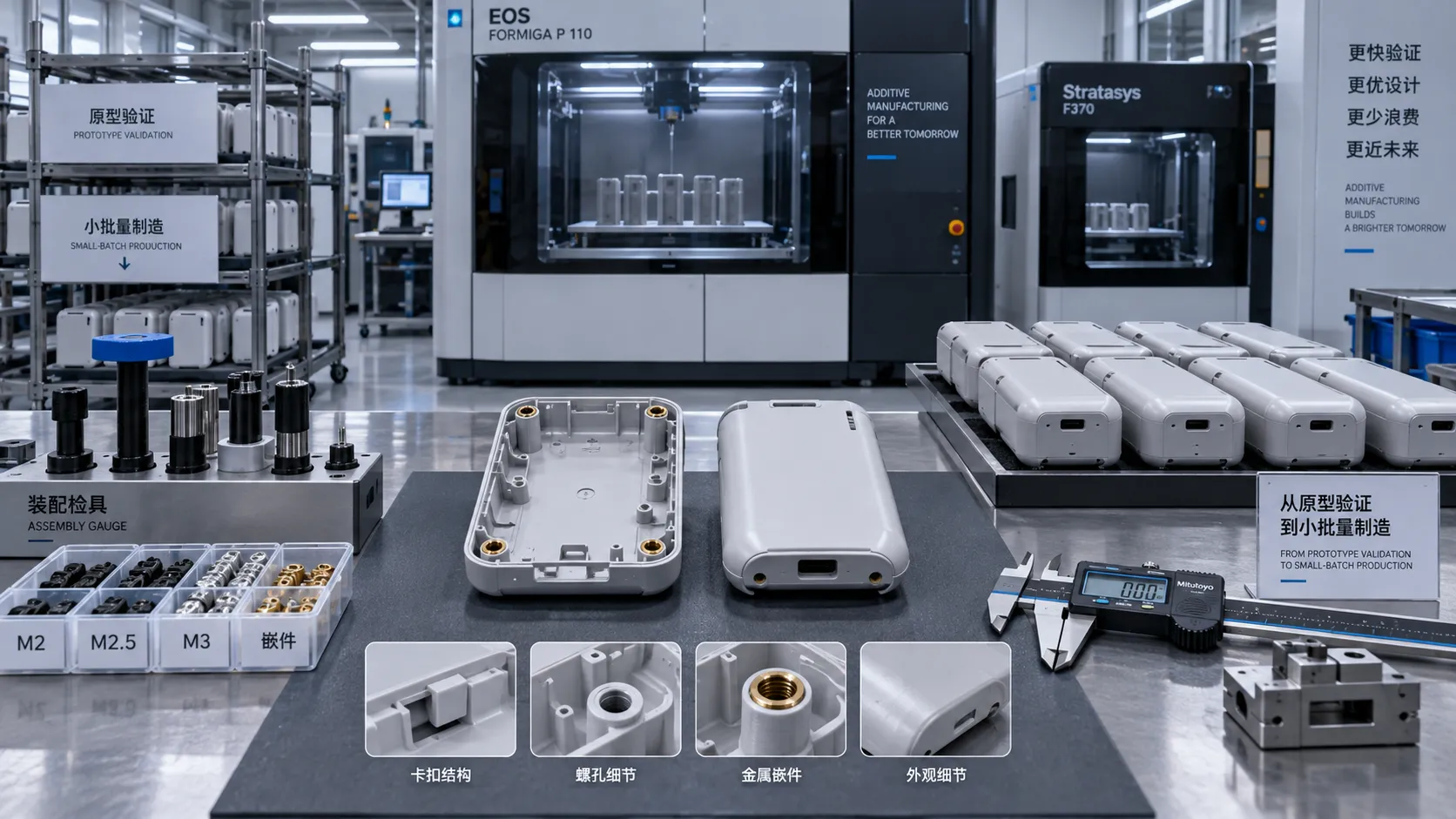
From Prototype to Small Batch: Applying 3D Printing to Consumer Goods
Explore 3d printing in consumer goods: learn how to move from prototype to small-batch production with practical guidance on materials, quality validation, and cost control.
Related News
- 00
0000-00
How to verify part consistency before choosing a 3D printing OEM - 00
0000-00
How does a rigid cryogenic transfer line handle thermal contraction? - 00
0000-00
How much does edge vision deployment cost beyond the hardware? - 00
0000-00
How does the purity of sputtering targets affect thin-film quality? - 00
0000-00
How high power laser cladding systems control substrate dilution
Dr. Victor Gear
Weekly Insights
Stay ahead with our curated technology reports delivered every Monday.