
Graphene Oxides: Where Do They Add Value?

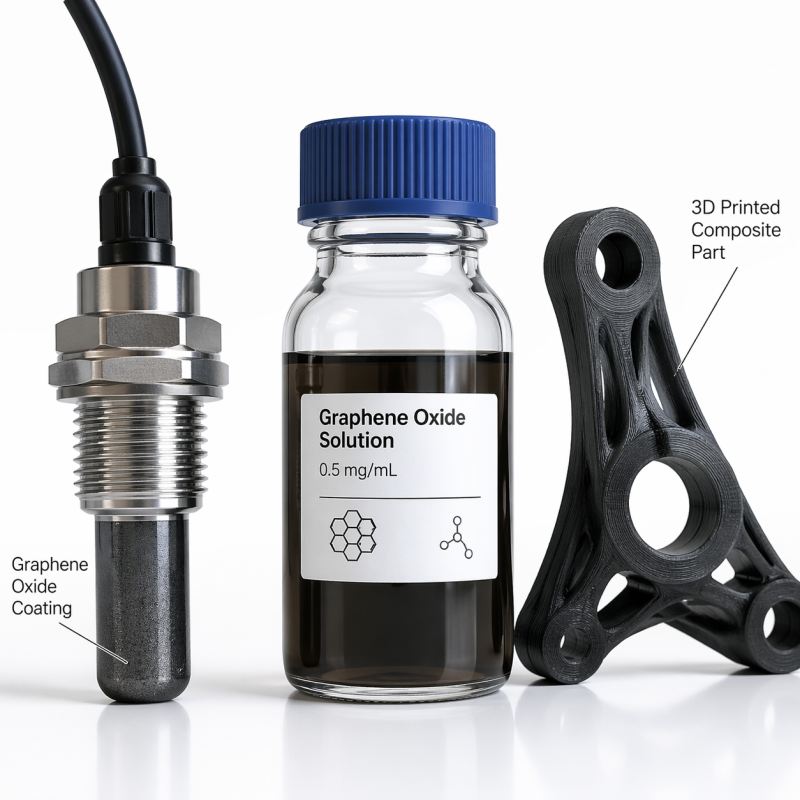
Graphene oxides are gaining attention across precision manufacturing because they can enhance coatings, sensors, composites, and conductive systems while supporting stricter industrial standards. For buyers, engineers, and project leaders working in 3D Printing, Additive Manufacturing, Machine Vision, Fiber Lasers, and Nanomaterials, the real question is not hype but measurable value—where performance, technical specifications, compliance, and export control considerations translate into practical commercial advantage.
For most industrial buyers and technical evaluators, the core question behind “Graphene Oxides: Where Do They Add Value?” is straightforward: in which applications do graphene oxides deliver a clear performance or cost advantage, and where are they still better viewed as experimental materials rather than procurement-ready solutions? The short answer is that graphene oxide (GO) adds the most value when a project needs a combination of surface functionality, barrier performance, tunable conductivity after reduction, mechanical reinforcement, and process compatibility. It is usually most useful in coatings, membranes, sensors, energy-related components, conductive inks, and engineered composites—not as a universal upgrade for every product.
That distinction matters. Decision-makers do not need another broad introduction to nanomaterials. They need to know where graphene oxide can improve product performance, how to evaluate suppliers, what processing limits to expect, and what compliance or scale-up risks may affect commercialization. This article focuses on those practical questions.
Where does graphene oxide create measurable industrial value?
Graphene oxide creates value primarily because it is easier to disperse and chemically modify than pristine graphene. Its oxygen-containing functional groups make it compatible with water-based systems, polymers, ceramics, metals, and coated surfaces. That gives engineers more process flexibility and gives procurement teams a clearer path to integration.
The strongest value cases typically include:
- Protective and functional coatings: GO can improve barrier properties, corrosion resistance, wear resistance, and adhesion in properly formulated coating systems.
- Polymer and composite reinforcement: In low, well-controlled loading levels, GO may increase stiffness, thermal stability, and in some systems fracture resistance.
- Sensors and optical platforms: GO and reduced graphene oxide (rGO) can support humidity, gas, biosensing, and optoelectronic performance because of their high surface area and tunable electronic behavior.
- Conductive inks and printed electronics: When reduced after deposition, GO can serve as a process-friendly precursor for conductive patterns.
- Membranes and filtration: Layered GO structures can provide selective transport behavior useful in water treatment, gas separation, and specialty filtration.
- Energy storage and functional interfaces: GO is often used in electrodes, separators, and interfacial layers to improve electrochemical stability or transport behavior.
In industrial terms, graphene oxide adds value when it solves a specific engineering problem better than carbon black, metal oxides, conventional fillers, or standard barrier additives. If no measurable problem is being solved, the material may only add cost and qualification burden.
What makes graphene oxide attractive compared with standard graphene or conventional fillers?
For many users, the practical advantage of graphene oxide is not that it is the “best” nanocarbon in absolute performance. It is that it can be processed more easily in many real manufacturing environments.
Compared with pristine graphene, GO typically offers:
- Better dispersion in water and some polar systems
- Easier chemical functionalization
- Improved compatibility with resins, coatings, and binders
- More practical routes for large-area deposition or wet processing
Compared with conventional fillers such as silica, clay, or carbon black, GO may offer:
- High aspect ratio at very low loading levels
- Simultaneous mechanical and barrier improvements
- Surface chemistry that supports multifunctional design
- A pathway to conductivity after reduction
However, these advantages only materialize when dispersion quality, sheet size, oxidation level, purity, and loading fraction are well controlled. Poorly controlled GO often underperforms because agglomeration, inconsistent oxidation, or residual contaminants erase the theoretical benefits.
Which application areas are most promising for buyers and project teams?
Across industries, the best-fit applications are those where GO provides a combination of performance gain and realistic integration into existing production lines.
1. Coatings and surface engineering
This is one of the most commercially relevant segments. GO can improve anti-corrosion behavior, reduce permeability to moisture or gases, and support multifunctional coatings with mechanical or sensing capabilities. For industrial buyers, this is attractive because coatings are often easier to modify than bulk materials or full component designs.
Typical value indicators include:
- Lower corrosion rate in salt spray or humidity testing
- Improved adhesion to metallic or polymer substrates
- Enhanced chemical resistance
- Longer maintenance intervals
2. Additive manufacturing and 3D printing materials
In additive manufacturing, GO can be used in photopolymers, thermoplastics, cementitious systems, or specialty inks to adjust rheology, mechanical strength, thermal response, or post-processed conductivity. The value is strongest when the material improves a critical performance metric without disrupting printability.
For additive manufacturing teams, the key question is not whether GO is advanced, but whether it preserves:
- Stable extrusion or jetting behavior
- Layer adhesion and dimensional accuracy
- Curing consistency
- Repeatable final-part properties
3. Sensors, machine vision support materials, and optical systems
GO-based films and rGO structures are used in humidity sensing, gas sensing, flexible electronics, and some optical or photonic platforms. In machine vision and optical inspection ecosystems, GO may not always be the core active product, but it can add value in sensor substrates, functional films, anti-static interfaces, or specialty detection materials.
4. Conductive films and printed electronics
GO is not highly conductive in its oxidized state, but it becomes much more useful after reduction. This makes it relevant for conductive coatings, EMI-related layers, flexible circuits, and lower-cost printed structures where processing ease matters. Commercial value depends heavily on whether the achieved conductivity is sufficient for the target use case.
5. Filtration and membrane technology
GO laminates can provide selective transport pathways and strong barrier control. That creates opportunities in industrial water systems, specialty gas separation, laboratory filtration, and advanced process media. Here, the value case depends on long-term stability, fouling resistance, and reproducibility at scale.
Where is graphene oxide often oversold?
This is a critical point for commercial and technical evaluation. Graphene oxide is often marketed as if it will automatically improve strength, conductivity, thermal transfer, barrier performance, and durability all at once. In practice, trade-offs are common.
GO is frequently oversold in the following situations:
- When dispersion is poor: Agglomerated particles can weaken materials instead of reinforcing them.
- When conductivity expectations are unrealistic: GO generally requires reduction, and even then performance may not match metals or premium conductive carbons.
- When loading is too high: Excess GO can hurt viscosity, processability, transparency, or mechanical consistency.
- When the formulation is not redesigned: Simply adding GO to an existing recipe rarely guarantees better performance.
- When supplier specifications are incomplete: “Graphene oxide” alone is not a sufficient specification for industrial qualification.
For buyers and business evaluators, the takeaway is clear: graphene oxide should be judged as a defined engineering material with a controlled specification, not as a generic innovation label.
How should procurement and engineering teams evaluate graphene oxide suppliers?
Supplier evaluation is where many projects succeed or fail. Because GO properties vary significantly with production method and post-treatment, purchasing by headline terminology is risky.
Teams should request and verify at least the following:
- Sheet size distribution
- Thickness or layer profile
- Carbon-to-oxygen ratio or oxidation level
- Dispersion medium and stability data
- Purity and residual metal/acid contamination
- Surface area and defect characterization
- Electrical performance after reduction, if relevant
- Batch-to-batch consistency
- SDS, REACH/RoHS-related documentation, and handling guidance
- Scalability and lead-time reliability
For high-spec industries, material validation may also involve Raman spectroscopy, XPS, TEM/SEM imaging, TGA, particle size analysis, rheology data, and application-specific performance testing. A supplier that cannot support technical dialogue beyond a datasheet may not be suitable for mission-critical manufacturing programs.
What technical risks should users expect during scale-up?
Lab success does not automatically transfer to industrial production. The main scale-up risks with graphene oxide involve consistency, processing, and environmental control.
Common scale-up issues include:
- Viscosity drift: GO dispersions can behave differently at larger batch sizes, affecting coating or printing processes.
- Sedimentation or shelf-life instability: A formulation that works fresh in the lab may separate during storage or transport.
- Drying and film formation defects: Cracking, wrinkling, or uneven deposition can reduce barrier or electrical performance.
- Reduction variability: If the process requires rGO, conductivity and defect structure can vary with reduction method and thermal history.
- EHS and dust-handling controls: Powder-form materials may require stricter containment and workplace exposure management.
Project leaders should build qualification plans around pilot-scale process windows, not just material certificates. That means testing under real production conditions: line speed, humidity, substrate variability, curing conditions, and storage time.
How does graphene oxide fit into compliance, quality control, and export-sensitive sectors?
For enterprise buyers, especially those supplying global high-tech manufacturing chains, graphene oxide is not only a materials question but also a compliance and governance question.
Important review areas include:
- Chemical compliance: Check regional requirements such as REACH, RoHS, and sector-specific chemical restrictions.
- Workplace safety: Review handling procedures, exposure controls, storage requirements, and waste management practices.
- Quality traceability: Ensure lot traceability, test method consistency, and nonconformance procedures.
- Application qualification standards: In aerospace, electronics, medical, or energy sectors, the end-use standard may matter more than the nanomaterial itself.
- Cross-border trade and export control awareness: While GO is not uniformly restricted in the same way as some dual-use systems, buyers should still review destination markets, technical end use, and documentation pathways.
For quality and safety managers, the most useful mindset is to treat GO like any other advanced industrial input: verify composition, process behavior, hazard communication, and downstream performance before approval.
How can decision-makers tell whether graphene oxide is worth the investment?
The best way to assess value is to connect graphene oxide to a measurable business outcome. Technical novelty alone is not enough.
Strong investment cases usually show one or more of the following:
- Reduced coating failure or corrosion-related replacement cost
- Higher sensor sensitivity or product differentiation
- Lower material loading than conventional additives
- Improved process compatibility in water-based or low-temperature systems
- New functionality that enables premium pricing or market entry
- Better product life-cycle performance
Weak cases usually depend on vague claims such as “nano-enhanced,” “next-generation,” or “stronger and more conductive” without benchmark data.
A practical evaluation framework for business and technical teams is:
- Define the exact performance bottleneck.
- Identify whether GO solves that bottleneck better than incumbent materials.
- Verify process compatibility and quality consistency.
- Estimate qualification cost, scale-up cost, and sourcing risk.
- Model the commercial upside in cost savings, reliability, or product premium.
So, where does graphene oxide add the most value?
Graphene oxide adds the most value in applications where surface chemistry, dispersion flexibility, thin-film formation, barrier effects, and tunable post-treatment properties matter more than raw conductivity alone. It is especially valuable in advanced coatings, engineered composites, sensors, membranes, and selected additive manufacturing materials.
It adds less value when a project needs a simple drop-in material replacement, extremely high conductivity without post-processing, or guaranteed performance without reformulation and qualification work. In other words, GO is most powerful when used as a designed functional ingredient, not a marketing additive.
For engineers, procurement teams, quality managers, and industrial decision-makers, the right question is not “Is graphene oxide important?” but “In this specific application, can graphene oxide deliver verifiable technical and commercial advantage under real manufacturing conditions?” When the answer is backed by repeatable data, supplier transparency, and a realistic scale-up path, graphene oxide can be a high-value industrial material rather than a speculative one.
In summary, graphene oxide is worth serious consideration where it improves barrier performance, enables functional coatings, enhances sensing platforms, supports printable formulations, or strengthens advanced composites with manageable integration risk. The organizations that gain the most from it will be those that evaluate it rigorously—through benchmark testing, supplier qualification, compliance review, and total-value analysis—rather than relying on broad nanomaterial claims.
Related News
How to verify part consistency before choosing a 3D printing OEM
Choosing a 3D printing OEM? Learn how to verify part consistency with repeat-build trials, validated inspections, and traceability checks before committing to production.

How does a rigid cryogenic transfer line handle thermal contraction?
Learn how a rigid cryogenic transfer line manages thermal contraction with bends, bellows, and guided supports. Discover key design checks for safe, reliable cryogenic performance.

How much does edge vision deployment cost beyond the hardware?
Understand edge vision deployment cost beyond hardware, from data and integration to security and support. Uncover hidden expenses and build a smarter lifecycle budget before you scale.
How does the purity of sputtering targets affect thin-film quality?
Discover how sputtering targets affect thin-film quality. Learn to assess purity, identify harmful impurities, and choose specifications that improve coating performance.

How high power laser cladding systems control substrate dilution
Discover how high power laser cladding systems control substrate dilution through beam shaping, material feed, and thermal management to deliver reliable bonds and coating performance.

How to check HS codes for customs compliance in international logistics
Strengthen international logistics customs compliance: learn how to verify HS codes, check official tariffs, and document classifications to reduce costly shipment delays.
Choosing a 3D Printing Service for Consumer Products: Finish, Fit, and Cost
Compare 3d printing consumer good services by finish, fit, materials, and total cost. Learn how to choose a reliable supplier and avoid costly defects before ordering.
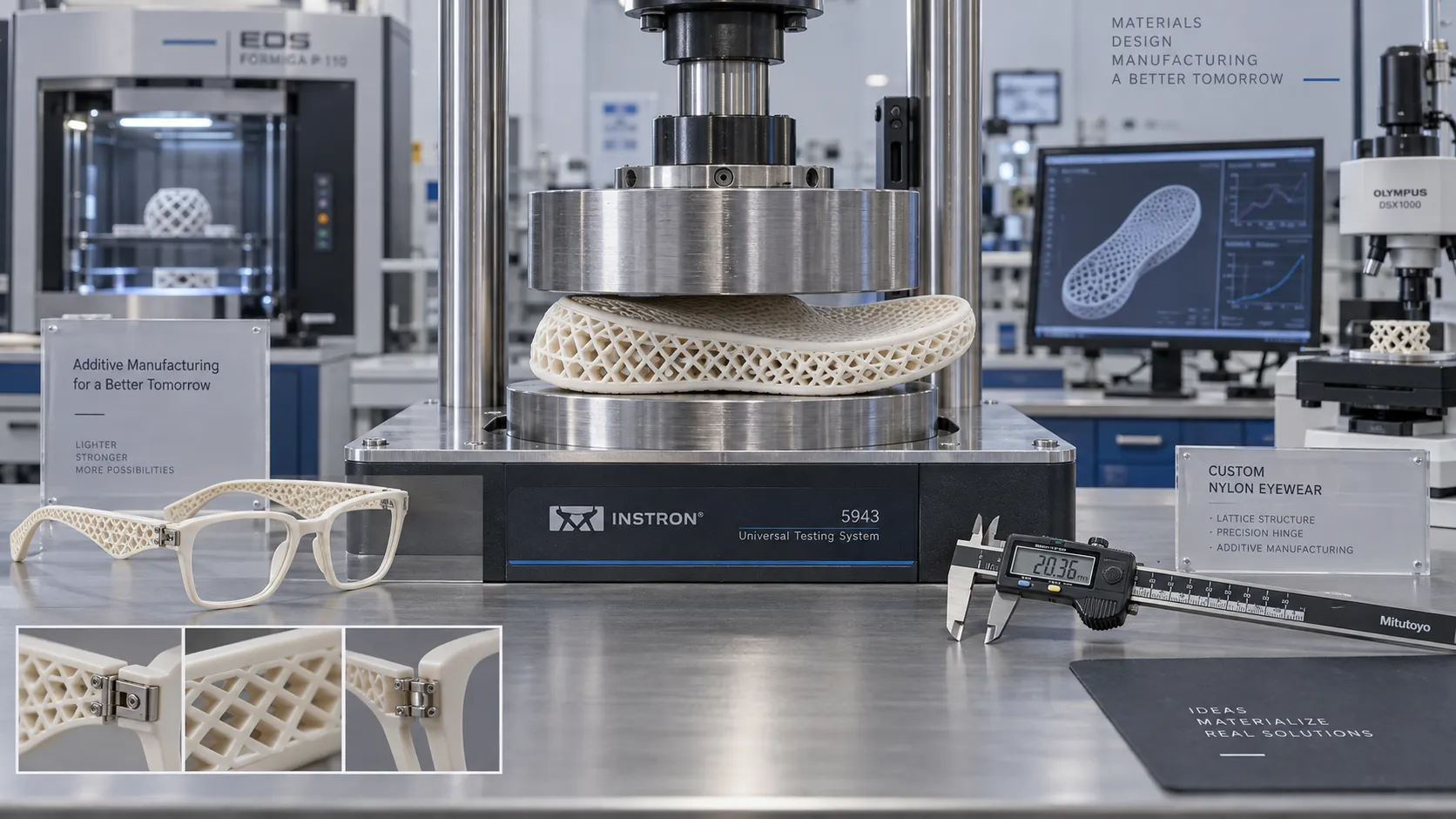
Which Consumer Goods Can Be 3D Printed, and What Are the Practical Limits?
Explore 3d printing consumer goods, from custom eyewear to replacement parts. Discover practical limits on materials, safety, and costs to make smarter production decisions.
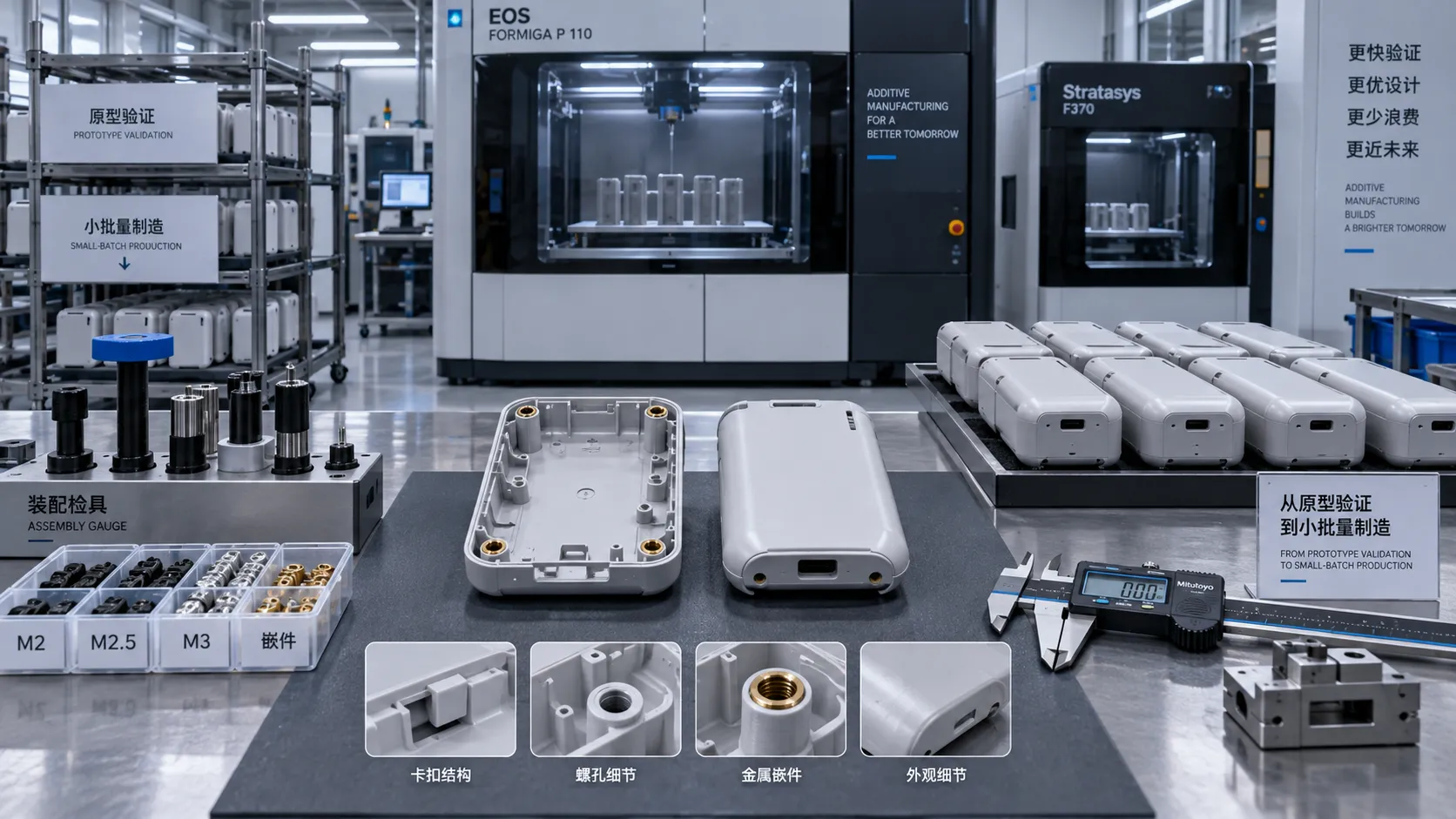
From Prototype to Small Batch: Applying 3D Printing to Consumer Goods
Explore 3d printing in consumer goods: learn how to move from prototype to small-batch production with practical guidance on materials, quality validation, and cost control.
Related News
- 00
0000-00
How to verify part consistency before choosing a 3D printing OEM - 00
0000-00
How does a rigid cryogenic transfer line handle thermal contraction? - 00
0000-00
How much does edge vision deployment cost beyond the hardware? - 00
0000-00
How does the purity of sputtering targets affect thin-film quality? - 00
0000-00
How high power laser cladding systems control substrate dilution
Dr. Elena Carbon
Weekly Insights
Stay ahead with our curated technology reports delivered every Monday.