
Nano-Coatings for Wear Resistance: How to Compare


Selecting nano-coatings for wear resistance requires more than comparing hardness claims. Buyers and engineers must evaluate Nanomaterials, Technical Specifications, Industrial Standards, and precision manufacturing fit to ensure reliable performance across demanding applications. This guide explains how to compare coating systems with a practical, data-driven approach that supports procurement, quality control, and long-term operational value.
Across industrial tooling, pumps, valves, optics, medical devices, energy systems, semiconductor components, and motion assemblies, wear failure rarely depends on one parameter alone. A coating that performs well at 25°C in dry sliding may degrade quickly under abrasive slurry, intermittent impact, or 300°C thermal cycling. That is why decision-makers need a structured comparison model that connects laboratory data to real operating conditions.
For research teams, operators, procurement managers, commercial evaluators, quality personnel, and project leaders, the core question is not simply which nano-coating is hardest. The better question is which coating system offers the most reliable wear resistance within a defined load range, substrate type, deposition route, compliance requirement, maintenance window, and total cost horizon of 12–36 months.
Define Wear Conditions Before Comparing Coating Claims
The first mistake in nano-coating selection is comparing suppliers by a single headline metric such as hardness in GPa. Wear resistance depends on contact mechanics, friction regime, counterface material, temperature, lubrication state, particle contamination, and duty cycle. A coating rated at 25–35 GPa may outperform a 40 GPa alternative if adhesion, toughness, and residual stress are better matched to the substrate and use case.
Procurement and engineering teams should begin with a 4-part operating profile: load, motion, environment, and failure mode. For example, a linear guide operating at 1–3 m/s under light lubrication needs a different coating strategy than a forming die exposed to repeated impact and edge loading. In many projects, the real benchmark is not peak hardness, but stable wear rate over 500,000 to 2 million cycles.
A practical comparison should also define whether the dominant mechanism is adhesive wear, abrasive wear, erosive wear, fretting, cavitation, or tribo-corrosion. Nano-structured ceramic, carbide-based, DLC-family, and composite coatings may each address different mechanisms. If this classification is skipped, teams often overpay for coatings optimized for the wrong failure mode.
Key wear questions to answer early
- What is the normal load range, such as 5 N, 50 N, or above 500 N in localized contact?
- Is the motion sliding, rolling, oscillating, impinging, or mixed-mode?
- Does the part run dry, boundary-lubricated, or fully lubricated for more than 80% of operating time?
- What is the expected service interval: 6 months, 12 months, or 3 years?
- Is failure defined by friction rise, coating breakthrough, dimensional drift, particle shedding, or corrosion-assisted spalling?
When these questions are documented, comparison becomes far more disciplined. It also helps distributors, project managers, and quality teams align coating requirements with production risk, spare-part planning, and acceptance testing.
Typical wear environments and coating implications
The table below shows why wear resistance must be compared in context rather than by one data point. These are common industrial evaluation patterns used in cross-sector sourcing and technical benchmarking.
The key conclusion is simple: a valid nano-coating comparison starts with the application envelope. Once the wear mechanism and operating window are defined, technical screening becomes faster, more reliable, and easier to defend during procurement review.
Compare the Right Technical Specifications, Not Just Hardness
After defining the wear environment, the next step is to compare the full coating system. A nano-coating is not only its top layer. It includes substrate preparation, interlayer design, deposition method, thickness control, surface roughness, stress profile, and post-treatment. Two coatings with similar chemistry can deliver very different field life if one has poor adhesion or uneven thickness on complex geometry.
For most B2B buyers, 8 technical parameters deserve routine review: thickness, hardness, elastic modulus, coefficient of friction, adhesion class or critical load, roughness after coating, service temperature range, and corrosion or chemical resistance. In advanced applications, additional data such as H/E ratio, H3/E2 indicator, porosity, residual stress, and pin-on-disk wear rate may also be important.
Thickness must be interpreted carefully. A 1–3 µm coating may be ideal for precision tools and optical components where tight tolerances matter, while 5–15 µm can be more suitable for severe abrasion or fluid handling components. Thicker is not always better; internal stress can increase, and sharp edges may suffer localized failure if deposition uniformity is poor.
Technical comparison checklist
- Confirm substrate type, hardness, and heat-treatment state before evaluating coating compatibility.
- Review deposition process consistency, such as PVD, CVD, ALD, plasma-assisted routes, or hybrid methods.
- Ask for adhesion test method, not only the pass/fail statement.
- Check whether friction data were measured dry, lubricated, ambient, or high temperature.
- Verify thickness tolerance across critical surfaces, especially for bores, edges, threads, and microfeatures.
Why deposition route matters
Deposition choice affects density, conformality, throughput, and heat exposure. PVD often supports hard, low-friction coatings on cutting tools and precision components. CVD can provide strong high-temperature performance but may require higher process temperatures. ALD is valuable when uniformity on high-aspect-ratio features or thin conformal layers below 1 µm is critical. These distinctions matter for semiconductor, medical, optics, and high-precision motion parts.
The table below summarizes how common specification categories should be interpreted during comparison.
This comparison framework helps commercial and technical teams separate meaningful engineering data from marketing summaries. It also improves the quality of RFQs, because suppliers are more likely to respond with application-relevant data when the request is technically precise.
Use Standards, Testing Protocols, and Acceptance Criteria to Reduce Procurement Risk
Even high-quality nano-coatings are difficult to compare if test methods are inconsistent. One supplier may publish hardness at a different indentation load, another may report friction under dry laboratory conditions, and a third may show only internal trial data. For procurement decisions involving regulated industries, critical machinery, or Tier-1 supply chains, acceptance must be based on standardized or clearly disclosed test conditions.
A sound sourcing process usually includes 3 layers of validation: document review, coupon-level testing, and component-level verification. Document review covers substrate preparation, coating architecture, batch traceability, and declared process window. Coupon tests provide screening data for hardness, adhesion, roughness, and wear behavior. Component-level trials confirm dimensional stability, assembly fit, and actual service performance.
For cross-border supply and advanced manufacturing programs, it is also wise to align testing with recognized industrial frameworks such as ISO, ASTM, SEMI, or application-specific customer protocols where relevant. The exact standard depends on the part and sector, but the principle is universal: a result without a disclosed method has limited procurement value.
Minimum acceptance package for coated parts
- Batch-level certificate stating substrate, process family, and target thickness range.
- Measured coating thickness from at least 3 representative points on critical surfaces.
- Surface roughness before and after coating when friction or sealing is important.
- Adhesion result with method disclosure and failure description.
- Wear or friction test conditions including load, speed, counterface, and environment.
- Visual inspection criteria for discoloration, pinholes, edge defects, and peeling.
How quality teams can set decision gates
A useful practice is to establish gate criteria at prototype, pilot, and production stages. For example, prototype screening may accept broader thickness variation if the objective is chemistry selection, while pilot runs may require dimensional repeatability within a tighter tolerance band. By production release, many teams require 100% documentation completeness and agreed sampling rules for destructive and non-destructive tests.
This staged method prevents premature approval based on attractive coupon data alone. It also supports project managers who need to balance launch timing, qualification cost, and field reliability.
Match Nano-Coating Selection to Precision Manufacturing and Lifecycle Economics
Wear resistance is only one part of the business case. In production environments, buyers must ask whether the coating fits tolerances, downstream assembly, cleaning chemistry, maintenance intervals, and rework strategy. A coating that increases component life by 30% may still be a poor choice if it creates dimensional rejection, slows throughput, or requires costly masking on every batch.
Precision fit is especially important in sectors using microfeatures, optical surfaces, vacuum interfaces, high-speed bearings, precision molds, semiconductor hardware, and medical components. In these cases, a thickness difference of 1–2 µm can influence sealing, sliding force, light scatter, or assembly fit. Buyers should compare not only coating performance, but process capability on actual part geometry.
Lifecycle economics should be calculated over a meaningful period, often 12, 24, or 36 months. Direct coating price is only one variable. Downtime, cleaning frequency, spare consumption, inspection burden, and field failure risk often have larger financial impact than unit coating cost alone.
Typical business comparison factors
The following table shows how technical and commercial factors can be compared in one decision view. This is useful for procurement teams, distributors, and enterprise decision-makers evaluating multiple coating options across sites or product lines.
In many industrial programs, the most competitive option is not the lowest initial quote, but the coating system with predictable process control, lower inspection burden, and a cleaner qualification path. That is particularly true where downtime costs exceed coating cost by a factor of 5–20.
Questions to ask suppliers before approval
- Can the supplier show repeatability across at least 3 batches on similar substrates?
- What pre-treatment steps are used to control adhesion and contamination?
- How is masking handled on precision surfaces and threaded areas?
- What is the typical turnaround for prototypes versus serial production?
- Is there a documented recoat process and acceptance plan for refurbished parts?
These questions convert coating selection from a material-only decision into a manufacturing and asset-management decision, which is how most enterprise buyers actually manage risk.
Common Mistakes, FAQ, and a Practical Next Step
Many coating projects fail not because the coating technology is weak, but because the comparison method is incomplete. Teams may compare brochure values, ignore counterface conditions, approve a coating without dimensional verification, or skip pilot validation on actual components. The result is often premature wear, unstable friction, qualification delays, or avoidable supplier disputes.
A better approach is to move through 5 steps: define wear mode, screen technical data, align test methods, validate on representative parts, and review lifecycle cost. This process is suitable across multiple industries because it focuses on operating reality rather than marketing terminology.
Below are several frequently asked questions that reflect real search and procurement intent.
How do I compare two nano-coatings with similar hardness?
Look at at least 5 additional factors: adhesion, friction coefficient under relevant conditions, thickness uniformity, thermal stability, and wear rate against the actual counterface. If one coating is 32 GPa and another is 36 GPa, the lower-hardness option may still last longer if it has better adhesion and lower defect density in your operating window.
Which applications benefit most from wear-resistant nano-coatings?
Typical high-value applications include cutting and forming tools, pump sleeves, valve internals, guide rails, molds, optical parts, semiconductor hardware, medical instruments, and high-cycle automation components. The best fit usually appears where wear, friction, particle generation, or maintenance frequency directly affects yield and uptime.
How long does qualification usually take?
For many industrial projects, initial lab screening takes 1–3 weeks, pilot coating and part inspection another 2–4 weeks, and application validation 2–8 weeks depending on duty cycle. Highly regulated or multi-site approvals may take longer, especially if documentation, traceability, or customer-specific testing is required.
What is the most overlooked purchasing risk?
The most common blind spot is assuming test data are comparable when the methods differ. Friction measured at low load in dry air cannot be used as a direct proxy for lubricated or high-temperature service. The second major risk is ignoring geometry-related coating variation on edges, bores, or small features.
For organizations evaluating wear-resistant nano-coatings across advanced manufacturing, energy, automation, optics, additive manufacturing, or high-performance materials programs, the most reliable comparison model is data-based, application-specific, and linked to quality control from the start. G-AIT supports that decision process through technical benchmarking, standards-oriented evaluation, and cross-sector industrial intelligence.
If you need to compare nano-coating options for a specific substrate, wear mode, or precision manufacturing requirement, contact us to discuss your use case, request a tailored evaluation framework, or explore broader coating and materials benchmarking solutions.
Related News

How to verify part consistency before choosing a 3D printing OEM
Choosing a 3D printing OEM? Learn how to verify part consistency with repeat-build trials, validated inspections, and traceability checks before committing to production.

How does a rigid cryogenic transfer line handle thermal contraction?
Learn how a rigid cryogenic transfer line manages thermal contraction with bends, bellows, and guided supports. Discover key design checks for safe, reliable cryogenic performance.

How much does edge vision deployment cost beyond the hardware?
Understand edge vision deployment cost beyond hardware, from data and integration to security and support. Uncover hidden expenses and build a smarter lifecycle budget before you scale.
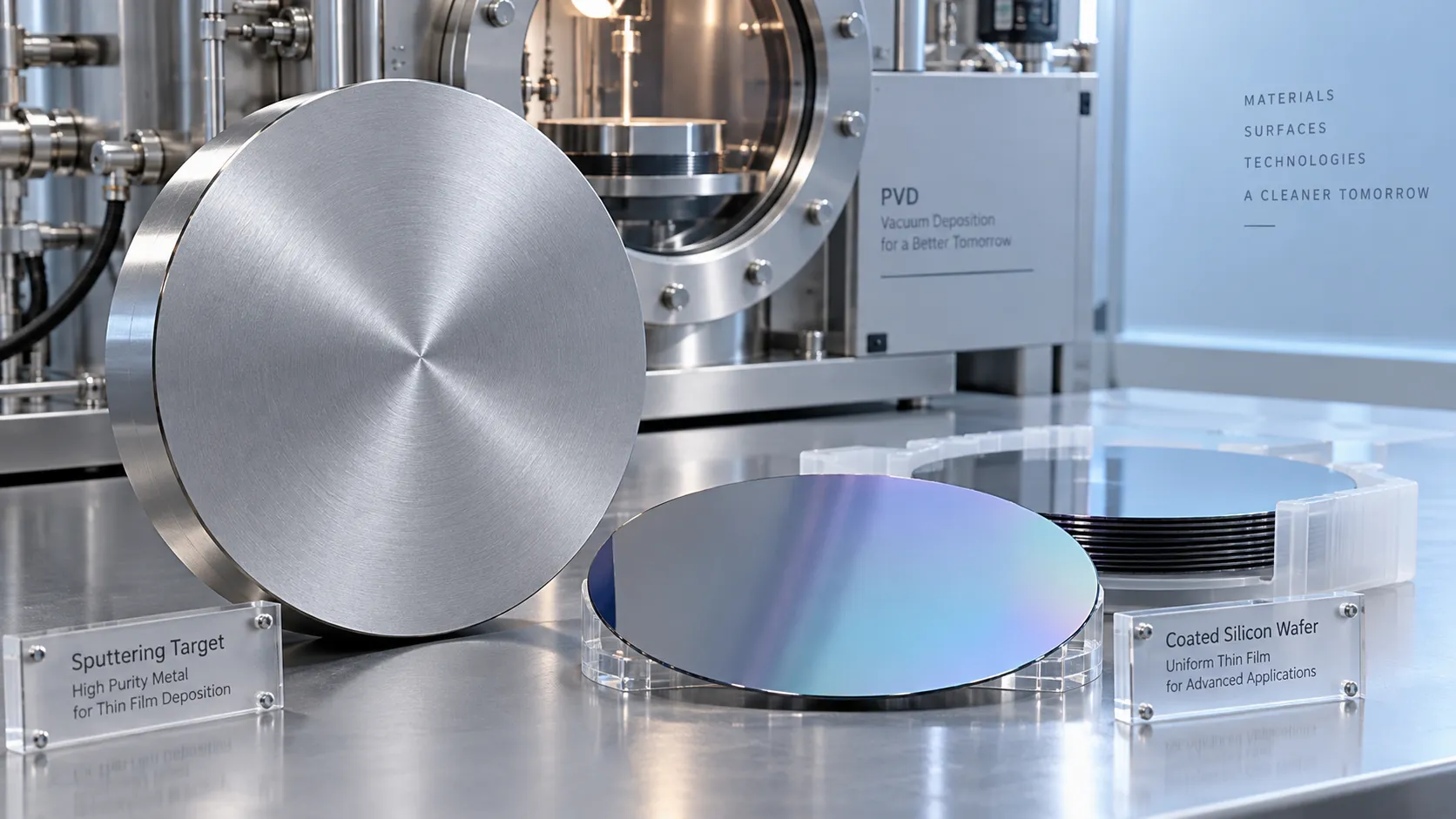
How does the purity of sputtering targets affect thin-film quality?
Discover how sputtering targets affect thin-film quality. Learn to assess purity, identify harmful impurities, and choose specifications that improve coating performance.

How high power laser cladding systems control substrate dilution
Discover how high power laser cladding systems control substrate dilution through beam shaping, material feed, and thermal management to deliver reliable bonds and coating performance.

How to check HS codes for customs compliance in international logistics
Strengthen international logistics customs compliance: learn how to verify HS codes, check official tariffs, and document classifications to reduce costly shipment delays.
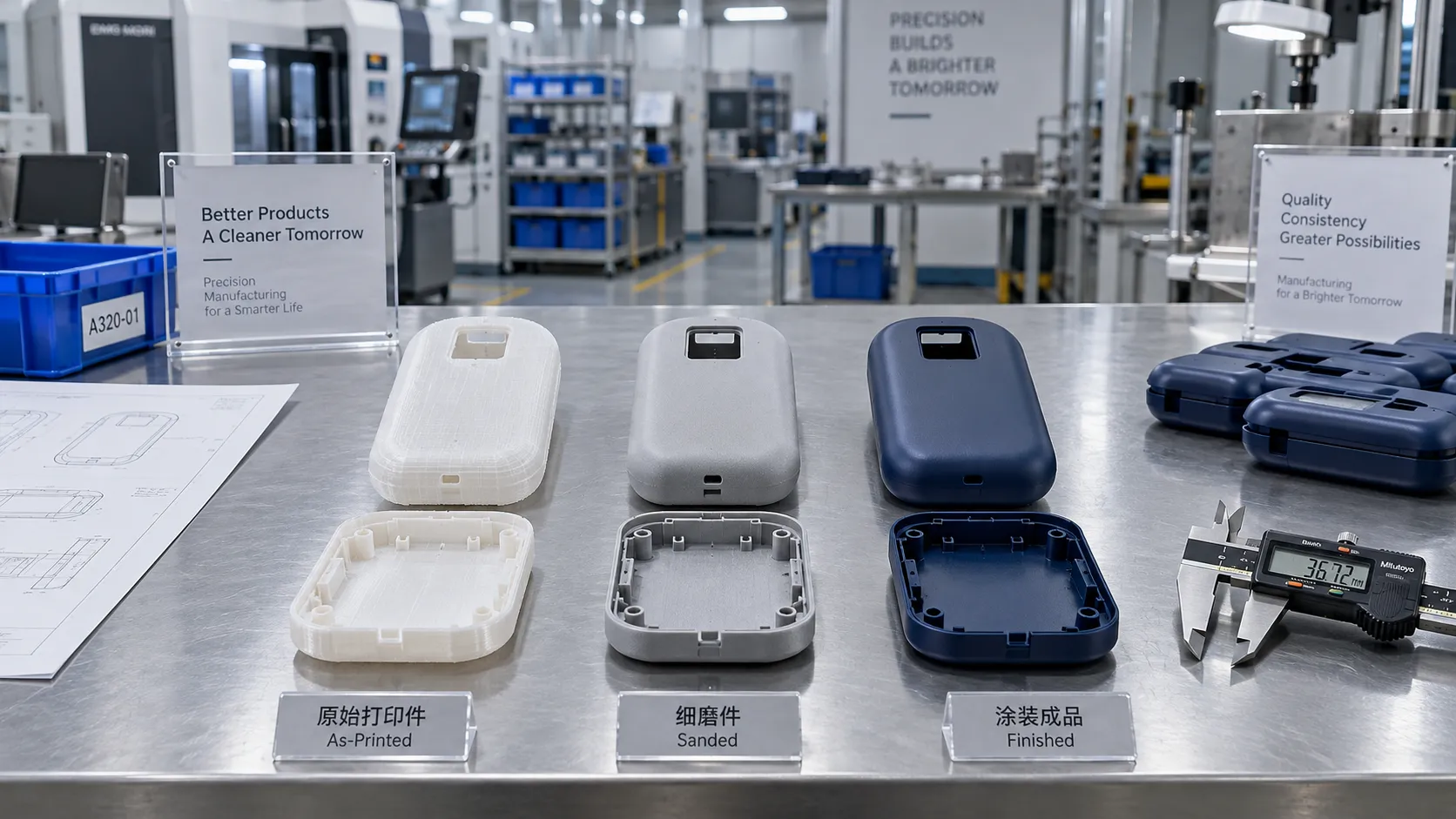
Choosing a 3D Printing Service for Consumer Products: Finish, Fit, and Cost
Compare 3d printing consumer good services by finish, fit, materials, and total cost. Learn how to choose a reliable supplier and avoid costly defects before ordering.
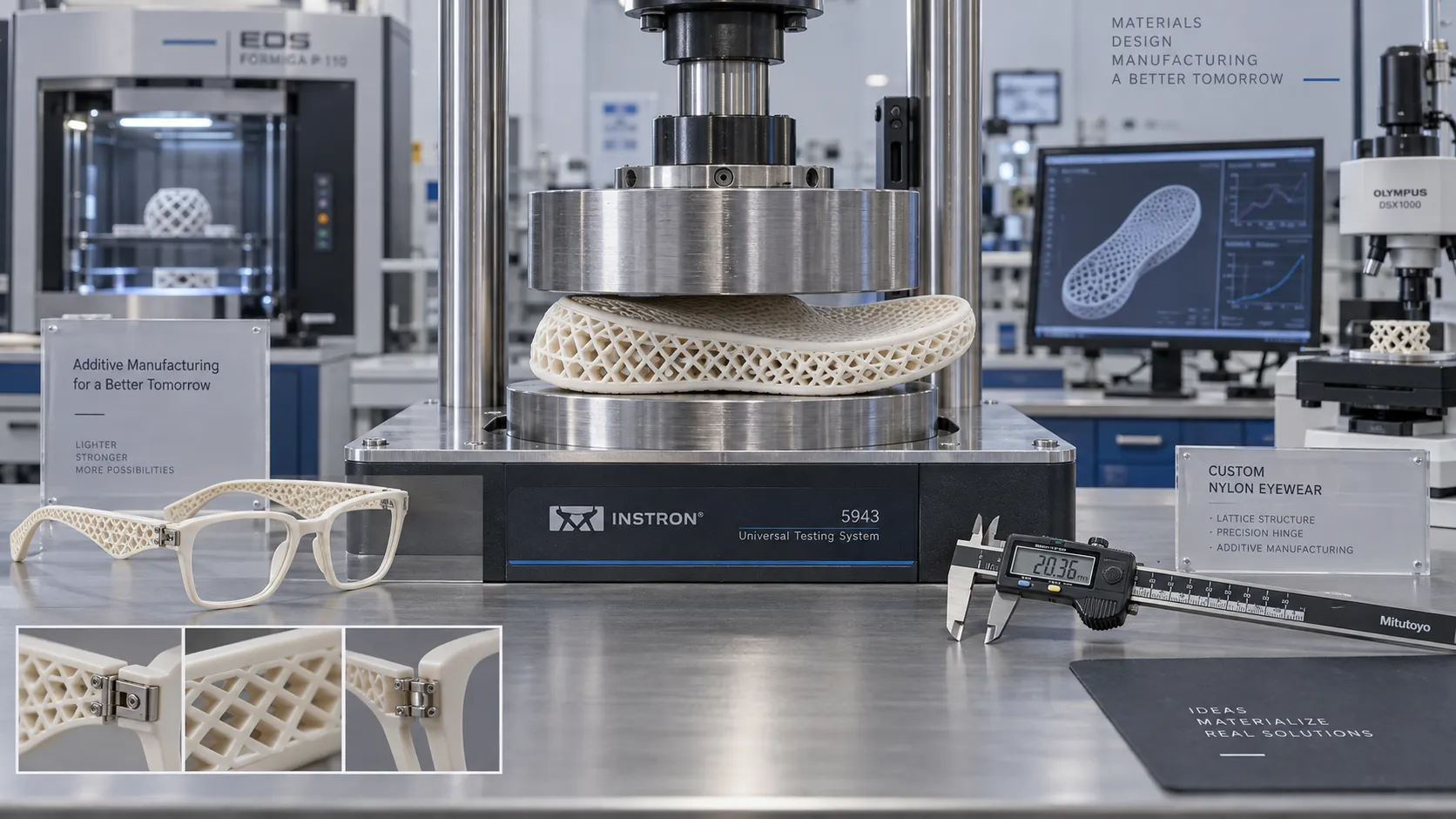
Which Consumer Goods Can Be 3D Printed, and What Are the Practical Limits?
Explore 3d printing consumer goods, from custom eyewear to replacement parts. Discover practical limits on materials, safety, and costs to make smarter production decisions.

From Prototype to Small Batch: Applying 3D Printing to Consumer Goods
Explore 3d printing in consumer goods: learn how to move from prototype to small-batch production with practical guidance on materials, quality validation, and cost control.
Related News
- 00
0000-00
How to verify part consistency before choosing a 3D printing OEM - 00
0000-00
How does a rigid cryogenic transfer line handle thermal contraction? - 00
0000-00
How much does edge vision deployment cost beyond the hardware? - 00
0000-00
How does the purity of sputtering targets affect thin-film quality? - 00
0000-00
How high power laser cladding systems control substrate dilution
Dr. Elena Carbon
Weekly Insights
Stay ahead with our curated technology reports delivered every Monday.