
When laser beam quality m2 metrics change cutting results

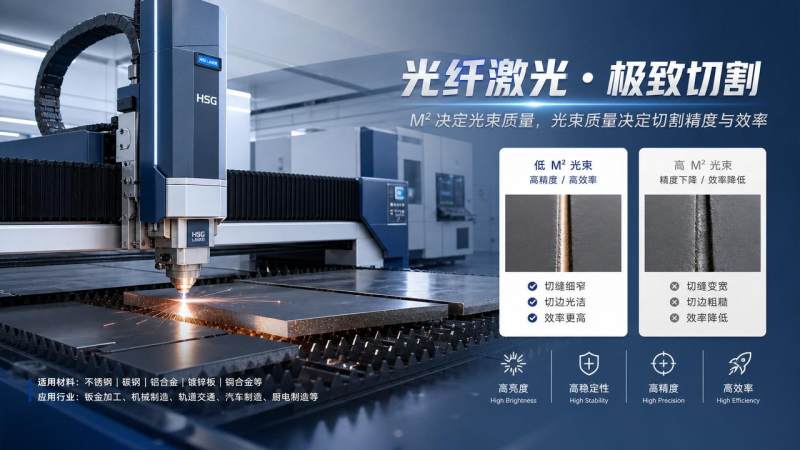
When laser beam quality (m2) metrics shift, cutting performance can change faster than many operators expect. A small variation in beam propagation directly affects focusability, kerf width, edge finish, speed, and material consistency. For users running precision cutting tasks, understanding laser beam quality (m2) metrics is essential to diagnosing defects, optimizing process windows, and achieving stable, repeatable results across different materials and thicknesses.
In industrial laser processing, operators often focus first on power, gas pressure, nozzle condition, and feed rate. Those factors matter, but laser beam quality (m2) metrics frequently determine whether the available power is being delivered as a clean, controllable cut or dispersed into unstable heat.
For B2B manufacturing environments, this topic is not only technical. It affects scrap rates, first-pass yield, setup time, machine utilization, and procurement decisions across fiber laser cutting lines, contract manufacturing cells, and high-mix precision fabrication workflows.
Why laser beam quality (m2) metrics matter on the shop floor
The M2 value describes how closely a real laser beam approaches an ideal Gaussian beam. In practical terms, a lower M2 generally means tighter focus, higher power density, and more predictable energy delivery. An M2 near 1.1 to 1.3 is typically considered very good for fine cutting, while values above 1.5 may require more process compensation.
Operators see the impact immediately when moving between thin stainless steel, reflective aluminum, and thicker carbon steel. A shift that looks small in a beam report can change focal spot size enough to alter kerf geometry, dross generation, and pierce stability within a single production shift.
Direct effects on cut quality
When laser beam quality (m2) metrics worsen, the beam becomes less focusable. That can widen the kerf by 0.02 mm to 0.10 mm depending on optics and thickness, reduce peak intensity at the workpiece, and increase the heat-affected zone. The result may be rougher edges, more taper, and unstable separation at corners.
In thin sheet cutting, even a minor beam degradation can reduce achievable feed rate by 5% to 15% before burrs appear. In thicker plate, the same degradation may show up first as inconsistent bottom edge quality, delayed break-through, or more frequent nozzle crashes caused by molten material buildup.
Common operator symptoms
- Kerf width drifting outside tolerance after lens replacement or source aging
- Edge roughness increasing on one thickness range but not another
- Piercing time extending from 0.8 seconds to 1.2 seconds or more
- More frequent dross on the underside despite unchanged gas settings
- Cut speed reductions needed to maintain acceptable edge finish
The table below connects typical production indicators with likely changes in laser beam quality (m2) metrics. It is useful for operators who need a quick troubleshooting reference before escalating to process engineering or service teams.
The key conclusion is simple: poor cutting results are not always caused by incorrect speed or gas selection. If the beam cannot be focused consistently, every downstream process parameter becomes harder to control and less repeatable from batch to batch.
How changes in M2 alter different cutting applications
The effect of laser beam quality (m2) metrics is application dependent. The same M2 shift may be manageable in thick mild steel cutting but unacceptable in thin-gauge precision components, battery enclosures, medical housings, or tight-tolerance electronic shielding parts.
Thin sheet precision cutting
For 0.5 mm to 2.0 mm stainless steel or galvanized sheet, operators usually need narrow kerf, minimal burr, and sharp corner fidelity. In this range, a lower M2 supports smaller spot sizes and cleaner beam interaction. A slight deterioration can show up as corner overburn, micro-burrs, or widening of narrow slots below 0.8 mm.
Medium and thick plate cutting
For 6 mm to 20 mm carbon steel or aluminum, M2 influences whether enough power density reaches the lower section of the cut front. If beam quality drops, operators may compensate by slowing feed, increasing assist gas, or adjusting focus position, but these changes often raise operating cost and reduce throughput.
Reflective and thermally sensitive materials
Copper, brass, and coated alloys are less forgiving. Here, beam stability and focusability are critical because process windows can already be narrow. A small change in beam propagation may shift a previously stable recipe into intermittent back-reflection alarms, edge oxidation, or excessive heat tint.
The following comparison helps users understand where laser beam quality (m2) metrics become most sensitive in daily production planning.
For many operators, the practical lesson is that M2 should be interpreted together with material type, sheet flatness, lens focal length, nozzle diameter, and assist gas mode. A single beam metric does not act in isolation, but it often explains why a proven recipe suddenly becomes narrow or unstable.
How operators can diagnose M2-related cutting problems
A useful diagnostic approach is to separate beam quality symptoms from routine consumable issues. Before changing 6 or 7 parameters at once, operators should run a structured check covering optics, focus behavior, cut sample comparison, and machine history over the previous 30 to 90 days.
A practical 5-step inspection sequence
- Verify nozzle centering and inspect nozzle wear under magnification.
- Check protective window and focusing lens for contamination or thermal damage.
- Run a standard test pattern on at least 2 material thicknesses.
- Compare kerf, burr, and edge striation against archived baseline samples.
- Review source performance logs, focus calibration, and service records.
What to monitor during test cuts
If laser beam quality (m2) metrics have changed, operators may notice that the best focus point shifts, the tolerance window narrows, or the same recipe performs differently between center sheet zones and edge zones. Recording three sample positions and at least two speed levels often reveals whether the issue is systemic or material related.
It is also useful to compare pierce consistency over 10 to 20 repetitions. Random pierce failures, especially on clean material with stable gas supply, can indicate deteriorating beam delivery or optical contamination that effectively worsens usable beam quality.
Frequent misdiagnoses
- Assuming all burr formation is caused by feed rate alone
- Replacing nozzles repeatedly without checking focus behavior
- Increasing power to compensate for poor focusability
- Ignoring source aging trends until scrap exceeds acceptable levels
In many production cells, a 2% or 3% rise in reject rate can remain hidden until downstream inspection flags a trend. By then, extra labor, lens consumption, and schedule disruption may already exceed the cost of a proper beam quality review and parameter reset.
Selection, maintenance, and procurement considerations
For users and operating teams involved in equipment selection, laser beam quality (m2) metrics should be evaluated as part of the whole cutting system, not as a brochure number in isolation. Source specification, beam delivery path, thermal stability, and service access all influence real-world performance.
What buyers and operators should ask suppliers
A good supplier discussion should cover the M2 range at rated power, stability over time, measurement conditions, and expected variation after warm-up. It should also address recommended inspection intervals, typical consumable replacement cycles, and whether application data is available for 3 to 5 representative materials.
The checklist below helps connect purchasing questions with operator concerns and long-term process control requirements.
The strongest procurement decisions come from linking beam data to acceptance criteria on actual parts. For example, instead of accepting only a source-level beam report, buyers may define cut validation across 3 material groups, 2 thicknesses each, and a repeatability run of 20 parts per recipe.
Maintenance practices that preserve usable beam quality
Routine maintenance still plays a major role because usable beam performance depends on the full optical chain. Protective windows may need inspection every shift in harsh environments, while lens condition, gas purity, chiller stability, and alignment checks may follow weekly or monthly schedules depending on utilization.
For high-volume plants running 2 or 3 shifts, documenting beam-related cut samples can be as valuable as recording machine alarms. A baseline library built from approved parts gives operators a fast visual standard when kerf, edge smoothness, or focus response starts drifting.
Where technical benchmarking creates operational value
In advanced manufacturing, beam quality discussions should move beyond theory into measurable production decisions. That is where independent technical benchmarking becomes valuable. Users need more than nominal specifications; they need context on how laser beam quality (m2) metrics influence throughput, repeatability, and process robustness across different industrial use cases.
A multidisciplinary intelligence platform such as G-AIT supports this need by connecting laser processing data with broader decision factors including standards alignment, equipment benchmarking, and supply-chain reliability. For operators, engineers, and procurement teams, that means faster comparison of practical performance indicators rather than relying only on isolated catalog claims.
Who benefits most
- Operators managing precision cutting stability across mixed materials
- Production supervisors targeting lower scrap and fewer setup resets
- Process engineers validating cutting windows for new part families
- Procurement teams comparing laser systems on measurable operating outcomes
When laser beam quality (m2) metrics change, cutting results rarely stay neutral. They shift in speed, edge finish, kerf control, and repeatability, often before the root cause is obvious on the machine interface. Understanding those relationships allows users to diagnose issues faster, stabilize recipes sooner, and make better-informed equipment and service decisions.
If your team needs clearer benchmarks for laser cutting performance, application-specific guidance, or support comparing system capability across real production scenarios, contact G-AIT to get a tailored technical evaluation, discuss product details, or explore broader industrial laser processing solutions.
Related News
How to verify part consistency before choosing a 3D printing OEM
Choosing a 3D printing OEM? Learn how to verify part consistency with repeat-build trials, validated inspections, and traceability checks before committing to production.
How does a rigid cryogenic transfer line handle thermal contraction?
Learn how a rigid cryogenic transfer line manages thermal contraction with bends, bellows, and guided supports. Discover key design checks for safe, reliable cryogenic performance.
How much does edge vision deployment cost beyond the hardware?
Understand edge vision deployment cost beyond hardware, from data and integration to security and support. Uncover hidden expenses and build a smarter lifecycle budget before you scale.
How does the purity of sputtering targets affect thin-film quality?
Discover how sputtering targets affect thin-film quality. Learn to assess purity, identify harmful impurities, and choose specifications that improve coating performance.
How high power laser cladding systems control substrate dilution
Discover how high power laser cladding systems control substrate dilution through beam shaping, material feed, and thermal management to deliver reliable bonds and coating performance.

How to check HS codes for customs compliance in international logistics
Strengthen international logistics customs compliance: learn how to verify HS codes, check official tariffs, and document classifications to reduce costly shipment delays.
Choosing a 3D Printing Service for Consumer Products: Finish, Fit, and Cost
Compare 3d printing consumer good services by finish, fit, materials, and total cost. Learn how to choose a reliable supplier and avoid costly defects before ordering.
Which Consumer Goods Can Be 3D Printed, and What Are the Practical Limits?
Explore 3d printing consumer goods, from custom eyewear to replacement parts. Discover practical limits on materials, safety, and costs to make smarter production decisions.
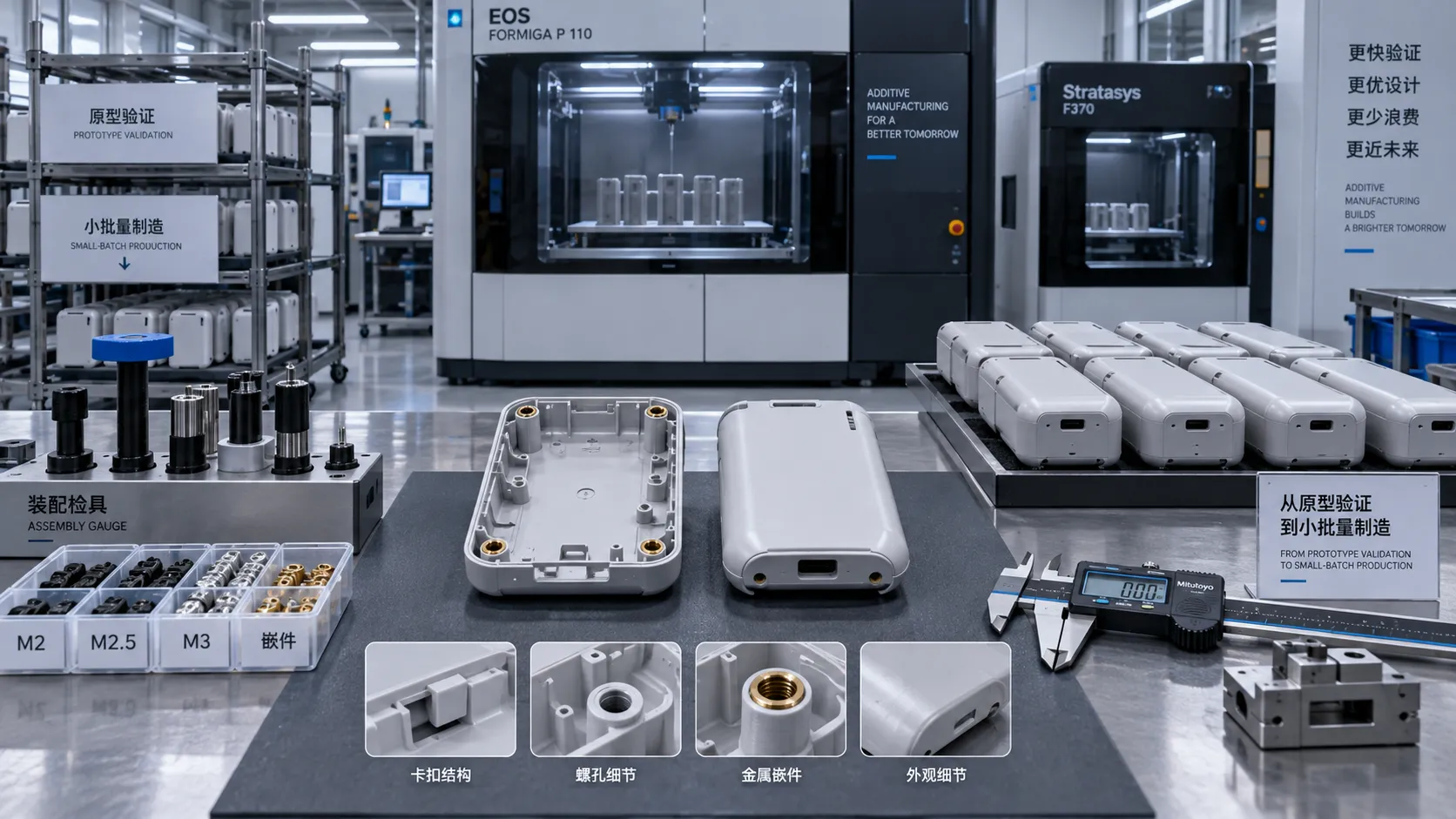
From Prototype to Small Batch: Applying 3D Printing to Consumer Goods
Explore 3d printing in consumer goods: learn how to move from prototype to small-batch production with practical guidance on materials, quality validation, and cost control.
Related News
- 00
0000-00
How to verify part consistency before choosing a 3D printing OEM - 00
0000-00
How does a rigid cryogenic transfer line handle thermal contraction? - 00
0000-00
How much does edge vision deployment cost beyond the hardware? - 00
0000-00
How does the purity of sputtering targets affect thin-film quality? - 00
0000-00
How high power laser cladding systems control substrate dilution
Dr. Hideo Tanaka
Weekly Insights
Stay ahead with our curated technology reports delivered every Monday.